


Neuroanatomic and cognitive abnormalities in attention-deficit/hyperactivity disorder in the era of 'high definition' neuroimaging
- PMID: 25212469
- PMCID: PMC4293331
- DOI: 10.1016/j.conb.2014.08.005
Neuroanatomic and cognitive abnormalities in attention-deficit/hyperactivity disorder in the era of 'high definition' neuroimaging
Abstract
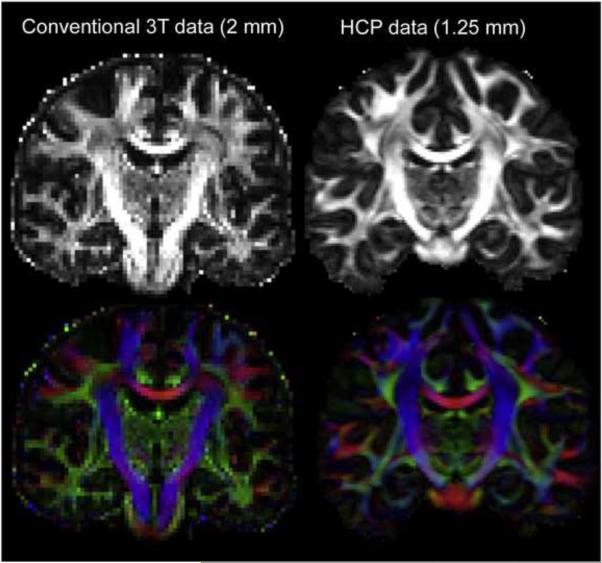
The ongoing release of the Human Connectome Project (HCP) data is a watershed event in clinical neuroscience. By attaining a quantum leap in spatial and temporal resolution within the framework of a twin/sibling design, this open science resource provides the basis for delineating brain-behavior relationships across the neuropsychiatric landscape. Here we focus on attention-deficit/hyperactivity disorder (ADHD), which is at least partly continuous across the population, highlighting constructs that have been proposed for ADHD and which are included in the HCP phenotypic battery. We review constructs implicated in ADHD (reward-related processing, inhibition, vigilant attention, reaction time variability, timing and emotional lability) which can be examined in the HCP data and in future 'high definition' clinical datasets.
Copyright © 2014 Elsevier Ltd. All rights reserved.
Figures
References
-
- American Psychiatric Association . Diagnostic and Statistical Manual of Mental Disorders. Fifth Edition American Psychiatric Association; Washington, D.C.: 2013.
-
- Regier DA, Narrow WE, Clarke DE, Kraemer HC, Kuramoto SJ, Kuhl EA, Kupfer DJ. DSM-5 field trials in the United States and Canada, Part II: test-retest reliability of selected categorical diagnoses. Am J Psychiatry. 2013;170:59–70. - PubMed
-
- Centers for Disease Control Increasing prevalence of parent-reported attention-deficit/hyperactivity disorder among children --- United States, 2003 and 2007. MMWR Morb Mortal Wkly Rep. 201059:1439–1443. - PubMed
Publication types
MeSH terms
Grants and funding
LinkOut - more resources
Full Text Sources
Other Literature Sources
Medical
Miscellaneous
