


The psychometric properties of the German version of the WHOQOL-OLD in the German population aged 60 and older
- PMID: 25213736
- PMCID: PMC4172837
- DOI: 10.1186/s12955-014-0105-4
The psychometric properties of the German version of the WHOQOL-OLD in the German population aged 60 and older
Abstract
Background: The WHOQOL-OLD is an instrument for the assessment of subjective quality of life in elderly people. It is based on the WHO definition of quality of life and is available in more than 20 languages. However, in most countries, the psychometric properties of the WHOQOL-OLD have been assessed only on the basis of small local samples and not in representative studies. In this study, the psychometric properties of the WHOQOL-OLD are evaluated based on a representative sample of Germany's elderly population.
Methods: Face-to-face interviews with 1133 respondents from the German population aged 60 years and older were conducted. Quality of life was assessed by means of the WHOQOL-BREF, the WHOQOL-OLD and the SF12. Moreover, the GDS, the DemTect and the IADL were applied for the assessment of depressive symptoms, cognitive capacities and capacity for carrying out daily activities. Psychometric properties of the WHOQOL-OLD were evaluated by means of classical and probabilistic test theory, confirmatory factor analysis and multivariate regression model.
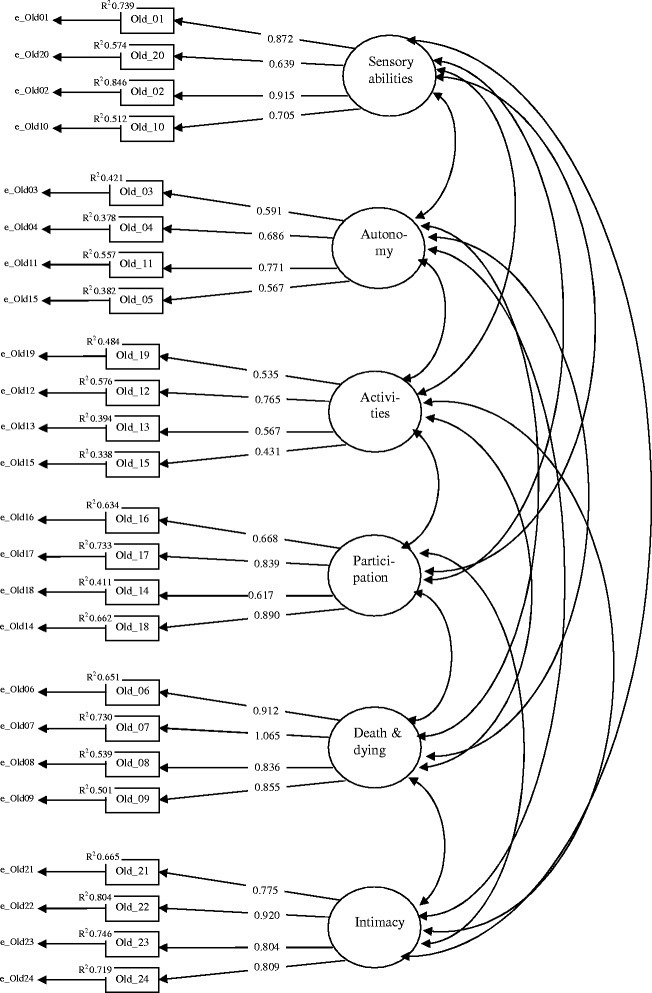
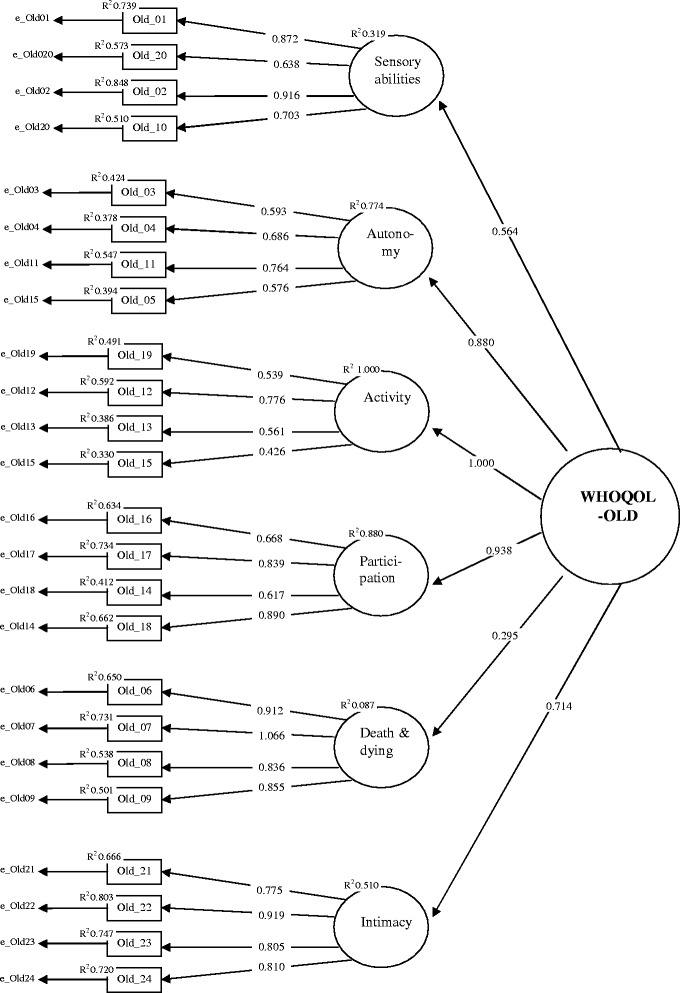
Results: Cronbach's alpha was found to be above 0.85 for four and above .75 for two of the six facets of the WHOQOL-OLD. IRT analyses indicated that all items of the WHOQOL-OLD contribute considerably to the measurement of the associated facets. While the six-facet structure of the WHOQOL-OLD was well supported by the results of the confirmatory factor analysis, a common latent factor for the WHOQOL-OLD total scale could not be identified. Correlations with other quality of life measures and multivariate regression models with GDS, IADL and the DemTect indicate a good criterion validity of all six WHOQOL-OLD facets.
Conclusions: Study results confirm that the good psychometric properties of the WHOQOL-OLD that have been found in international studies could be replicated in a representative study of the German population. These results suggest that the WHOQOL-OLD is an instrument that is well suited to identify the needs and the wishes of an aging population.
Figures
References
-
- United Nations Organization . World population ageing 1950–2021. New York: United Nations; 2002.
-
- U.S. Census Press Release: Retrieved February 11, 2008 from. 2005, http://www.census.gov/Press-Release/www/releases/archives/facts_for_feat....
-
- Organisation for Economic Cooperation and Development . Maintaining prosperity in an ageing society. Paris: OECD; 1999.
Publication types
MeSH terms
LinkOut - more resources
Full Text Sources
Other Literature Sources
Medical
