


What have novel imaging techniques revealed about metabolism in the aging brain?
- PMID: 25214817
- PMCID: PMC4159180
- DOI: 10.2217/fnl.14.13
What have novel imaging techniques revealed about metabolism in the aging brain?
Abstract
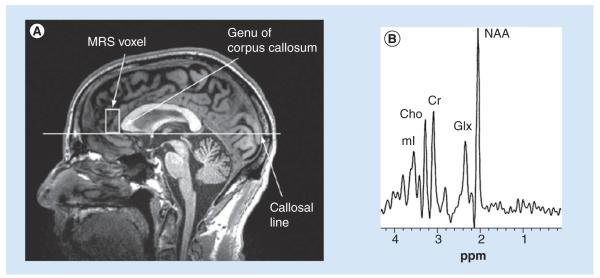
Brain metabolism declines with age and do so in an accelerated manner in neurodegenerative disorders. Noninvasive neuroimaging techniques have played an important role to identify the metabolic biomarkers in aging brain. Particularly, PET with fluorine-18 (18F)-labeled 2-fluoro-2-deoxy-d-glucose tracer and proton magnetic resonance spectroscopy (MRS) have been widely used to monitor changes in brain metabolism over time, identify the risk for Alzheimer's disease (AD) and predict the conversion from mild cognitive impairment to AD. Novel techniques, including PET carbon-11 Pittsburgh compound B, carbon-13 and phosphorus-31 MRS, have also been introduced to determine Aβ plaques deposition, mitochondrial functions and brain bioenergetics in aging brain and neurodegenerative disorders. Here, we introduce the basic principle of the imaging techniques, review the findings from 2-fluoro-2-deoxy-d-glucose-PET, Pittsburgh compound B PET, proton, carbon-13 and phosphorus-31 MRS on changes in metabolism in normal aging brain, mild cognitive impairment and AD, and discuss the potential of neuroimaging to identify effective interventions and treatment efficacy for neurodegenerative disorders.
Keywords: APOE4; Alzheimer’s disease; Aβ plaques; PET; aging; glucose metabolism; magnetic resonance spectroscopy; mild cognitive impairment; mitochondrial function.
Figures



References
-
- Sokoloff L, Reivich M, Kennedy C, et al. The [14C]deoxyglucose method for the measurement of local cerebral glucose utilization: theory, procedure, and normal values in the conscious and anesthetized albino rat. J. Neurochem. 1977;28:897–916. - PubMed
-
-
Cunnane S, Nugent S, Roy M, et al. Brain fuel metabolism, aging, and Alzheimer’s disease. Nutrition. 2011;27:3–20. A thorough review on brain glucose metabolism changes in aging and Alzheimer’s disease.
-
-
- Hoyer S. Abnormalities of glucose metabolism in Alzheimer’s disease. Ann. NY Acad. Sci. 1991;640:53–58. - PubMed
-
- Nagata K, Buchan RJ, Yokoyama E, et al. Misery perfusion with preserved vascular reactivity in Alzheimer’s disease. Ann. NY Acad. Sci. 1997;826:272–281. - PubMed
-
-
Reiman EM, Caselli RJ, Chen K, et al. Declining brain activity in cognitively normal apolipoprotein E epsilon 4 heterozygotes: a foundation for using positron emission tomography to efficiently test treatments to prevent Alzheimer’s disease. Proc. Natl Acad. Sci. USA. 2001;98:3334–3339. Shows significant brain glucose metabolism reductions in normal individuals who are at high risk for Alzheimer’s disease.
-
Grants and funding
LinkOut - more resources
Full Text Sources
Other Literature Sources