


Mechanotransduction in musculoskeletal tissue regeneration: effects of fluid flow, loading, and cellular-molecular pathways
- PMID: 25215295
- PMCID: PMC4151828
- DOI: 10.1155/2014/863421
Mechanotransduction in musculoskeletal tissue regeneration: effects of fluid flow, loading, and cellular-molecular pathways
Abstract
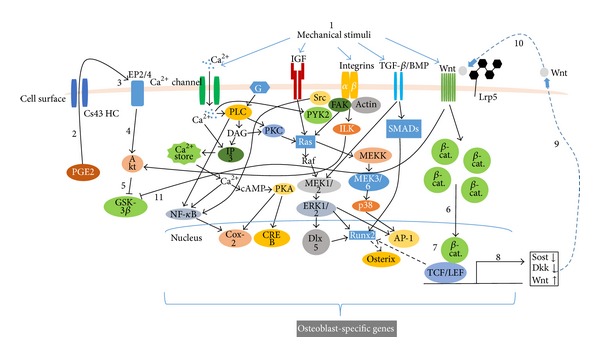
While mechanotransductive signal is proven essential for tissue regeneration, it is critical to determine specific cellular responses to such mechanical signals and the underlying mechanism. Dynamic fluid flow induced by mechanical loading has been shown to have the potential to regulate bone adaptation and mitigate bone loss. Mechanotransduction pathways are of great interests in elucidating how mechanical signals produce such observed effects, including reduced bone loss, increased bone formation, and osteogenic cell differentiation. The objective of this review is to develop a molecular understanding of the mechanotransduction processes in tissue regeneration, which may provide new insights into bone physiology. We discussed the potential for mechanical loading to induce dynamic bone fluid flow, regulation of bone adaptation, and optimization of stimulation parameters in various loading regimens. The potential for mechanical loading to regulate microcirculation is also discussed. Particularly, attention is allotted to the potential cellular and molecular pathways in response to loading, including osteocytes associated with Wnt signaling, elevation of marrow stem cells, and suppression of adipotic cells, as well as the roles of LRP5 and microRNA. These data and discussions highlight the complex yet highly coordinated process of mechanotransduction in bone tissue regeneration.
Figures
References
-
- Gerdhem P, Ringsberg KAM, Åkesson K, Obrant KJ. Influence of muscle strength, physical activity and weight on bone mass in a population-based sample of 1004 elderly women. Osteoporosis International. 2003;14(9):768–772. - PubMed
-
- Gerdhem P, Ringsberg KAM, Magnusson H, Obrant KJ, Åkesson K. Bone mass cannot be predicted by estimations of frailty in elderly ambulatory women. Gerontology. 2003;49(3):168–172. - PubMed
-
- LeBlanc A, Lin C, Shackelford L, et al. Muscle volume, MRI relaxation times (T2), and body composition after spaceflight. Journal of Applied Physiology. 2000;89(6):2158–2164. - PubMed
-
- Wolff J. Das Gesetz der Transformation der Knochen. Berlin, Germany: Auflage; 1892.
-
- Wolff J. The Law of Bone Remodeling. Springer. Berlin, Germany: 1986.
Publication types
MeSH terms
Grants and funding
LinkOut - more resources
Full Text Sources
Other Literature Sources
