


Cyclin-dependent kinase inhibitors as marketed anticancer drugs: where are we now? A short survey
- PMID: 25215591
- PMCID: PMC6271685
- DOI: 10.3390/molecules190914366
Cyclin-dependent kinase inhibitors as marketed anticancer drugs: where are we now? A short survey
Abstract
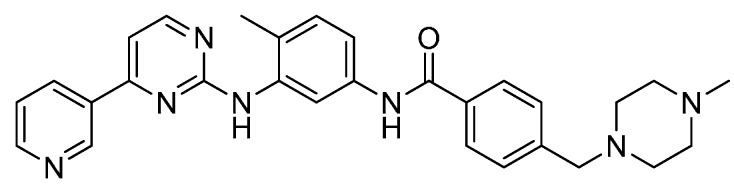
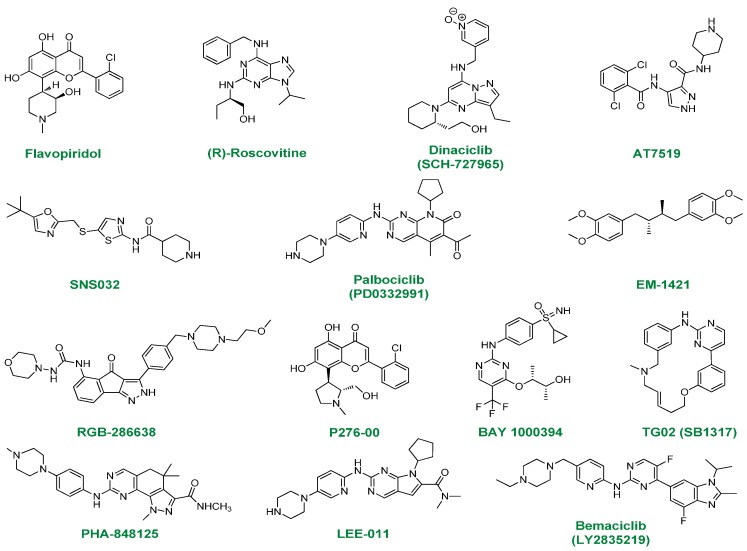
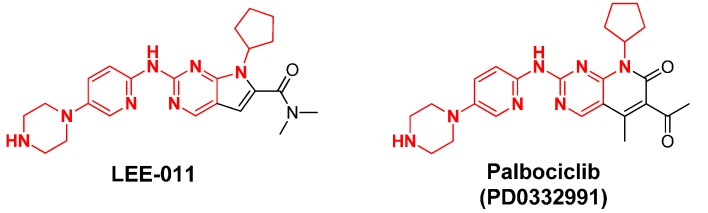
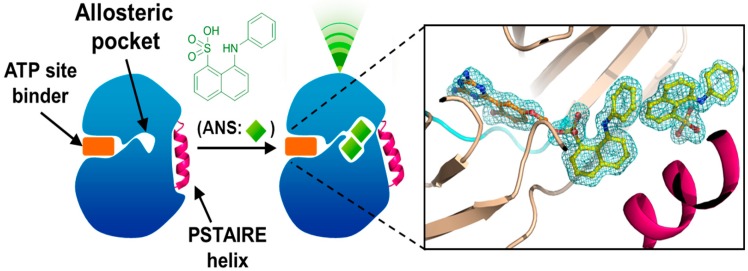
In the early 2000s, the anticancer drug imatinib (Glivec®) appeared on the market, exhibiting a new mode of action by selective kinase inhibition. Consequently, kinases became a validated therapeutic target, paving the way for further developments. Although these kinases have been thoroughly studied, none of the compounds commercialized since then target cyclin-dependent kinases (CDKs). Following a recent and detailed review on the subject by Galons et al., we concentrate our attention on an updated list of compounds under clinical evaluation (phase I/II/III) and discuss their mode of action as ATP-competitive inhibitors. CDK inhibition profiles and clinical development stages are reported for the 14 compounds under clinical evaluation. Also, tentative progress for forthcoming potential ATP non-competitive inhibitors and allosteric inhibitors are briefly described, along with their limitations.
Conflict of interest statement
The authors declare no conflict of interest.
Figures
References
-
- Matthews D.J., Gerritsen M.E. Targeting Protein Kinases for Cancer Therapy. John Wiley & sons, Inc.; Hoboken, NJ, USA: 2010.
-
- Meijer L. Le cycle de division cellulaire et sa régulation. Oncologie. 2003;5:311–326.
-
- Schwob E. Nobel Prize in Medicine 2001: The universal key to cell division. Bull. Cancer. 2001;88:937. - PubMed
Publication types
MeSH terms
Substances
LinkOut - more resources
Full Text Sources
Other Literature Sources
Molecular Biology Databases
