


HIV testing in community pharmacies and retail clinics: a model to expand access to screening for HIV infection
- PMID: 25216878
- PMCID: PMC4698873
- DOI: 10.1331/JAPhA.2014.14045
HIV testing in community pharmacies and retail clinics: a model to expand access to screening for HIV infection
Abstract
Objective: To test the feasibility of offering rapid point-of-care human immunodeficiency virus (HIV) testing at community pharmacies and retail clinics.
Design: Pilot program to determine how to implement confidential HIV testing services in community pharmacies and retail clinics.
Setting: 21 community pharmacies and retail clinics serving urban and rural patients in the United States, from August 2011 to July 2013.
Participants: 106 community pharmacy and retail clinic staff members.
Intervention: A model was developed to implement confidential HIV counseling and testing services using community pharmacy and retail clinic staff as certified testing providers, or through collaborations with organizations that provide HIV testing. Training materials were developed and sites selected that serve patients from urban and rural areas to pilot test the model. Each site established a relationship with its local health department for HIV testing policies, developed referral lists for confirmatory HIV testing/care, secured a CLIA Certificate of Waiver, and advertised the service. Staff were trained to perform a rapid point-of-care HIV test on oral fluid, and provide patients with confidential test results and information on HIV. Patients with a preliminary positive result were referred to a physician or health department for confirmatory testing and, if needed, HIV clinical care.
Main outcome measures: Number of HIV tests completed and amount of time required to conduct testing.
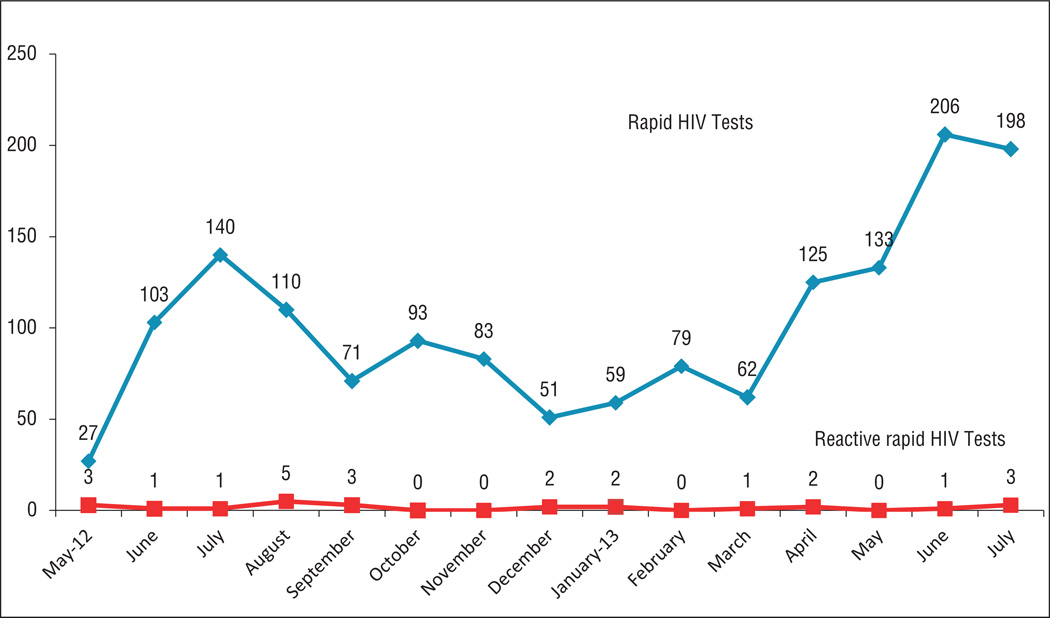
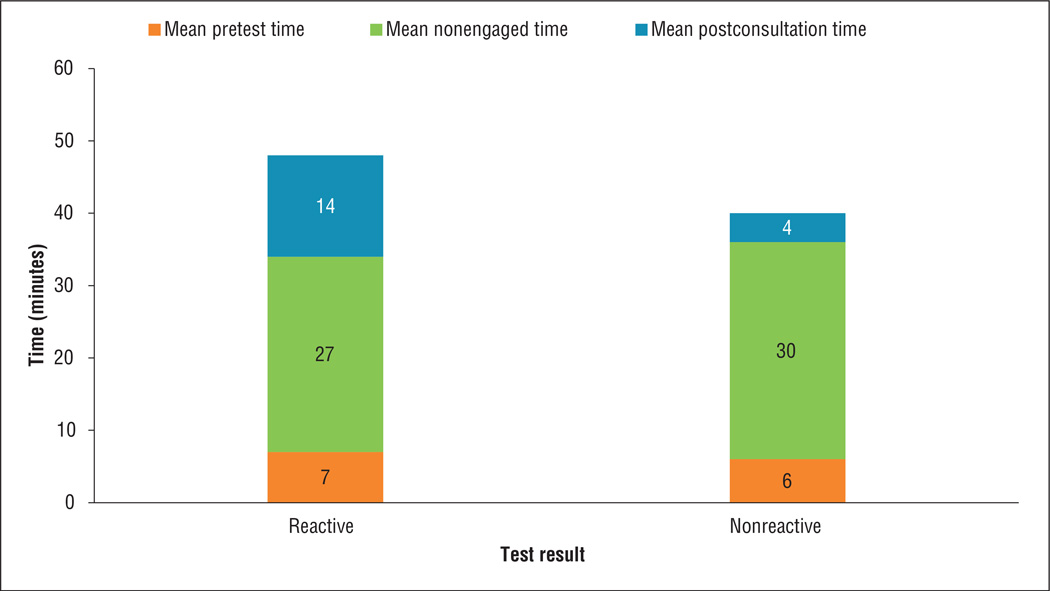
Results: The 21 participating sites administered 1,540 HIV tests, with 1,087 conducted onsite by staff during regular working hours and 453 conducted at 37 different HIV testing events (e.g., local health fairs). The median amount of time required for pretest counseling/consent, waiting for test results, and posttest counseling was 4, 23, and 3 minutes, respectively. A majority of the sites (17) said they planned to continue HIV testing after the project period ended and would seek assistance or support from the local health department, a community-based organization, or an AIDS service organization.
Conclusion: This pilot project established HIV testing in several community pharmacies and retail clinics to be a feasible model for offering rapid, point-of-care HIV testing. It also demonstrated the willingness and ability of staff at community pharmacies and retail clinics to provide confidential HIV testing to patients. Expanding this model to additional sites and evaluating its feasibility and effectiveness may serve unmet needs in urban and rural settings.
Conflict of interest statement
Figures
References
-
- Centers for Disease Control and Prevention. HIV surveillance report, vol. 23: diagnoses of HIV infection in the United States and dependent areas, 2011. [September 30, 2013]; www.cdc.gov/hiv/pdf/statistics_2011_HIV_Surveillance_Report_vol_23.pdf.
-
- Centers for Disease Control and Prevention. HIV surveillance supplemental report, 17, no. 3: monitoring selected national HIV prevention and care objectives by using HIV surveillance data—United States and 6 U.S. dependent areas—2010, part A. [September 30, 2013]; www.cdc.gov/hiv/pdf/statistics_2010_HIV_Surveillance_Report_vol_17_no_3.pdf.
-
- Centers for Disease Control and Prevention. HIV surveillance supplemental report, vol. 17, no. 4: estimated HIV incidence in the United States, 2007–2010. [September 30, 2013]; www.cdc.gov/hiv/pdf/statistics_hssr_vol_17_no_4.pdf.
-
- Sutton M, Anthony MN, Vila C, et al. HIV testing and HIV/AIDS treatment services in rural counties in 10 southern states: service provider perspectives. J Rural Health. 2010;26:240–247. - PubMed
Publication types
MeSH terms
Grants and funding
LinkOut - more resources
Full Text Sources
Other Literature Sources
Medical
