


Delayed anemia assessment in patients treated with oral artemisinin derivatives for uncomplicated malaria: a pooled analysis of clinical trials data from Mali
- PMID: 25217396
- PMCID: PMC4177171
- DOI: 10.1186/1475-2875-13-358
Delayed anemia assessment in patients treated with oral artemisinin derivatives for uncomplicated malaria: a pooled analysis of clinical trials data from Mali
Abstract
Background: In sub-Saharan Africa, artemisinin-based combination therapy (ACT) and injectable artesunate are the first-line treatments for uncomplicated and severe Plasmodium falciparum malaria, respectively. However, recent studies suggest that delayed anaemia is associated with these treatments in non-immune travellers. This paper aimed to assess the risk factors associated with delayed anaemia after falciparum malaria treatment with artemisinin-containing drugs in malaria-endemic populations.
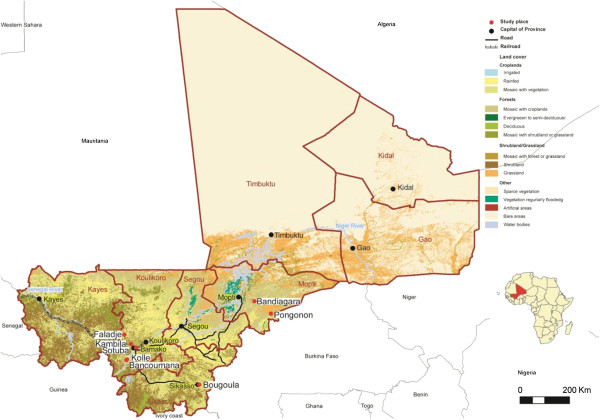
Methods: Pooled, individual malaria patient data were extracted from 13 clinical trials performed from 2002 to 2011 in various settings of Mali. Treatment regimens were artemether-lumefantrine, artesunate plus amodiaquine, artesunate plus sulphadoxine-pyrimethamine, artesunate plus sulphamethoxypyrazine-pyrimethamine, artesunate plus mefloquine, artesunate-pyronaridine, artesunate monotherapy, chloroquine, sulphadoxine-pyrimethamine, amodiaquine and sulphadoxine-pyrimethamine plus amodiaquine. Univariate and multivariate analyses were performed using the generalized linear and latent mixed model procedures to assess risk factors associated with haemoglobin concentration evolution and anaemia during the treatment follow-up.
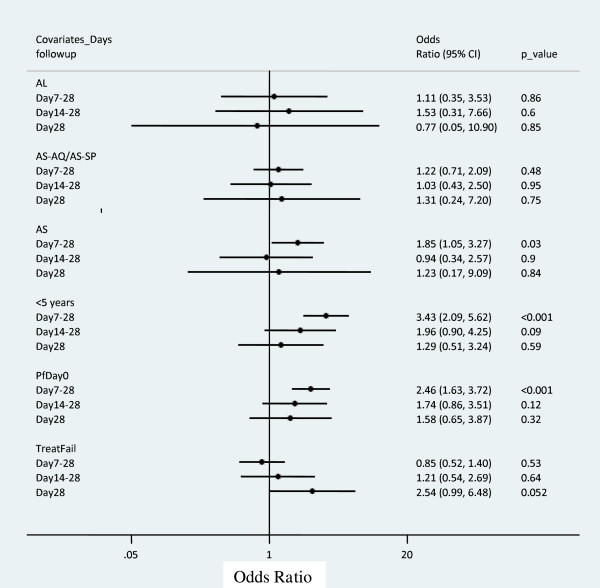
Results: A total of 5,990 participants were recruited and followed from day 0 to day 28. The participants' median age was five years, ranging from three months to 70 years. There was a decrease in haemoglobin level on day 7 in all treatment arms, but the magnitude varied across treatments. There was a significant risk of haemoglobin level decrease on day 7 in the artemisinin-based therapy compared to the non-artemisinin treatments. The risk of haemoglobin concentration drop was associated with age group < five years old (0.61 g/dL 95% CI (0.71 to 0.51), p < 0.001), baseline high parasite density (0.43 g/dL 95% CI (0.51 to 0.35), p < 0.001) and treatment failure (0.40 g/dL 95% CI (0.59 to 0.20), p = 0.018), while high haemoglobin level at baseline was a protective factor (0.53 to 0.59) p < 0.001). No association was found between artemisinin-based therapy and severe delayed anaemia.
Conclusions: Oral artemisinin derivative treatments for uncomplicated P. falciparum malaria are associated with a transient and clinically moderate haemoglobin decrease by day 7 but not associated with a delayed severe anaemia.
Figures
References
-
- WHO . World Malaria Report. Geneva: World Health Organization; 2013.
-
- WHO . Fact sheets N°94. 2014.
-
- WHO . Guidelines for the Treatment of Malaria. 2. Geneva: World Health Organization; 2010. - PubMed
-
- WHO . Guidelines for the Treatment of Malaria. 2. Geneva: World Health Organization; 2011.
-
- WHO/GMP . Information Note on Delayed Haemolytic Anaemia following Treatment with Artesunate. 2013.
Publication types
MeSH terms
Substances
LinkOut - more resources
Full Text Sources
Other Literature Sources
Medical
