


ILDR1 null mice, a model of human deafness DFNB42, show structural aberrations of tricellular tight junctions and degeneration of auditory hair cells
- PMID: 25217574
- PMCID: PMC4291242
- DOI: 10.1093/hmg/ddu474
ILDR1 null mice, a model of human deafness DFNB42, show structural aberrations of tricellular tight junctions and degeneration of auditory hair cells
Abstract
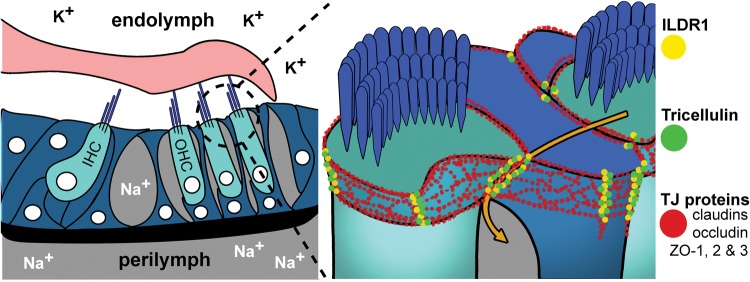
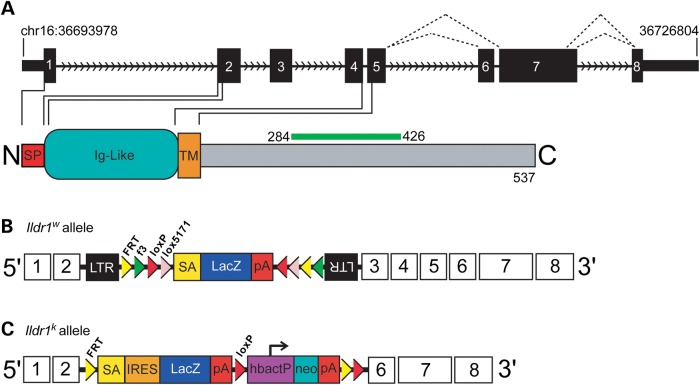
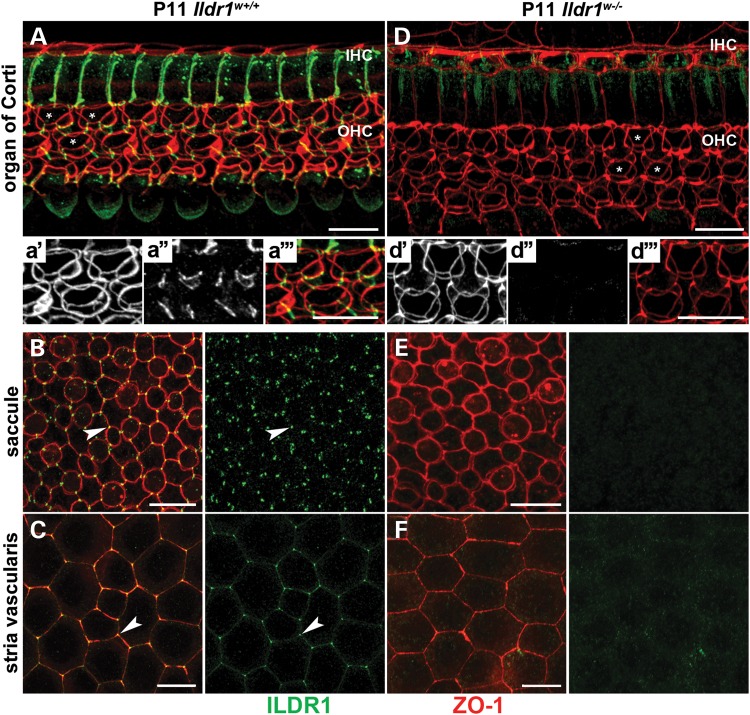
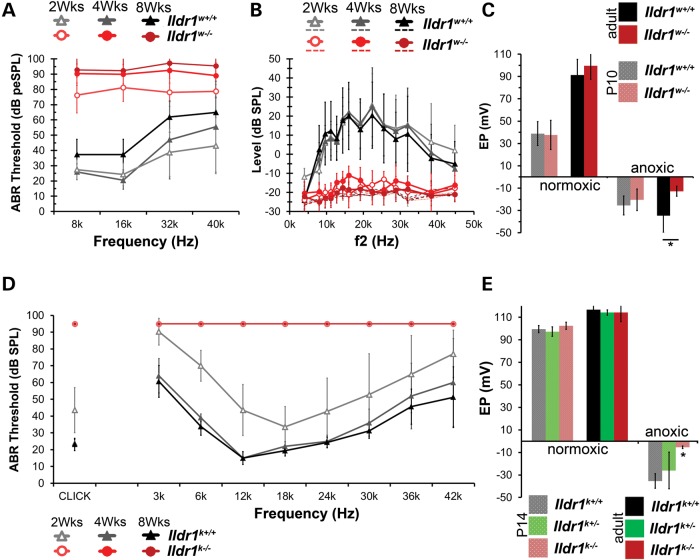
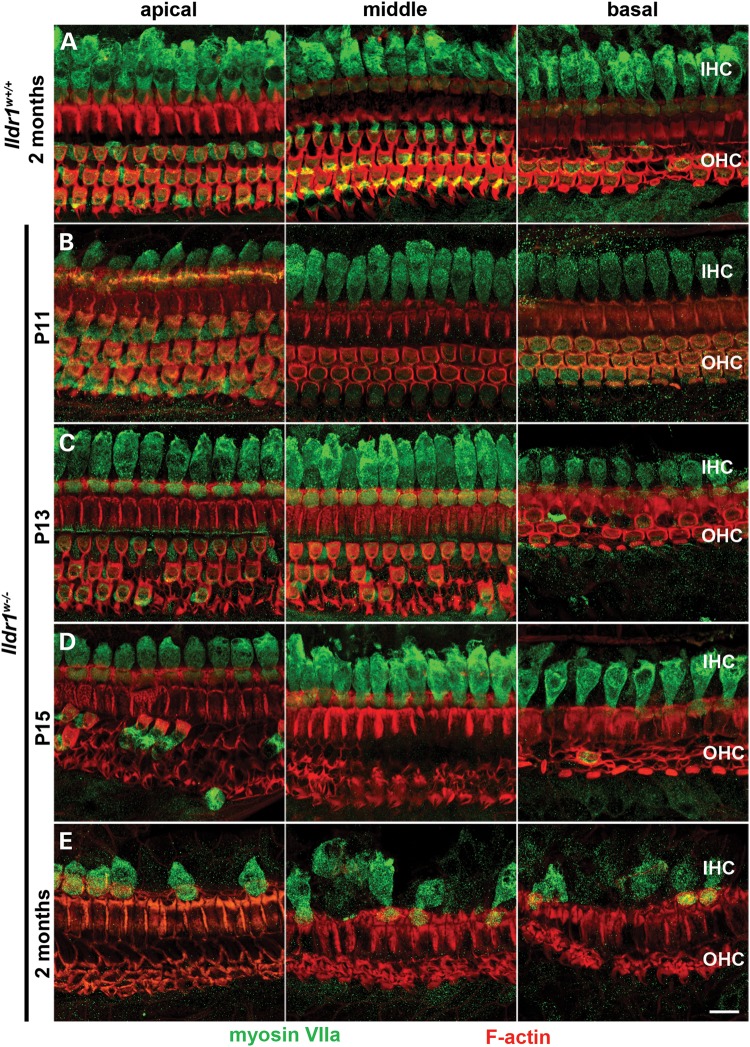
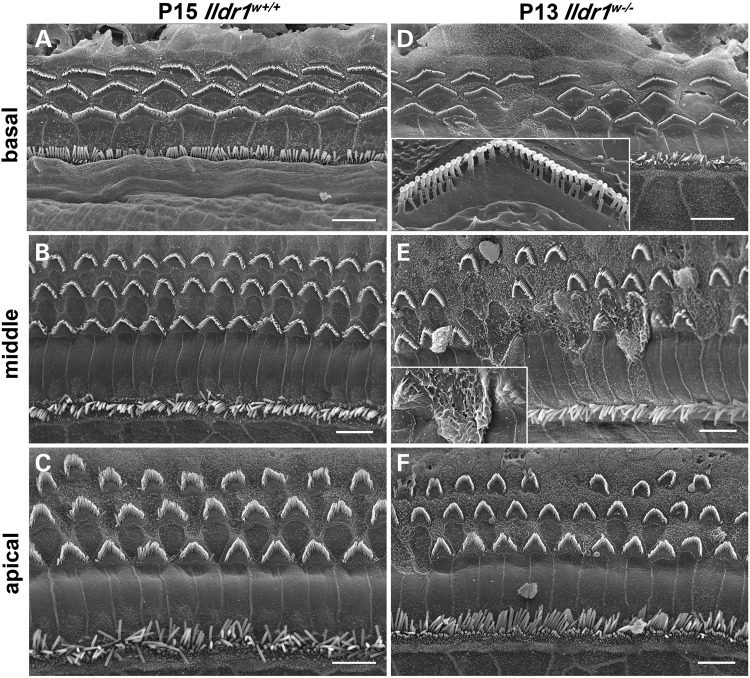
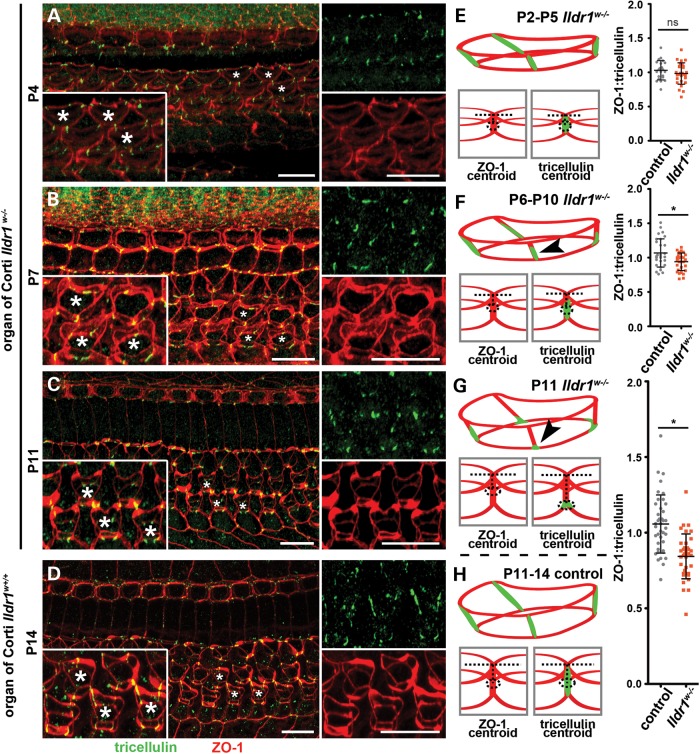
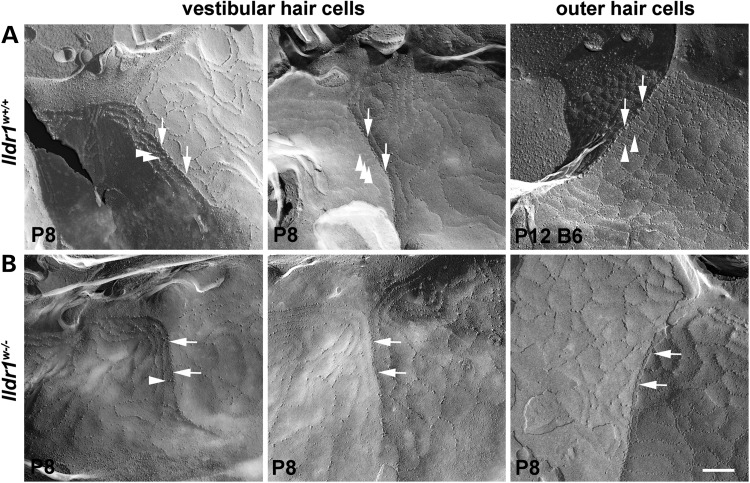
In the mammalian inner ear, bicellular and tricellular tight junctions (tTJs) seal the paracellular space between epithelial cells. Tricellulin and immunoglobulin-like (Ig-like) domain containing receptor 1 (ILDR1, also referred to as angulin-2) localize to tTJs of the sensory and non-sensory epithelia in the organ of Corti and vestibular end organs. Recessive mutations of TRIC (DFNB49) encoding tricellulin and ILDR1 (DFNB42) cause human nonsyndromic deafness. However, the pathophysiology of DFNB42 deafness remains unknown. ILDR1 was recently reported to be a lipoprotein receptor mediating the secretion of the fat-stimulated cholecystokinin (CCK) hormone in the small intestine, while ILDR1 in EpH4 mouse mammary epithelial cells in vitro was shown to recruit tricellulin to tTJs. Here we show that two different mouse Ildr1 mutant alleles have early-onset severe deafness associated with a rapid degeneration of cochlear hair cells (HCs) but have a normal endocochlear potential. ILDR1 is not required for recruitment of tricellulin to tTJs in the cochlea in vivo; however, tricellulin becomes mislocalized in the inner ear sensory epithelia of ILDR1 null mice after the first postnatal week. As revealed by freeze-fracture electron microscopy, ILDR1 contributes to the ultrastructure of inner ear tTJs. Taken together, our data provide insight into the pathophysiology of human DFNB42 deafness and demonstrate that ILDR1 is crucial for normal hearing by maintaining the structural and functional integrity of tTJs, which are critical for the survival of auditory neurosensory HCs.
© The Author 2014. Published by Oxford University Press.
Figures
References
Publication types
MeSH terms
Substances
Supplementary concepts
Grants and funding
- R01 DK091946/DK/NIDDK NIH HHS/United States
- WT100669MA/WT_/Wellcome Trust/United Kingdom
- DK091946/DK/NIDDK NIH HHS/United States
- R01 DC012151/DC/NIDCD NIH HHS/United States
- DC000039-18/DC/NIDCD NIH HHS/United States
- I01 BX002230/BX/BLRD VA/United States
- DC000060-14/DC/NIDCD NIH HHS/United States
- 100669/WT_/Wellcome Trust/United Kingdom
- R01-DC012151/DC/NIDCD NIH HHS/United States
- G0300212/MRC_/Medical Research Council/United Kingdom
- R01 DK098796/DK/NIDDK NIH HHS/United States
- MC_QA137918/MRC_/Medical Research Council/United Kingdom
- DK098796/DK/NIDDK NIH HHS/United States
LinkOut - more resources
Full Text Sources
Other Literature Sources
Molecular Biology Databases
Research Materials
