


Dichloroacetate selectively improves cardiac function and metabolism in female and male rainbow trout
- PMID: 25217653
- PMCID: PMC4233302
- DOI: 10.1152/ajpheart.00755.2013
Dichloroacetate selectively improves cardiac function and metabolism in female and male rainbow trout
Abstract
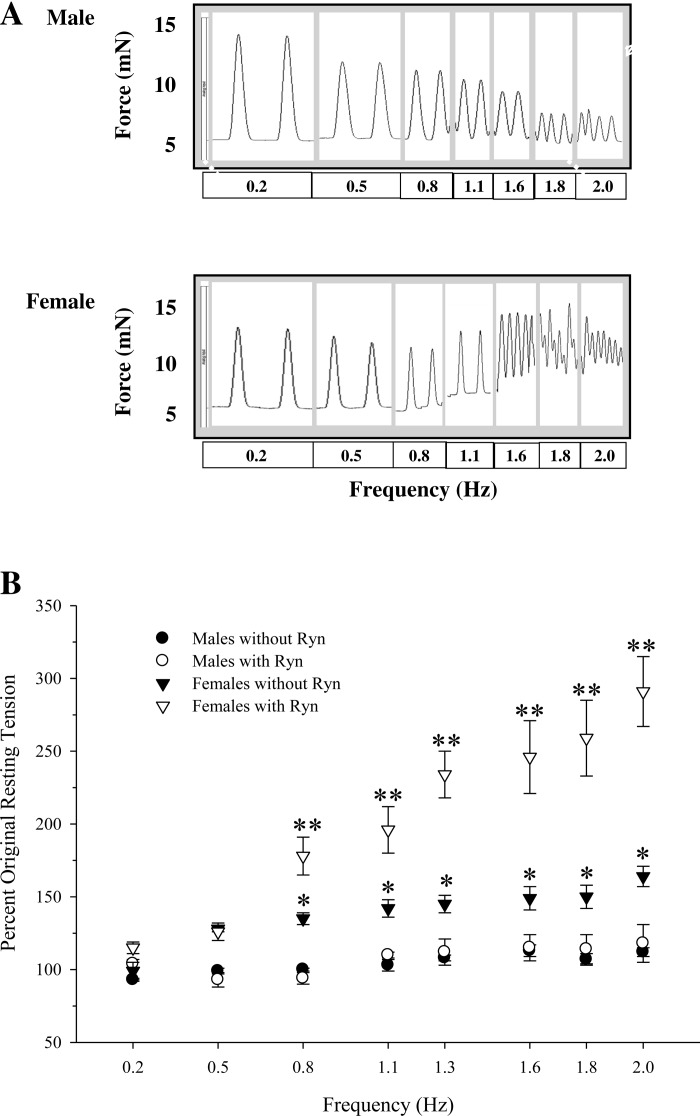
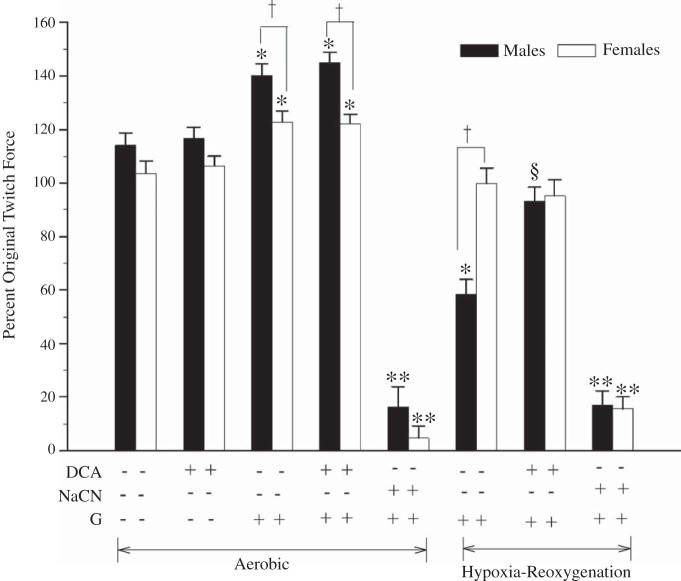
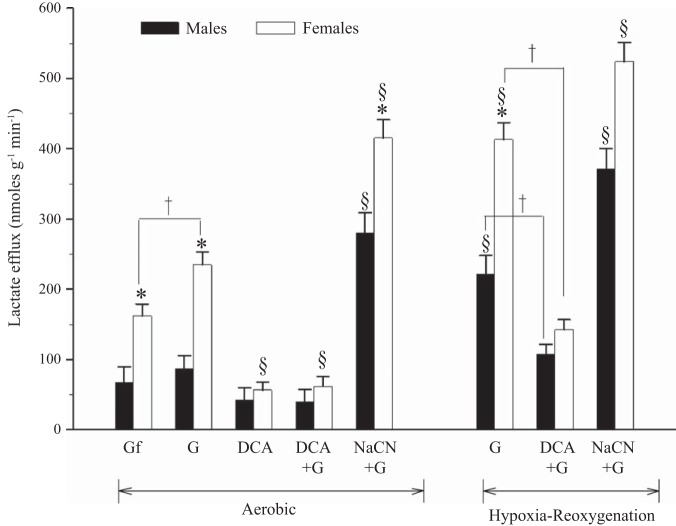
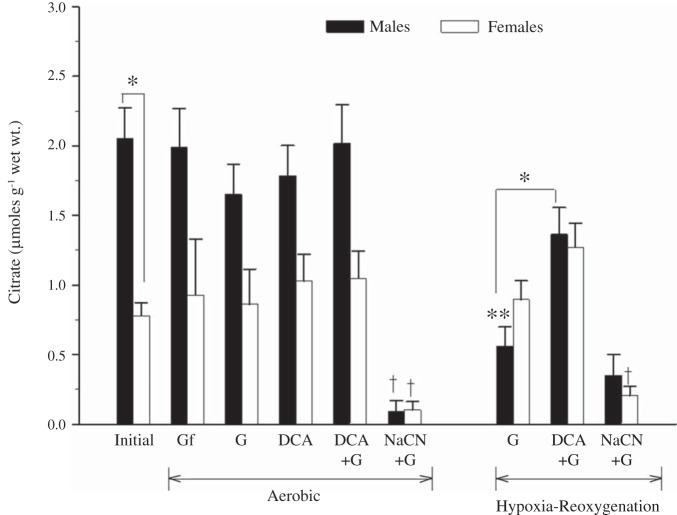
Cardiac tissue from female rainbow trout demonstrates a sex-specific preference for exogenous glucose and glycolysis, impaired Ca(2+) handling, and a greater tolerance for hypoxia and reoxygenation than cardiac tissue from male rainbow trout. We tested the hypothesis that dichloroacetate (DCA), an activator of pyruvate dehydrogenase, enhances cardiac energy metabolism and Ca(2+) handling in female preparations and provide cardioprotection for hypoxic male tissue. Ventricle strips from sexually immature fish with very low (male) and nondetectable (female) plasma sex steroids were electrically paced in oxygenated or hypoxic Ringer solution with or without 1 mM DCA. In the presence of 5 mM glucose, aerobic tissue from male trout could be paced at a higher frequency (1.79 vs. 1.36 Hz) with lower resting tension and less contractile dysfunction than female tissue. At 0.5 Hz, DCA selectively reduced resting tension below baseline values and lactate efflux by 75% in aerobic female ventricle strips. DCA improved the functional recovery of developed twitch force, reduced lactate efflux by 50%, and doubled citrate in male preparations after hypoxia-reoxygenation. Independent of female sex steroids, reduced myocardial pyruvate dehydrogenase activity and impaired carbohydrate oxidation might explain the higher lactate efflux, compromised function of the sarcoplasmic reticulum, and reduced mechanical performance of aerobic female tissue. Elevated oxidative metabolism and reduced glycolysis might also underlie the beneficial effects of DCA on the mechanical recovery of male cardiac tissue after hypoxia-reoxygenation. These results support the use of rainbow trout as an experimental model of sex differences of cardiovascular energetics and function, with the potential for modifying metabolic phenotypes and cardioprotection independent of sex steroids.
Keywords: cardiac; dichloroacetate; glucose; hypoxia; lactate; rainbow trout; sex differences.
Copyright © 2014 the American Physiological Society.
Figures
References
-
- Aho E, Vornanen M. Contractile properties of atrial and ventricular myocardium of the heart of rainbow Oncorhynchus mykiss: effects of thermal acclimation. J Exp Biol 202: 2663–2677, 1999. - PubMed
-
- Alves MG, Oliveira PJ, Carvalho RA. Substrate selection in hearts subjected to ischemia/reperfusion: role of cardioplegic solutions and gender. NMR Biomed 24: 1029–1037, 2011. - PubMed
-
- Apstein CS, Deckelbaum L, Hagopian L, Hood WB. Acute cardiac ischemia and reperfusion–contractility, relaxation, and glycolysis. Am J Physiol Heart Circ Physiol 235: H636–H648, 1978. - PubMed
-
- Arthur PG, Keen JE, Hochachka PW, Farrell AP. Metabolic state of the in situ perfused trout heart during severe hypoxia. Am J Physiol Regul Integr Comp Physiol 263: R798–R804, 1992. - PubMed
Publication types
MeSH terms
Substances
Grants and funding
LinkOut - more resources
Full Text Sources
Other Literature Sources
Miscellaneous
