


Effects of anxiety sensitivity on alcohol problems: evaluating chained mediation through generalized anxiety, depression and drinking motives
- PMID: 25220033
- PMCID: PMC4302006
- DOI: 10.1111/add.12739
Effects of anxiety sensitivity on alcohol problems: evaluating chained mediation through generalized anxiety, depression and drinking motives
Abstract
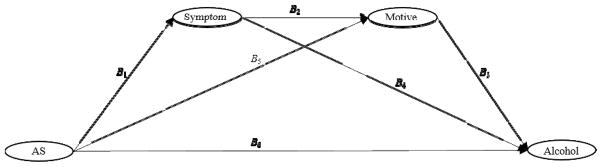
Aims: To test whether the relations between anxiety sensitivity (AS), a transdiagnostic risk factor, and alcohol problems are explained by chained mediation models, from AS through anxiety or depressive symptoms then drinking motives in an at-risk sample. It was hypothesized that AS would influence alcohol problems through generalized anxiety or depression symptoms and then through negatively reinforced drinking motives (i.e. drinking to cope with negative affect and drinking to conform).
Design: Cross-sectional single- and chained-mediation models were tested.
Setting: Self-report measures were completed in clinics at Florida State University and the University of Vermont, USA.
Participants: Participants consisted of 523 adult daily cigarette smokers [mean age = 37.23, standard deviation (SD) = 13.53; 48.6% female].
Measurements: As part of a larger battery of self-report measures, participants completed self-report measures of AS, generalized anxiety, depression, drinking motives and alcohol problems.
Findings: Chained mediation was found from AS to alcohol problems through generalized anxiety then through drinking to cope with negative affect [B = 0.04, 90% confidence interval (CI) = 0.004, 0.10)]. Chained mediation was also found from AS to alcohol problems through depression then through drinking to cope with negative affect (B = 0.11, 90% CI = 0.05, 0.21) and, separately, through socially motivated drinking (B = 0.05, 90% CI = 0.003, 0.11).
Conclusions: Anxiety sensitivity and alcohol problems are indirectly related through several intervening variables, such as through generalized anxiety or depression and then through drinking to cope with negative affect.
Keywords: Alcohol; anxiety sensitivity; chained mediation; depression; drinking motives; generalized anxiety.
© 2014 Society for the Study of Addiction.
Conflict of interest statement
Declaration of interest: There are no conflicts of interest.
Figures
References
-
- World Health Organization. Global status report on alcohol and health-2014. World Health Organization; 2014.
-
- Reiss S. Expectancy model of fear, anxiety, and panic. Clinical Psychology Review. 1991;11:141–153.
-
- Reiss S, McNally RJ. Expectancy model of fear. Theoretical Issues in Behavior Therapy. 1985:107–121.
-
- Kushner MG, Thuras P, Abrams K, Brekke M, Stritar L. Anxiety mediates the association between anxiety sensitivity and coping-related drinking motives in alcoholism treatment patients. Addictive Behaviors. 2001;26:869–885. - PubMed
-
- Schmidt NB, Buckner JD, Keough ME. Anxiety Sensitivity as a prospective predictor of alcohol Use Disorders. Behavior Modification. 2007;31:202–219. - PubMed
Publication types
MeSH terms
Grants and funding
LinkOut - more resources
Full Text Sources
Other Literature Sources
Medical
