


Distribution of fitness in populations of dengue viruses
- PMID: 25222471
- PMCID: PMC4164612
- DOI: 10.1371/journal.pone.0107264
Distribution of fitness in populations of dengue viruses
Abstract
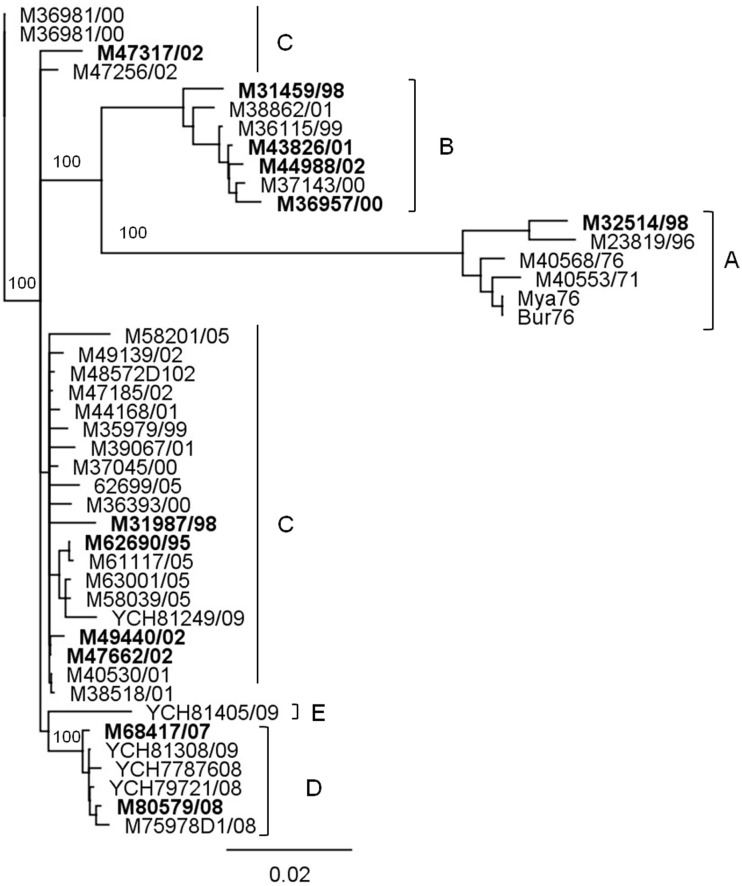
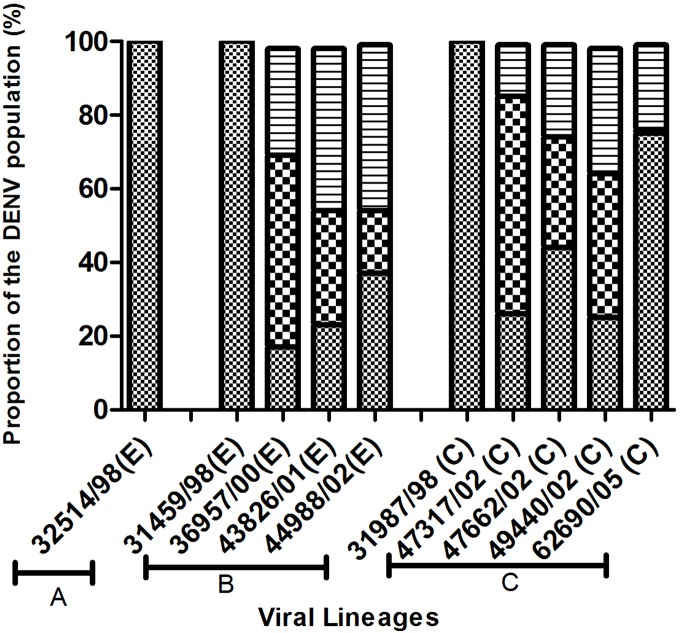
Genetically diverse RNA viruses like dengue viruses (DENVs) segregate into multiple, genetically distinct, lineages that temporally arise and disappear on a regular basis. Lineage turnover may occur through multiple processes such as, stochastic or due to variations in fitness. To determine the variation of fitness, we measured the distribution of fitness within DENV populations and correlated it with lineage extinction and replacement. The fitness of most members within a population proved lower than the aggregate fitness of populations from which they were drawn, but lineage replacement events were not associated with changes in the distribution of fitness. These data provide insights into variations in fitness of DENV populations, extending our understanding of the complexity between members of individual populations.
Conflict of interest statement
Figures
References
-
- Halstead SB (2007) Dengue. Lancet 370: 1644–1652. - PubMed
-
- WHO (2012) Dengue and severe dengue [Online]. World Health Organization: Available: http://www.who.int/mediacentre/factsheets/fs117/en/index.html Accessed 2012 Jan 1.
-
- Ooi E-E, Gubler DJ (2009) Global spread of epidemic dengue: the influence of environmental change. Future Virology 4: 571–580.
-
- Wilder-Smith A, Gubler DJ (2008) Geographic expansion of dengue: the impact of international travel. Medical Clinics of North America 92: 1377–1390. - PubMed
-
- Wilder-Smith A, Ooi EE, Vasudevan SG, Gubler DJ (2010) Update on dengue: epidemiology, virus evolution, antiviral drugs, and vaccine development. Current Infectious Disease Reports 12: 157–164. - PubMed
Publication types
MeSH terms
Substances
LinkOut - more resources
Full Text Sources
Other Literature Sources
