


Extracellular high-mobility group box 1 protein (HMGB1) as a mediator of persistent pain
- PMID: 25222915
- PMCID: PMC4365060
- DOI: 10.2119/molmed.2014.00176
Extracellular high-mobility group box 1 protein (HMGB1) as a mediator of persistent pain
Abstract
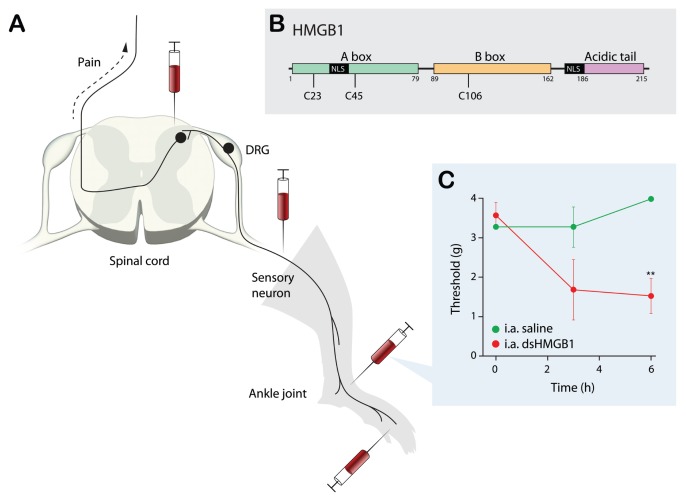
Although originally described as a highly conserved nuclear protein, high-mobility group box 1 protein (HMGB1) has emerged as a danger-associated molecular pattern molecule protein (DAMP) and is a mediator of innate and specific immune responses. HMGB1 is passively or actively released in response to infection, injury and cellular stress, providing chemotactic and cytokine-like functions in the extracellular environment, where it interacts with receptors such as receptor for advanced glycation end products (RAGE) and several Toll-like receptors (TLRs). Although HMGB1 was first revealed as a key mediator of sepsis, it also contributes to a number of other conditions and disease processes. Chronic pain arises as a direct consequence of injury, inflammation or diseases affecting the somatosensory system and can be devastating for the affected patients. Emerging data indicate that HMGB1 is also involved in the pathology of persistent pain. Here, we give an overview of HMGB1 as a proinflammatory mediator, focusing particularly on the role of HMGB1 in the induction and maintenance of hypersensitivity in experimental models of pain and discuss the therapeutic potential of targeting HMGB1 in conditions of chronic pain.
Figures
References
-
- Ueda T, Yoshida M. HMGB proteins and transcriptional regulation. Biochim Biophys Acta. 2010;1799:114–8. - PubMed
-
- Harris HE, Andersson U, Pisetsky DS. HMGB1: a multifunctional alarmin driving auto-immune and inflammatory disease. Nat Rev Rheumatol. 2012;8:195–202. - PubMed
-
- Park JS, et al. Involvement of toll-like receptors 2 and 4 in cellular activation by high mobility group box 1 protein. J Biol Chem. 2004;279:7370–7. - PubMed
-
- van Beijnum JR, Buurman WA, Griffioen AW. Convergence and amplification of toll-like receptor (TLR) and receptor for advanced glycation end products (RAGE) signaling pathways via high mobility group B1 (HMGB1) Angiogenesis. 2008;11:91–9. - PubMed
Publication types
MeSH terms
Substances
LinkOut - more resources
Full Text Sources
Other Literature Sources
Medical
