


The contribution of genetic variants to disease depends on the ruler
- PMID: 25223781
- PMCID: PMC4412738
- DOI: 10.1038/nrg3786
The contribution of genetic variants to disease depends on the ruler
Abstract
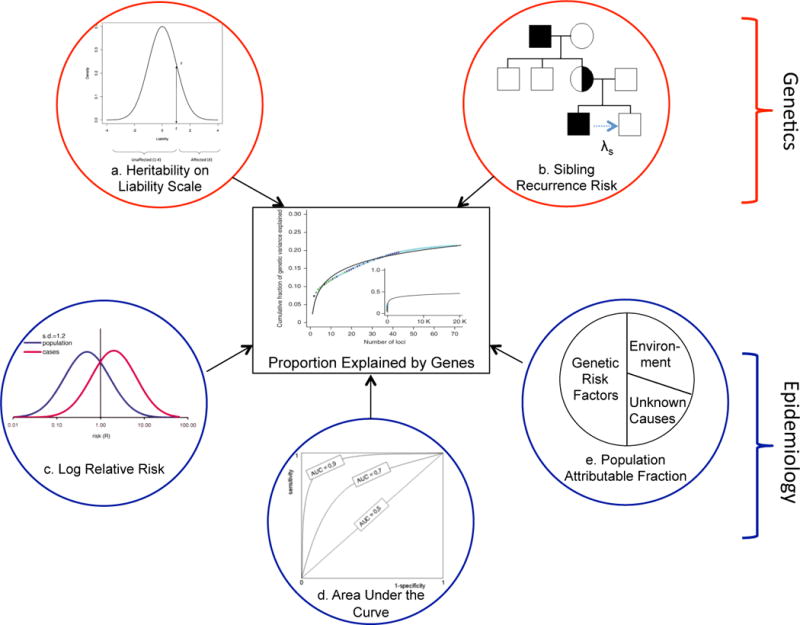
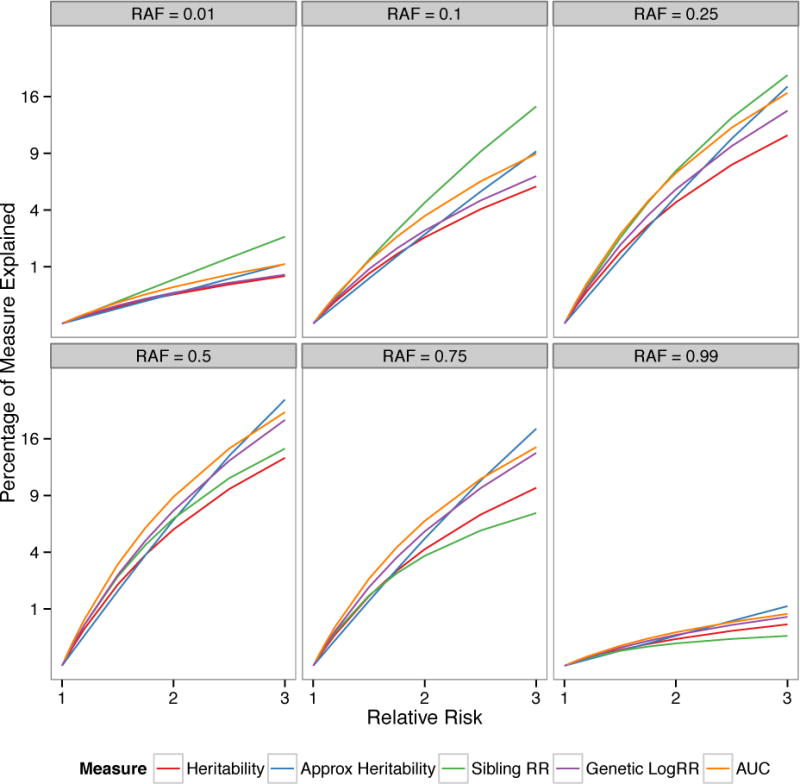
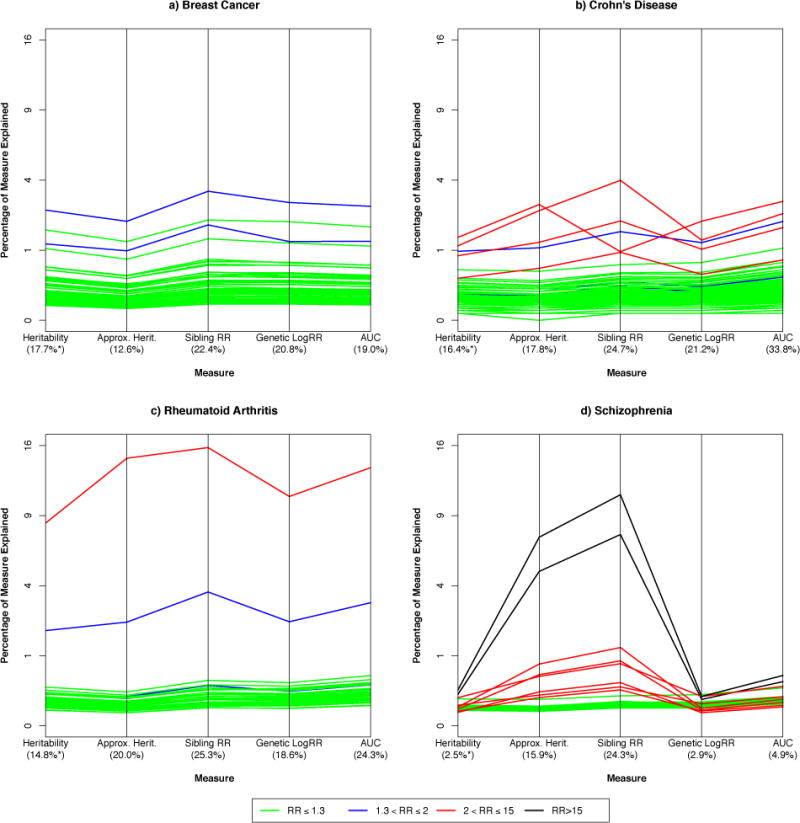
Our understanding of the genetic basis of disease has evolved from descriptions of overall heritability or familiality to the identification of large numbers of risk loci. One can quantify the impact of such loci on disease using a plethora of measures, which can guide future research decisions. However, different measures can attribute varying degrees of importance to a variant. In this Analysis, we consider and contrast the most commonly used measures - specifically, the heritability of disease liability, approximate heritability, sibling recurrence risk, overall genetic variance using a logarithmic relative risk scale, the area under the receiver-operating curve for risk prediction and the population attributable fraction - and give guidelines for their use that should be explicitly considered when assessing the contribution of genetic variants to disease.
Conflict of interest statement
The authors declare no competing interests.
Figures
References
Explores the relationship between heritability on disease and liability scales
A formal derivation of the relationship between disease risk in relatives and heritability plus a thoughtful exploration of scenarios and caveats
-
- Falconer D, Mackay TF. Introduction to Quantitative Genetics. Pearson Education Ltd; Harlow, England: 1996.
-
- Risch NJ. Searching for genetic determinants in the new millennium. Nature. 2000;405:847–56. - PubMed
Explains variance explained by a single locus on the disease and liability scale
A clear presentation of the log relative risk model
-
- Pharoah PD, Antoniou AC, Easton DF, Ponder BA. Polygenes, risk prediction, and targeted prevention of breast cancer. N Engl J Med. 2008;358:2796–803. - PubMed
-
- Pharoah PD, Day NE, Duffy S, Easton DF, Ponder BA. Family history and the risk of breast cancer: a systematic review and meta-analysis. Int J Cancer. 1997;71:800–9. - PubMed
Considers the limitations of the population attributable fraction
-
- Wray NR, et al. Polygenic methods and their application to psychiatric traits. Journal of Childhood Psychology and Psychiatry. 2014 - PubMed
Utilises variance explained by loci and also considers complications of age-related risk
Publication types
MeSH terms
Grants and funding
LinkOut - more resources
Full Text Sources
Other Literature Sources
Medical
