Review
. 2015 Feb;43(2):376-87.
doi: 10.1007/s10439-014-1117-2. Epub 2014 Sep 16.

A systems view of risk factors for knee osteoarthritis reveals insights into the pathogenesis of the disease

Affiliations
Review

A systems view of risk factors for knee osteoarthritis reveals insights into the pathogenesis of the disease

Thomas P Andriacchi et al. Ann Biomed Eng. 2015 Feb.

Abstract

Early detection of osteoarthritis (OA) remains a critical yet unsolved multifaceted problem. To address the multifaceted nature of OA a systems model was developed to consolidate a number of observations on the biological, mechanical and structural components of OA and identify features common to the primary risk factors for OA (aging, obesity and joint trauma) that are present prior to the development of clinical OA. This analysis supports a unified view of the pathogenesis of OA such that the risk for developing OA emerges when one of the components of the disease (e.g., mechanical) becomes abnormal, and it is the interaction with the other components (e.g., biological and/or structural) that influences the ultimate convergence to cartilage breakdown and progression to clinical OA. The model, applied in a stimulus-response format, demonstrated that a mechanical stimulus at baseline can enhance the sensitivity of a biomarker to predict cartilage thinning in a 5 year follow-up in patients with knee OA. The systems approach provides new insight into the pathogenesis of the disease and offers the basis for developing multidisciplinary studies to address early detection and treatment at a stage in the disease where disease modification has the greatest potential for a successful outcome.


Figures
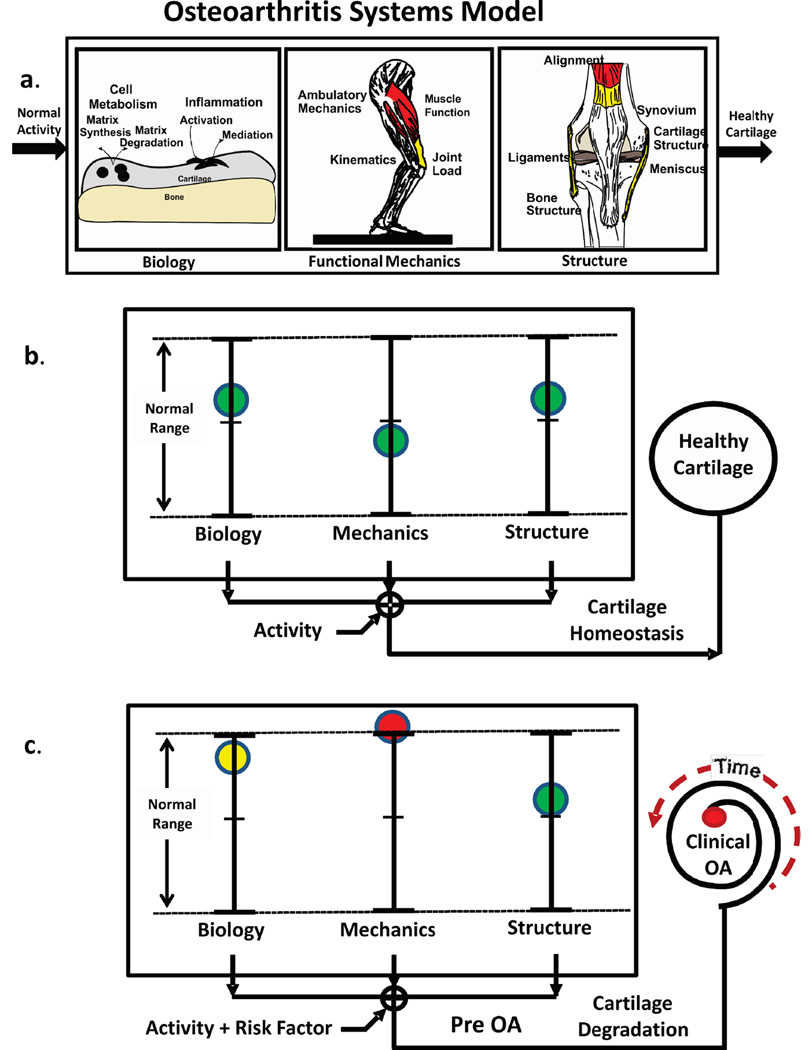
Figure 1
Figure 1
The OA systems model (a) considers cartilage health to be dependent on the integrated behavior of biological, mechanical and structural components where healthy homeostasis (b) is maintained when each of the components is within normal ranges during normal activity. Introducing a “Risk Factor” moves the system out of homeostasis (c). For example (c), if the “ Mechanics” component (red) moves out of normal range then cartilage will begin to degrade (Pre OA) and the “Time” to develop “Clinical OA” will depend the state of the other components.
Figure 2
Figure 2
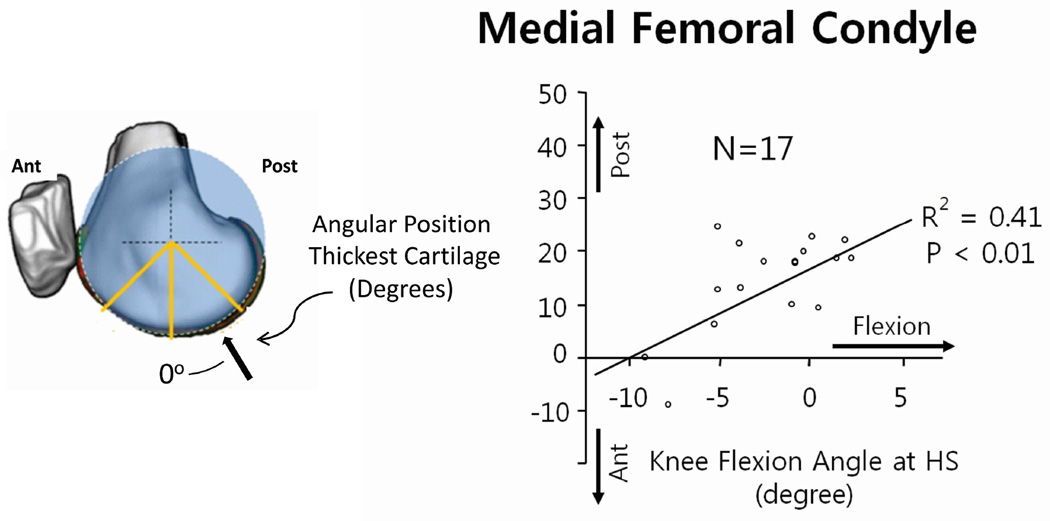
The interaction between gait mechanics and cartilage structure was demonstrated in a recent study that suggests variations in the patterns of normal cartilage thickness are influenced by knee kinematics during walking. Specifically the location of the thickest cartilage on the medial femoral condyle was associated with the angle of knee flexion at heel strike.
Figure 3
Figure 3
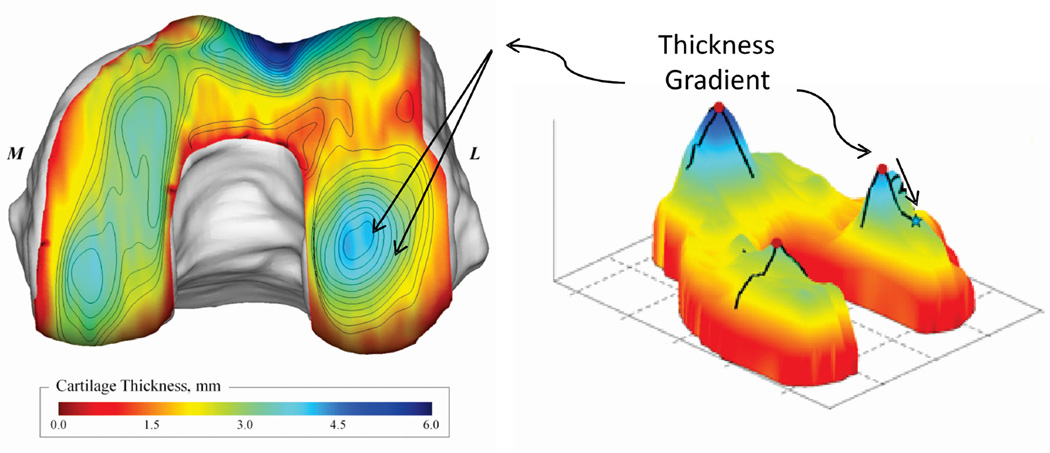
The individual patterns of cartilage thickness distribution can influence the sensitivity of cartilage health to kinematic changes since relatively small kinematic changes can move contact to substantially different regions. The gradients in cartilage thickness distribution can be relatively large in the load bearing regions as illustrated by the 2d projection on the right
Figure 4
Figure 4
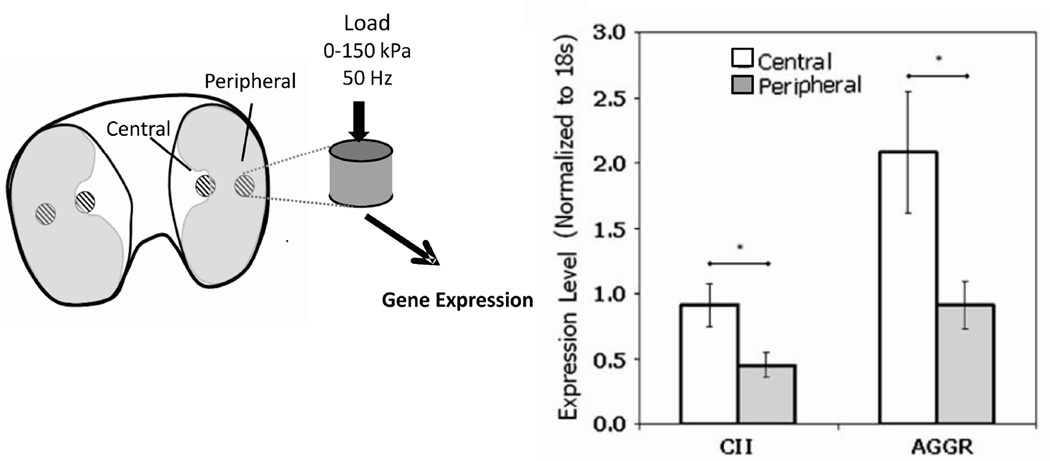
Regional differences in the biological response to mechanical load are consistent with the thickness variation shown in Figure 3 and support the interpretation that kinematic changes can load cartilage in regions that cannot respond to a new loading condition.
Figure 5
Figure 5
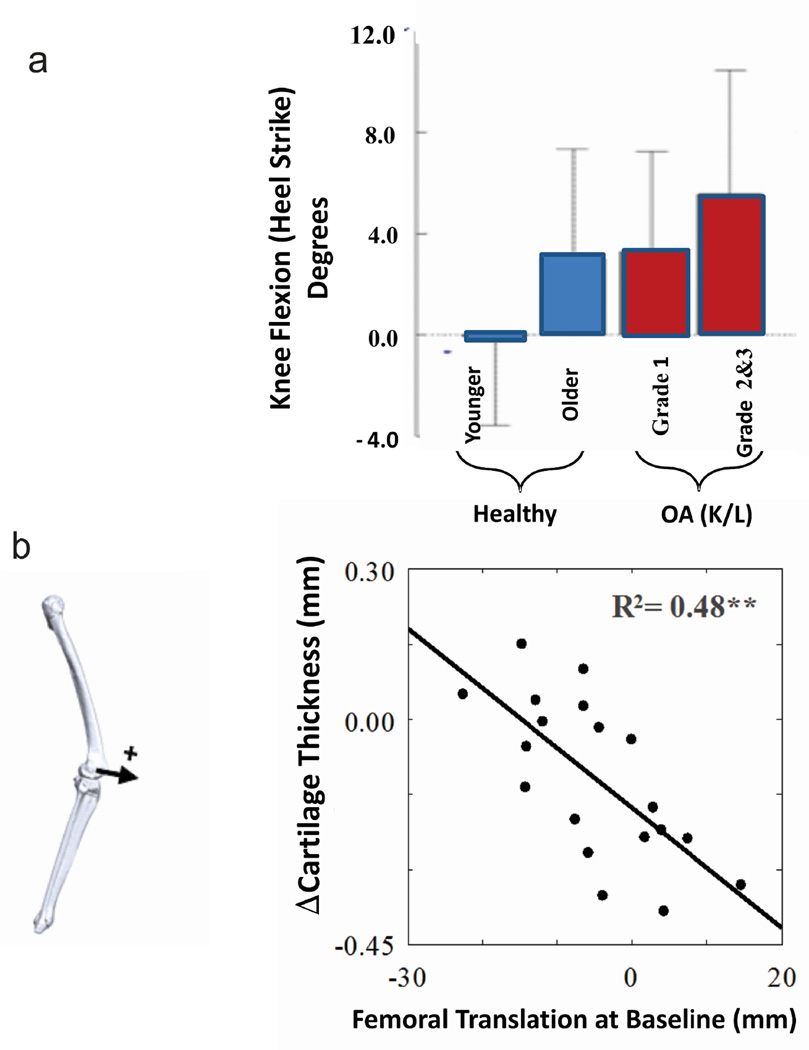
Age related changes in kinematics can influence the prospective cartilage changes. (a) Kinematic changes have been reported to progressively increase from a healthy younger population (29±4 yrs) to a healthy older population (59±9 yrs), and were even more pronounced in patients with moderate and severe OA relative to the younger asymptomatic population. The kinematic differences occurred at heel strike. (b) The AP position of the femur during walking at baseline was correlated with a reduction in cartilage thickness at a five year follow-up for patients with medial compartment knee OA. These data suggest that patients with a more anterior position at heel strike had greater loss of thickness at the 5 year follow-up.
Figure 6
Figure 6
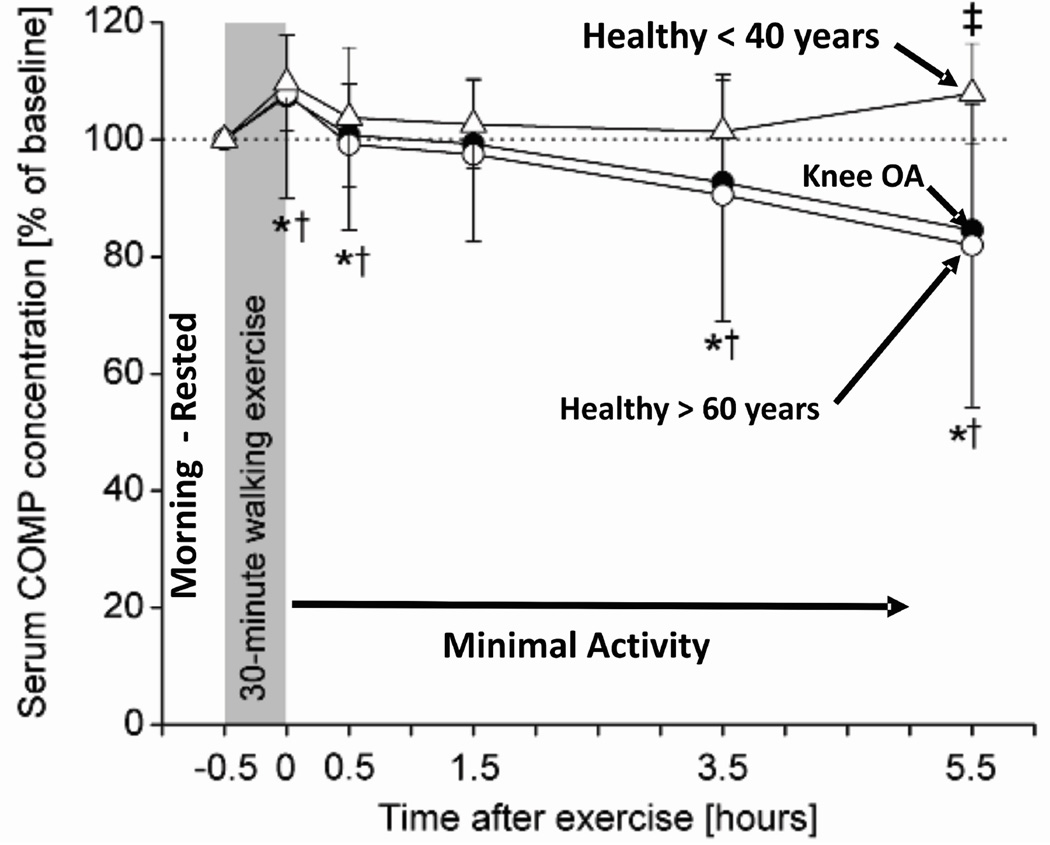
The importance of considering the system interaction between biology and mechanics is illustrated by combining the results of two studies, that show serum concentrations of cartilage oligomeric matrix protein (COMP) respond to a mechanical stimulus (30 minute walk) in older healthy subjects in a manner similar to that seen in patients with knee OA, whereas both groups differ from young healthy normal subjects. Specifically, 3.5 hours after a mechanical stimulus, the differences in serum concentration of COMP became significant between younger healthy subjects and both older healthy subjects and patients with knee OA.
Figure 7
Figure 7
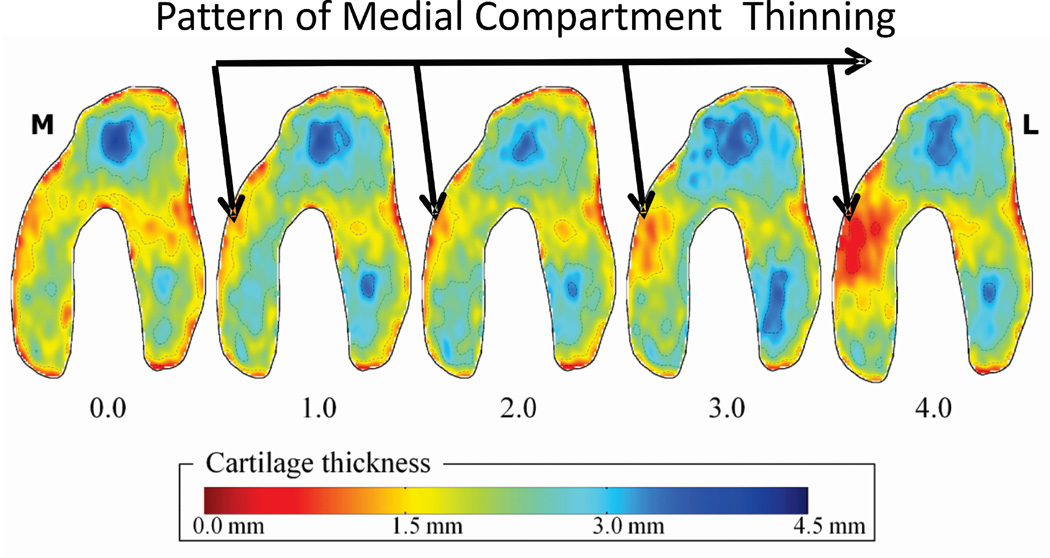
The potential for enhancing the sensitivity to detecting cartilage changes is illustrated in a recent study where a pattern analysis of cartilage thickness has quantified patterns of thickness change in patients with medial compartment knee OA for conditions ranging from mild OA (1.0) to end stage disease (4.0). The disease was shown to progress from the outer anterior regions though the load bearing regions of the medial compartment.
Figure 8
Figure 8
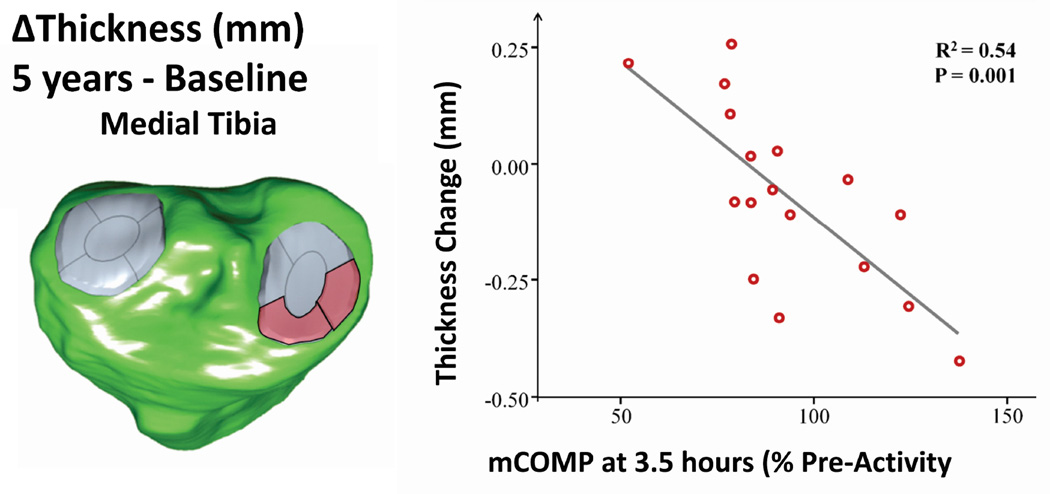
The advantage of integrating the biological, mechanical and structural elements in a unified system is illustrated in a recent study. The systems model was applied by combing a mechanical stimulus (30 min walk) with a biological response (change in COMP serum concentration), where the structural component was cartilage thickness. The results indicate that the change in anterior medial cartilage thickness (red) over 5 years was associated with the change in COMP in response to a mechanical stimulus (mCOMP).

References

    1. Agency for Healthcare Research and Quality. National and regional statistics in the national inpatient sample (2004–2006) Agency for Healthcare Research and Quality. 2006
    1. Andriacchi T, Osteoarthritis P. Probing knee OA as a system responding to a stimulus. Nat Rev Rheumatol. 2012 Apr;8(7):371–372. - PubMed
    1. Andriacchi TP, Koo S, Scanlan SF. Gait mechanics influence healthy cartilage morphology and osteoarthritis of the knee. J Bone Joint Surg Am. 2009 Feb;91(Suppl 1):95–101. - PMC - PubMed
    1. Andriacchi TP, Muendermann A, Smith RL, Alexander EJ, Dyrby CO, Koo S. A framework for the in vivo pathomechanics of osteoarthritis at the knee. Ann Biomed Eng. 2004 Mar;32(3):447–457. Review. - PubMed
    1. Berenbaum F. Osteoarthritis as an inflammatory disease (osteoarthritis is not osteoarthrosis!) Osteoarthritis Cartilage. 2013 Jan;21(1):16–21. Review. - PubMed

LinkOut - more resources