


Single-molecule investigation of G-quadruplex folds of the human telomere sequence in a protein nanocavity
- PMID: 25225404
- PMCID: PMC4209999
- DOI: 10.1073/pnas.1415944111
Single-molecule investigation of G-quadruplex folds of the human telomere sequence in a protein nanocavity
Abstract
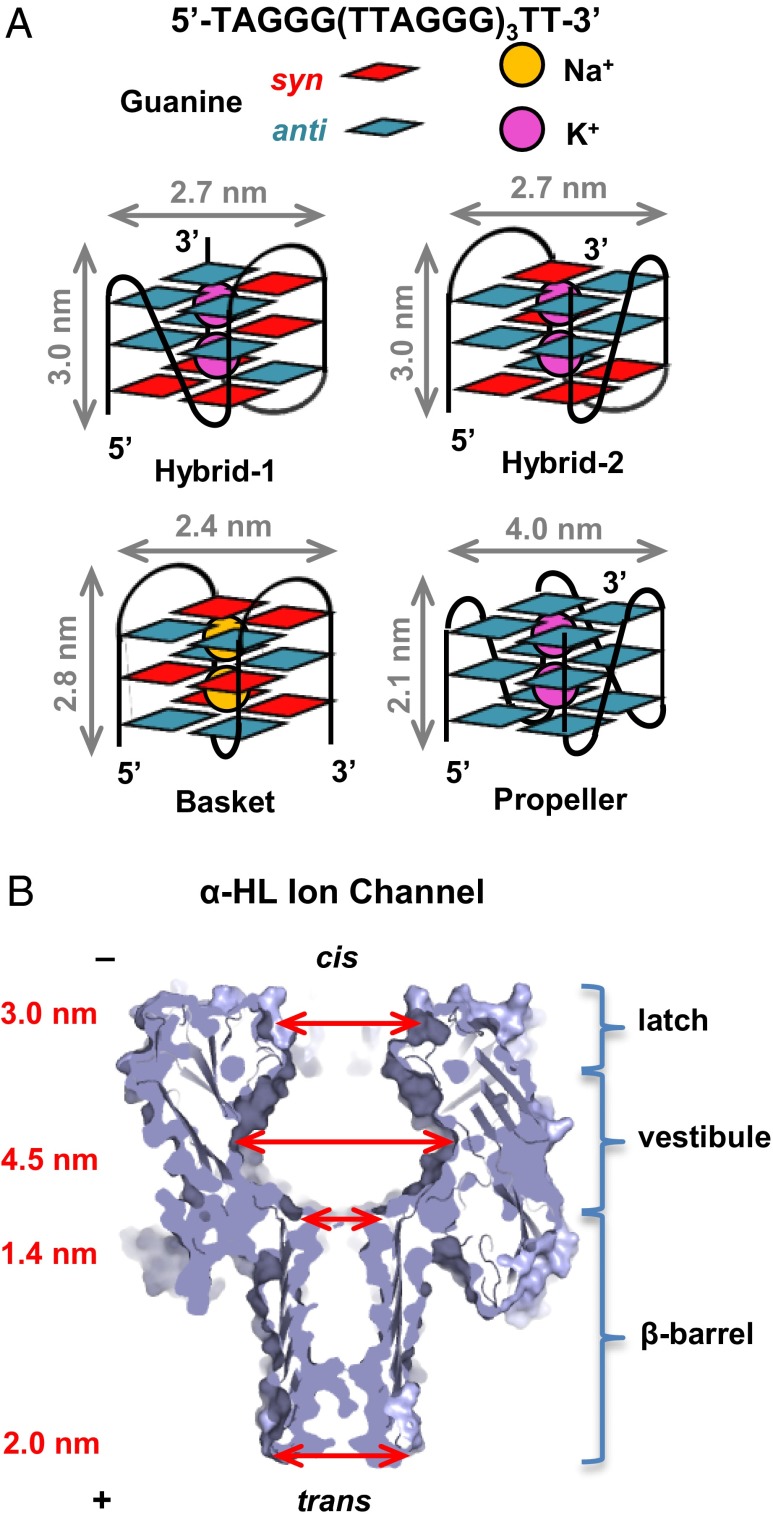
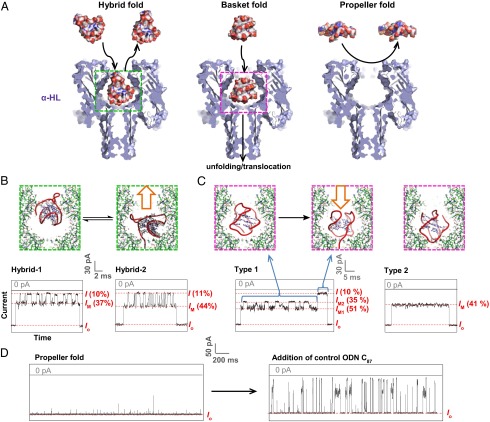
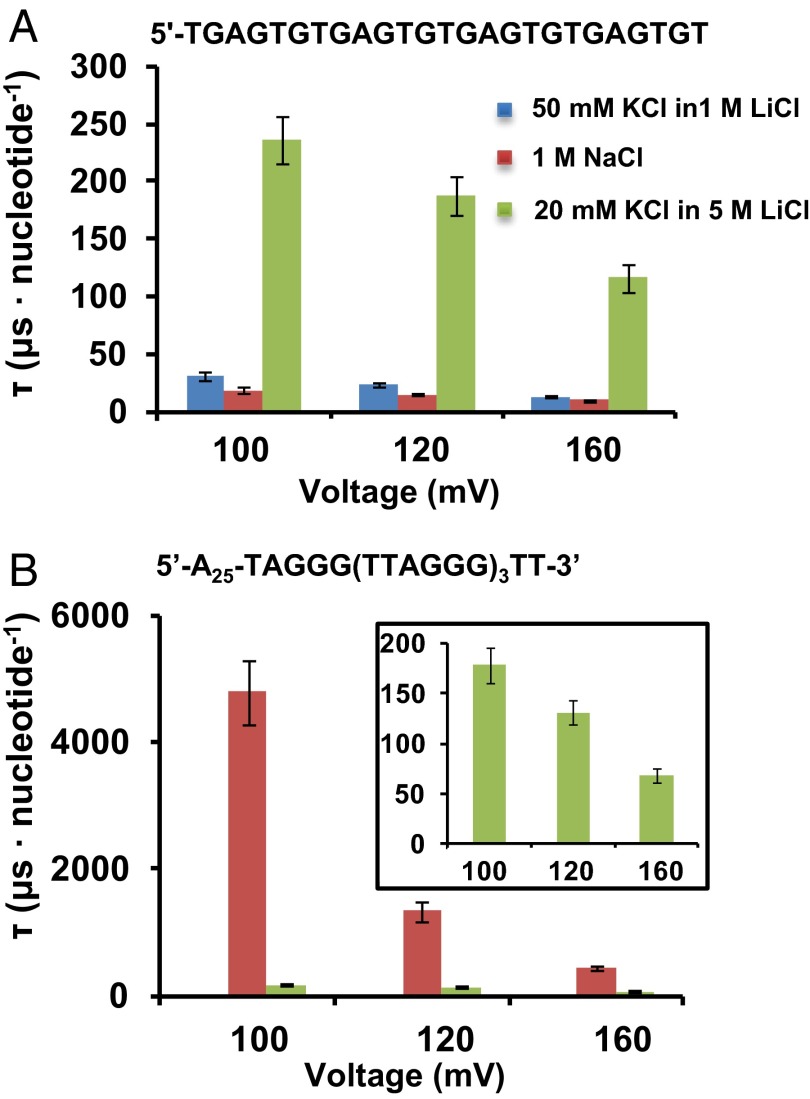
Human telomeric DNA consists of tandem repeats of the sequence 5'-TTAGGG-3' that can fold into various G-quadruplexes, including the hybrid, basket, and propeller folds. In this report, we demonstrate use of the α-hemolysin ion channel to analyze these subtle topological changes at a nanometer scale by providing structure-dependent electrical signatures through DNA-protein interactions. Whereas the dimensions of hybrid and basket folds allowed them to enter the protein vestibule, the propeller fold exceeds the size of the latch region, producing only brief collisions. After attaching a 25-mer poly-2'-deoxyadenosine extension to these structures, unraveling kinetics also were evaluated. Both the locations where the unfolding processes occur and the molecular shapes of the G-quadruplexes play important roles in determining their unfolding profiles. These results provide insights into the application of α-hemolysin as a molecular sieve to differentiate nanostructures as well as the potential technical hurdles DNA secondary structures may present to nanopore technology.
Keywords: single-molecule detection; α-hemolysin nanopore.
Conflict of interest statement
The authors declare no conflict of interest.
Figures

References
-
- Parkinson GN, Lee MPH, Neidle S. Crystal structure of parallel quadruplexes from human telomeric DNA. Nature. 2002;417(6891):876–880. - PubMed
-
- Xu Y. Chemistry in human telomere biology: Structure, function and targeting of telomere DNA/RNA. Chem Soc Rev. 2011;40(5):2719–2740. - PubMed
-
- Song L, et al. Structure of staphylococcal α-hemolysin, a heptameric transmembrane pore. Science. 1996;274(5294):1859–1866. - PubMed
-
- Wang Y, Patel DJ. Solution structure of the human telomeric repeat d[AG3(T2AG3)3] G-tetraplex. Structure. 1993;1(4):263–282. - PubMed
Publication types
MeSH terms
Substances
Grants and funding
LinkOut - more resources
Full Text Sources
Other Literature Sources
Miscellaneous
