


Pulque production from fermented agave sap as a dietary supplement in Prehispanic Mesoamerica
- PMID: 25225408
- PMCID: PMC4191797
- DOI: 10.1073/pnas.1408339111
Pulque production from fermented agave sap as a dietary supplement in Prehispanic Mesoamerica
Abstract
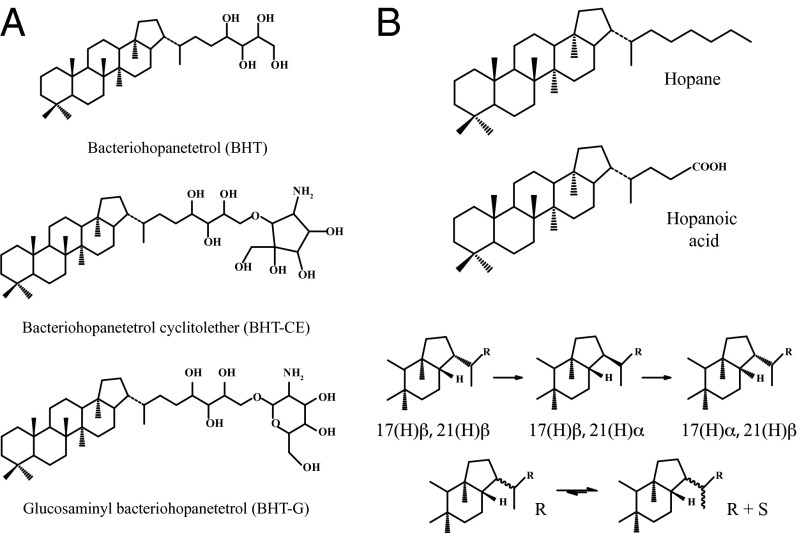
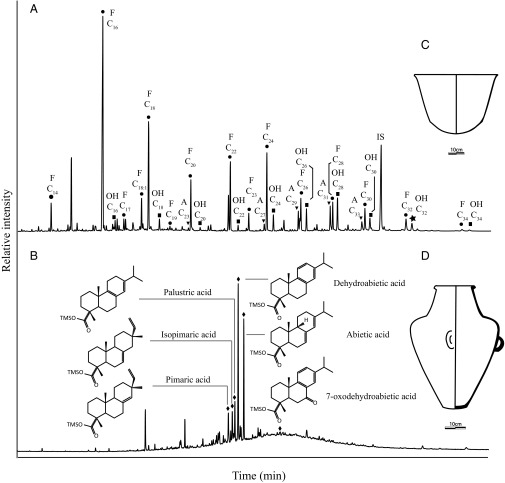
Although in modern societies fermented beverages are associated with socializing, celebration, and ritual, in ancient times they were also importa`nt sources of essential nutrients and potable water. In Mesoamerica, pulque, an alcoholic beverage produced from the fermented sap of several species of maguey plants (Agavaceae; Fig. 1) is hypothesized to have been used as a dietary supplement and risk-buffering food in ancient Teotihuacan (150 B.C. to A.D. 650). Although direct archaeological evidence of pulque production is lacking, organic residue analysis of pottery vessels offers a new avenue of investigation. However, the chemical components of alcoholic beverages are water-soluble, greatly limiting their survival over archaeological timescales compared with hydrophobic lipids widely preserved in food residues. Hence, we apply a novel lipid biomarker approach that considers detection of bacteriohopanoids derived from the ethanol-producing bacterium Zymomonas mobilis for identifying pulque production/consumption in pottery vessels. Gas chromatography-mass spectrometry selected ion monitoring (m/z 191) of lipid extracts of >300 potsherds revealed characteristic bacteriohopanoid distributions in a subset of 14 potsherds. This hopanoid biomarker approach offers a new means of identifying commonly occurring bacterially fermented alcoholic beverages worldwide, including palm wine, beer, cider, perry, and other plant sap- or fruit-derived beverages [Swings J, De Ley J (1977) Bacteriol Rev 41(1):1-46].
Keywords: Mexico; hopanes; pine resins.
Conflict of interest statement
The authors declare no conflict of interest.
Figures



References
-
- Cowgill GL. Teotihuacan as an Urban Place. In: Mastache AG, Cobean RH, García Cook A, Hirth KG, editors. El Urbanismo en Mesoamérica (Urbanism in Mesoamerica) Vol 2. University Park, PA: Pennsylvania State University; 2008. pp. 85–112.
-
- Sanders WT, Parsons JR, Santley RS. The Basin of Mexico. Ecological Processes in the Evolution of a Civilization. 1st Ed. New York: Academic Press; 1979. pp. 233–236.
-
- Santley RS, Rose EK. Diet, nutrition and population dynamics in the Basin of Mexico. World Archaeol. 1979;11(2):185–207. - PubMed
-
- McClung de Tapia E. 1987. Patrones de subsistencia urbana en Teotihuacan. Teotihuacan: Nuevos Datos, Nuevas Síntesis, Nuevos Problemas, eds McClung de Tapia E, Rattray EC (Instituto de Investigaciones Antropológicas, Universidad Nacional Autónoma de México, Mexico D.F., Mexico), pp 57–74.
-
- McClung de Tapia E, Martínez Yrñizar D, Ibarra Morales E, Adriano Morán C. Los Orígenes Prehispánicos de una Tradición Alimentaria en la Cuenca de México. Ann Antropol. 2014;48(1):97–121.
Publication types
MeSH terms
Substances
LinkOut - more resources
Full Text Sources
Other Literature Sources
Medical
Research Materials
Miscellaneous
