


Bacterial differentiation, development, and disease: mechanisms for survival
- PMID: 25228010
- PMCID: PMC4227932
- DOI: 10.1111/1574-6968.12602
Bacterial differentiation, development, and disease: mechanisms for survival
Abstract
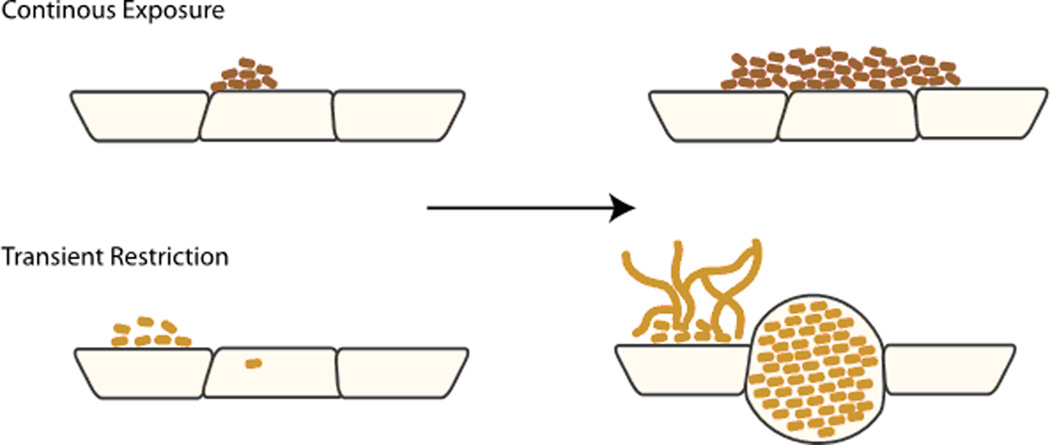
Bacteria have the exquisite ability to maintain a precise diameter, cell length, and shape. The dimensions of bacteria size and shape are a classical metric in the distinction of bacterial species. Much of what we know about the particular morphology of any given species is the result of investigations of planktonic cultures. As we explore deeper into the natural habitats of bacteria, it is increasingly clear that bacteria can alter their morphology in response to the environment in which they reside. Specific morphologies are also becoming recognized as advantageous for survival in hostile environments. This is of particular importance in the context of both colonization and infection in the host. There are multiple examples of bacterial pathogens that use morphological changes as a mechanism for evasion of host immune responses and continued persistence. This review will focus on two systems where specific morphological changes are essential for persistence in animal models of human disease. We will also offer insight into the mechanism underlying the morphological changes and how these morphotypes aid in persistence. Additional examples of morphological changes associated with survival will be presented.
Keywords: morphology; otitis media; persistence; urinary tract infection.
© 2014 Federation of European Microbiological Societies. Published by John Wiley & Sons Ltd. All rights reserved.
Conflict of interest statement
The authors have no conflict of interest to declare.
Figures

References
Publication types
MeSH terms
Grants and funding
LinkOut - more resources
Full Text Sources
Other Literature Sources
Medical
Research Materials
