


High plasma erythropoietin levels are associated with prolonged coma duration and increased mortality in children with cerebral malaria
- PMID: 25228706
- PMCID: PMC4296127
- DOI: 10.1093/cid/ciu735
High plasma erythropoietin levels are associated with prolonged coma duration and increased mortality in children with cerebral malaria
Abstract
Background: Elevated endogenous plasma erythropoietin (EPO) levels have been associated with protection from acute neurologic deficits in Kenyan children with cerebral malaria (CM). Based on these findings and animal studies, clinical trials of recombinant human EPO (rHuEPO) have been started in children with CM. Recent clinical trials in adults with acute ischemic stroke have demonstrated increased mortality with rHuEPO treatment. We conducted a study in children with CM to assess the relationship of endogenous plasma and cerebrospinal fluid (CSF) EPO levels with mortality and acute and long-term neurologic outcomes.
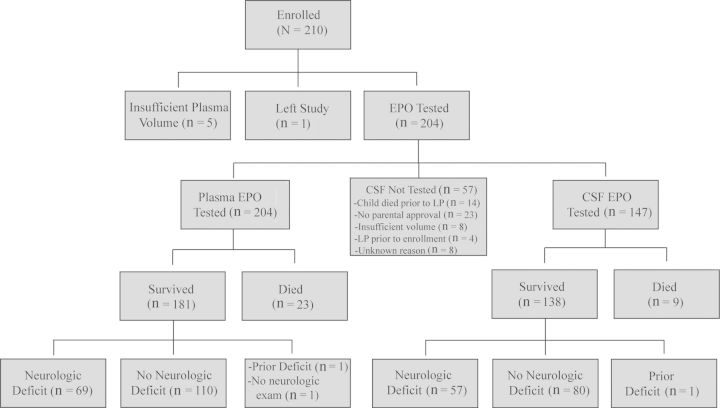
Methods: A total of 210 children between 18 months and 12 years of age with a diagnosis of CM, were enrolled at Mulago Hospital, Kampala, Uganda. Plasma (n = 204) and CSF (n = 147) EPO levels at admission were measured by radioimmunoassay and compared with mortality and neurologic outcomes.
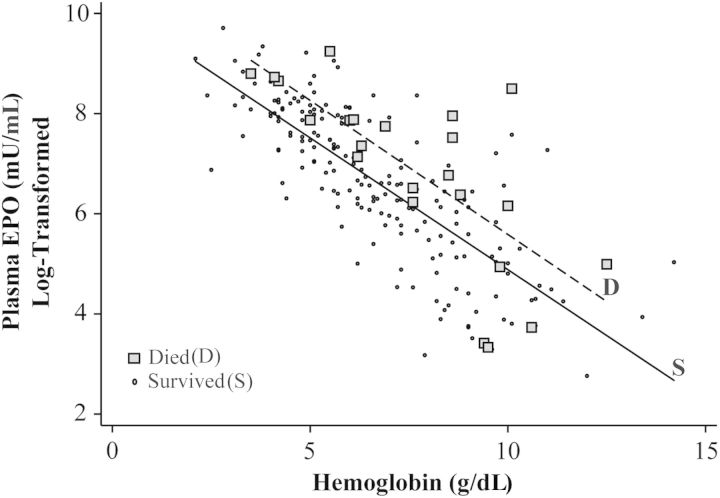
Results: After adjustment for age and hemoglobin level, a 1-natural-log increase in plasma EPO level was associated with a 1.74-fold increase in mortality (95% confidence interval, 1.09-2.77, P = .02). Plasma and CSF EPO levels also correlated positively with coma duration (P = .05 and P = .02, respectively). Plasma and CSF EPO levels did not differ in children with vs those without acute or long-term neurologic deficits. Plasma EPO levels correlated positively with markers of endothelial and platelet activation and histidine-rich protein-2 levels, but remained associated with mortality after adjustment for these factors.
Conclusions: High endogenous plasma EPO levels are associated with prolonged coma duration and increased mortality in children >18 months of age with CM.
Keywords: cerebral malaria; erythropoietin; mortality; neurologic deficits.
© The Author 2014. Published by Oxford University Press on behalf of the Infectious Diseases Society of America. All rights reserved. For Permissions, please e-mail: journals.permissions@oup.com.
Figures
Comment in
-
Reply to Eisenhut.Clin Infect Dis. 2015 Apr 1;60(7):1138-9. doi: 10.1093/cid/ciu1151. Epub 2014 Dec 19. Clin Infect Dis. 2015. PMID: 25527649 No abstract available.
-
Severe hemolysis as a potential contributing factor in the pathophysiology of cerebral malaria.Clin Infect Dis. 2015 Apr 1;60(7):1138. doi: 10.1093/cid/ciu1149. Epub 2014 Dec 19. Clin Infect Dis. 2015. PMID: 25527655 No abstract available.
References
-
- Murphy SC, Breman JG. Gaps in the childhood malaria burden in Africa: cerebral malaria, neurological sequelae, anemia, respiratory distress, hypoglycemia, and complications of pregnancy. Am J Trop Med Hyg. 2001;64(1–2 suppl):57–67. - PubMed
Publication types
MeSH terms
Substances
Grants and funding
LinkOut - more resources
Full Text Sources
Other Literature Sources
Medical
Research Materials
