


Paroxysmal nocturnal hemoglobinuria
- PMID: 25237200
- PMCID: PMC4215311
- DOI: 10.1182/blood-2014-02-522128
Paroxysmal nocturnal hemoglobinuria
Abstract
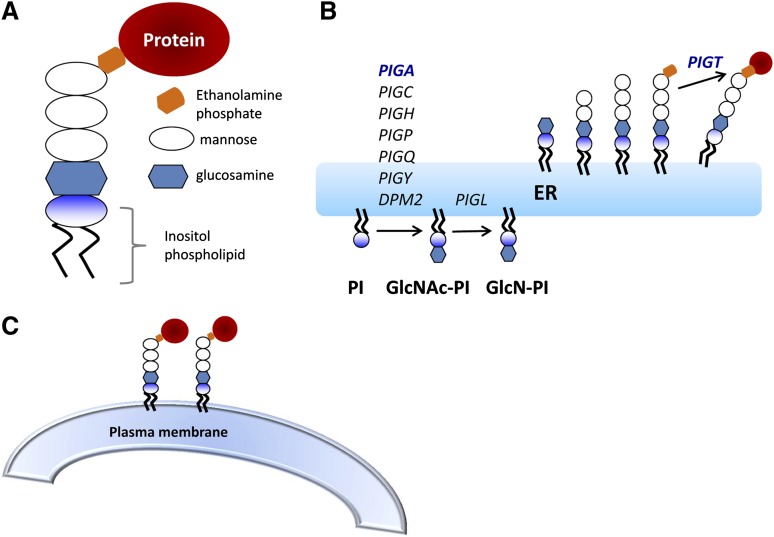
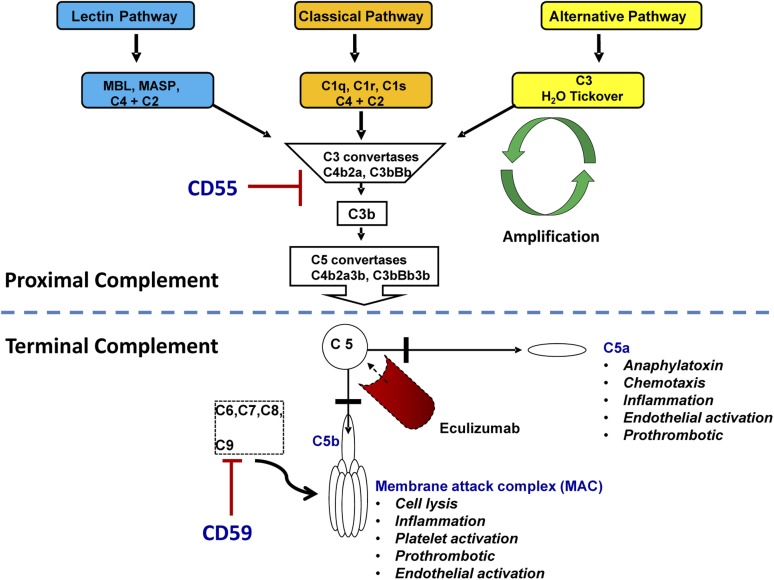
Paroxysmal nocturnal hemoglobinuria (PNH) is a rare bone marrow failure disorder that manifests with hemolytic anemia, thrombosis, and peripheral blood cytopenias. The absence of two glycosylphosphatidylinositol (GPI)-anchored proteins, CD55 and CD59, leads to uncontrolled complement activation that accounts for hemolysis and other PNH manifestations. GPI anchor protein deficiency is almost always due to somatic mutations in phosphatidylinositol glycan class A (PIGA), a gene involved in the first step of GPI anchor biosynthesis; however, alternative mutations that cause PNH have recently been discovered. In addition, hypomorphic germ-line PIGA mutations that do not cause PNH have been shown to be responsible for a condition known as multiple congenital anomalies-hypotonia-seizures syndrome 2. Eculizumab, a first-in-class monoclonal antibody that inhibits terminal complement, is the treatment of choice for patients with severe manifestations of PNH. Bone marrow transplantation remains the only cure for PNH but should be reserved for patients with suboptimal response to eculizumab.
© 2014 by The American Society of Hematology.
Figures
References
-
- Brodsky RA. Narrative review: paroxysmal nocturnal hemoglobinuria: the physiology of complement-related hemolytic anemia. Ann Intern Med. 2008;148(8):587–595. - PubMed
-
- Parker CJ. Historical aspects of paroxysmal nocturnal haemoglobinuria: ‘defining the disease’. Br J Haematol. 2002;117(1):3–22. - PubMed
-
- Socié G, Mary JY, de Gramont A, et al. French Society of Haematology. Paroxysmal nocturnal haemoglobinuria: long-term follow-up and prognostic factors. Lancet. 1996;348(9027):573–577. - PubMed
-
- Nishimura J, Kanakura Y, Ware RE, et al. Clinical course and flow cytometric analysis of paroxysmal nocturnal hemoglobinuria in the United States and Japan. Medicine (Baltimore) 2004;83(3):193–207. - PubMed
-
- Strubing P. Paroxysmale haemoglobinurie. Dtsch Med Wochenschr. 1882;8:1–16.
Publication types
MeSH terms
Substances
Grants and funding
LinkOut - more resources
Full Text Sources
Other Literature Sources
Miscellaneous
