


An automated telephone nutrition support system for Spanish-speaking patients with diabetes
- PMID: 25239122
- PMCID: PMC4455455
- DOI: 10.1177/1932296814550186
An automated telephone nutrition support system for Spanish-speaking patients with diabetes
Abstract
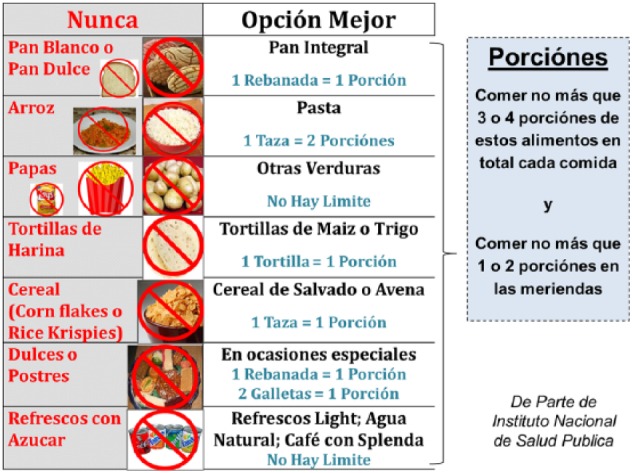
In the United States, Spanish-speaking patients with diabetes often receive inadequate dietary counseling. Providing language and culture-concordant dietary counseling on an ongoing basis is critical to diabetes self-care. To determine if automated telephone nutrition support (ATNS) counseling could help patients improve glycemic control by duplicating a successful pilot in Mexico in a Spanish-speaking population in Oakland, California. A prospective randomized open-label trial with blinded endpoint assessment (PROBE) was performed. The participants were seventy-five adult patients with diabetes receiving care at a federally qualified health center in Oakland, California. ATNS, a computerized system that dialed patients on their phones, prompted them in Spanish to enter (via keypad) portions consumed in the prior 24 hours of various cultural-specific dietary items, and then provided dietary feedback based on proportion of high versus low glycemic index foods consumed. The control group received the same ATNS phone calls 14 weeks after enrollment. The primary outcome was hemoglobin A1c % (A1c) 12 weeks following enrollment. Participants had no significant improvement in A1c (-0.3% in the control arm, -0.1% in the intervention arm, P = .41 for any difference) or any secondary parameters. In our study, an ATNS system did not improve diabetes control in a Spanish-speaking population in Oakland.
Keywords: Spanish; diabetes care; self-care; telephone nutrition support; vulnerable populations.
© 2014 Diabetes Technology Society.
Conflict of interest statement
Figures
References
-
- Fox CS, Pencina MJ, Meigs JB, Vasan RS, Levitzky YS, D’Agostino RB., Sr Trends in the incidence of type 2 diabetes mellitus from the 1970s to the 1990s: the Framingham Heart Study. Circulation. 2006;113:2914-2918. - PubMed
-
- National Institutes of Health. National diabetes statistics, 2011. Available at: http://diabetes.niddk.nih.gov/dm/pubs/statistics/dm_statistics.pdf. Accessed September 9, 2014.
-
- Markides KSEK, Ray LA, Peek MK. Census disability rates among older people by race/ethnicity and type of Hispanic origin. In: Angel JL, Whitefield KE, eds. Health of Aging Hispanics. New York, NY: Springer; 2007:26-39.
Publication types
MeSH terms
Substances
Grants and funding
LinkOut - more resources
Full Text Sources
Other Literature Sources
Medical
