


Measurement of nonverbal IQ in autism spectrum disorder: scores in young adulthood compared to early childhood
- PMID: 25239176
- PMCID: PMC4876598
- DOI: 10.1007/s10803-014-2250-3
Measurement of nonverbal IQ in autism spectrum disorder: scores in young adulthood compared to early childhood
Abstract
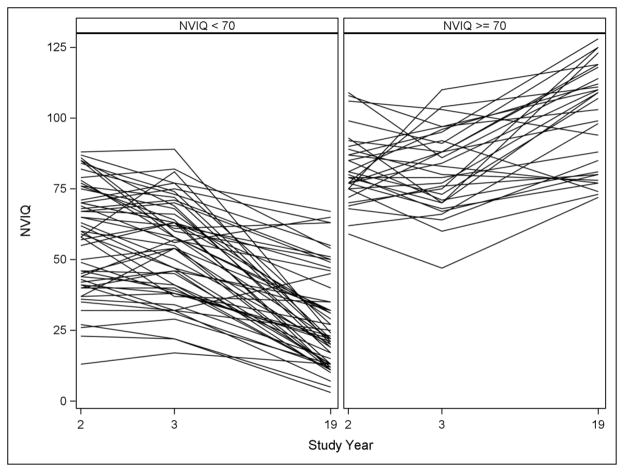
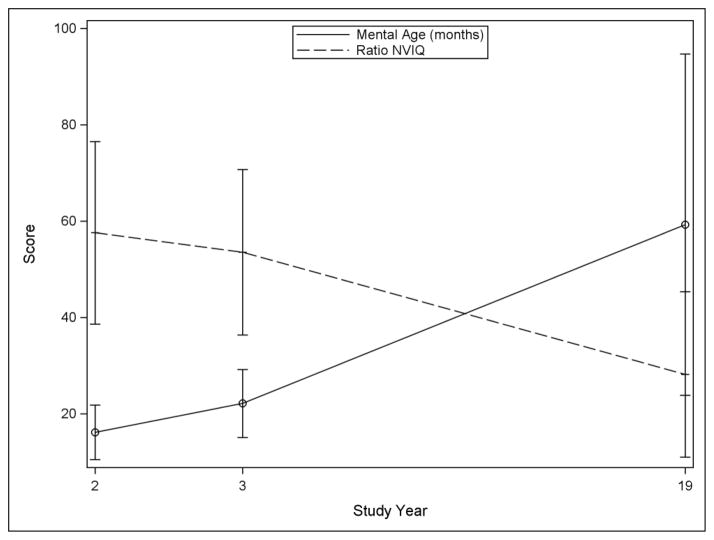
Nonverbal IQ (NVIQ) was examined in 84 individuals with autism spectrum disorder (ASD) followed from age 2 to 19. Most adults who scored in the range of intellectual disability also received scores below 70 as children, and the majority of adults with scores in the average range had scored in this range by age 3. However, within the lower ranges of ability, actual scores declined from age 2 to 19, likely due in part to limitations of appropriate tests. Use of Vineland-II daily living skills scores in place of NVIQ did not statistically improve the correspondence between age 2 and age 19 scores. Clinicians and researchers should use caution when making comparisons based on exact scores or specific ability ranges within or across individuals with ASD of different ages.
Conflict of interest statement
The authors have no conflicts of interest to report.
Figures
References
-
- Aiken LR. Assessment of Intellectual Functioning. 2. New York: Springer; 1996.
-
- American Psychiatric Association. Diagnostic and Statistical Manual of Mental Disorders. 5. Arlington, VA: American Psychiatric Publishing; 2013.
-
- CDC. Prevalence of Autism Spectrum Disorders — Autism and Developmental Disabilities Monitoring Network, 14 Sites, United States, 2008. MMWR CDC Surveillance Summaries. 2012;61:1–19. - PubMed
Publication types
MeSH terms
Grants and funding
LinkOut - more resources
Full Text Sources
Other Literature Sources
