


Improved FLT3 internal tandem duplication PCR assay predicts outcome after allogeneic transplant for acute myeloid leukemia
- PMID: 25240816
- PMCID: PMC4253693
- DOI: 10.1016/j.bbmt.2014.08.015
Improved FLT3 internal tandem duplication PCR assay predicts outcome after allogeneic transplant for acute myeloid leukemia
Abstract
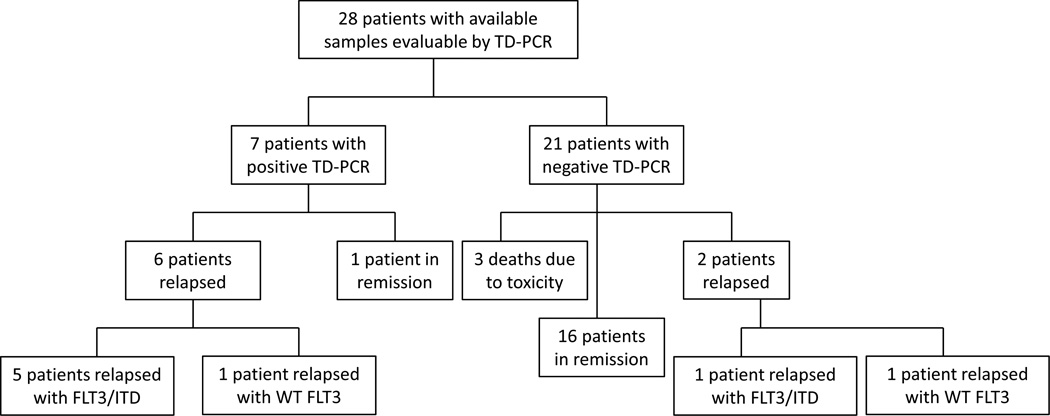
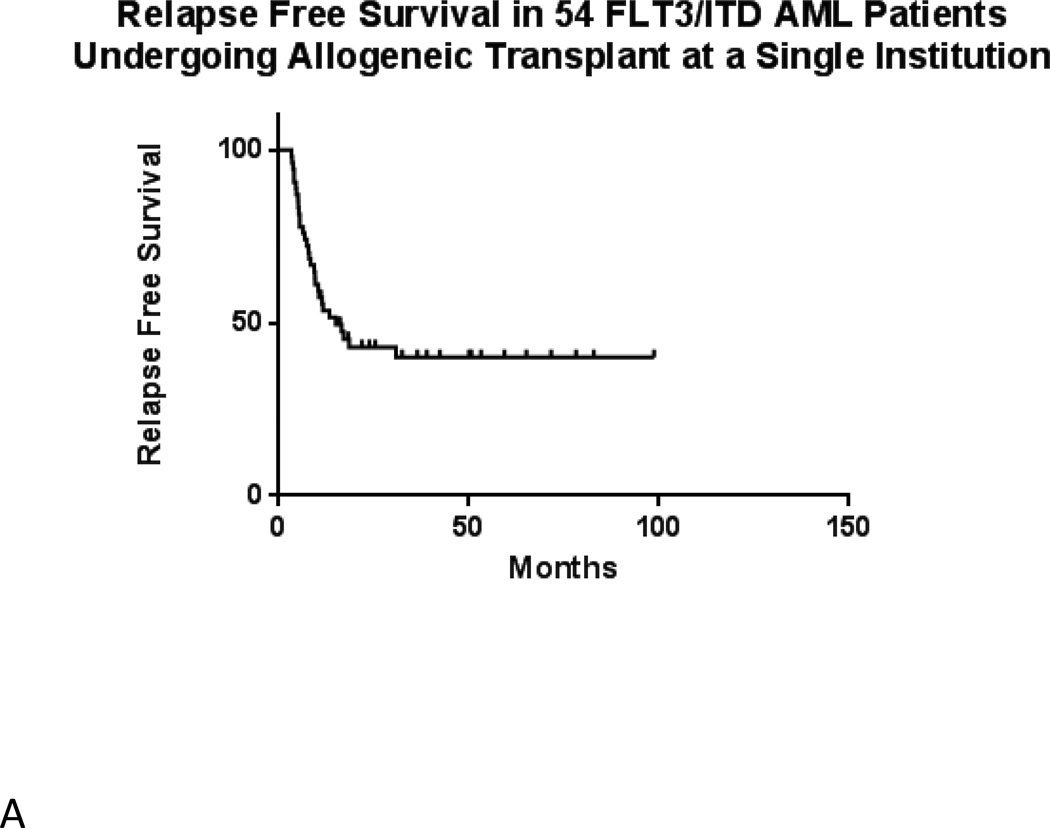
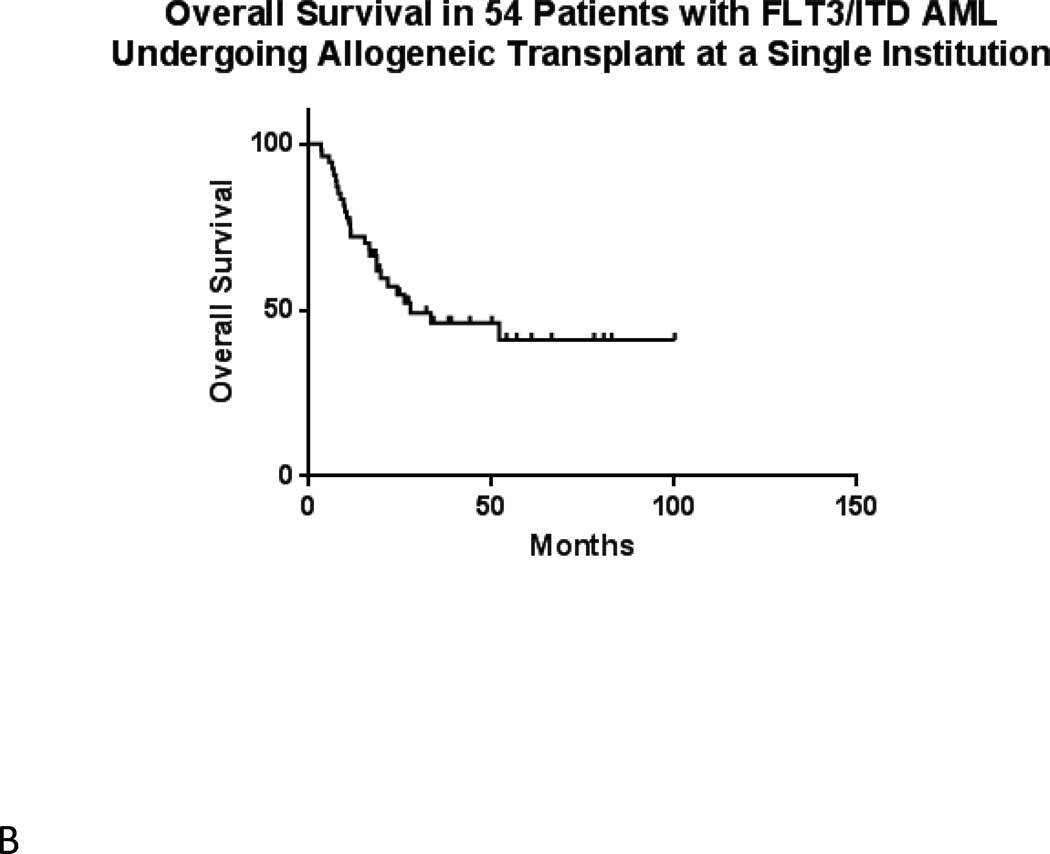
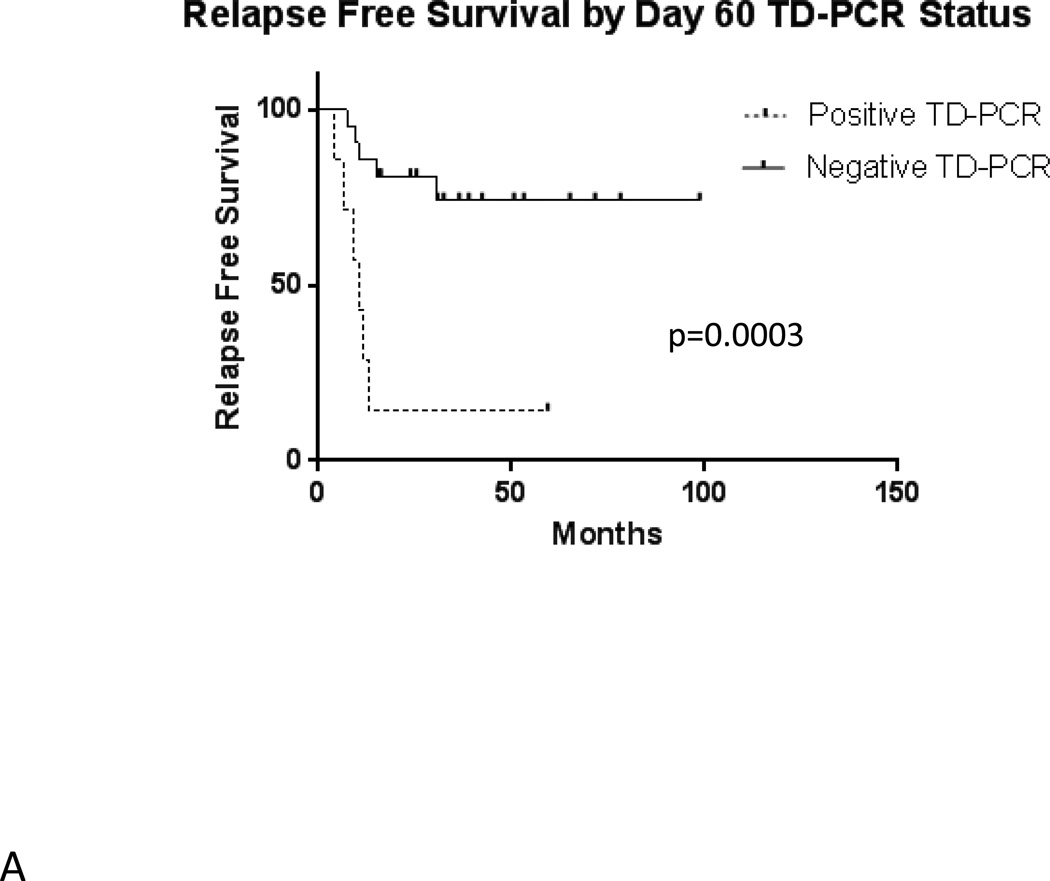
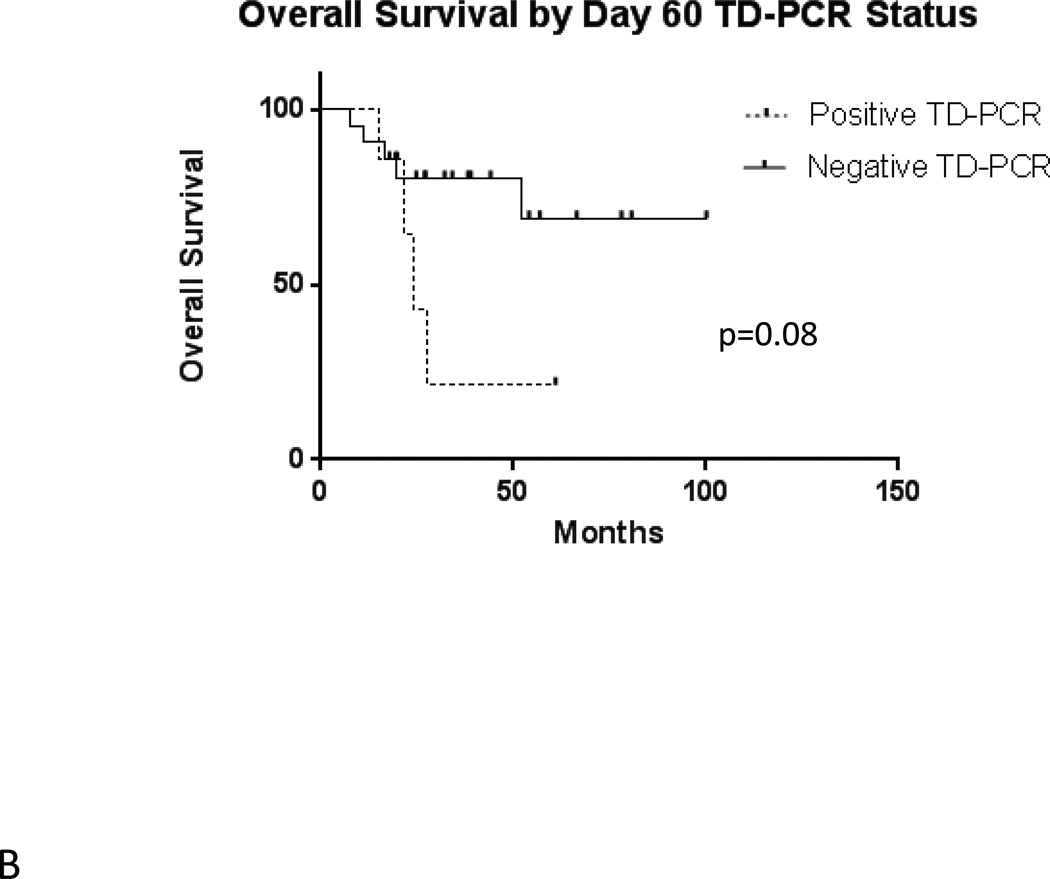
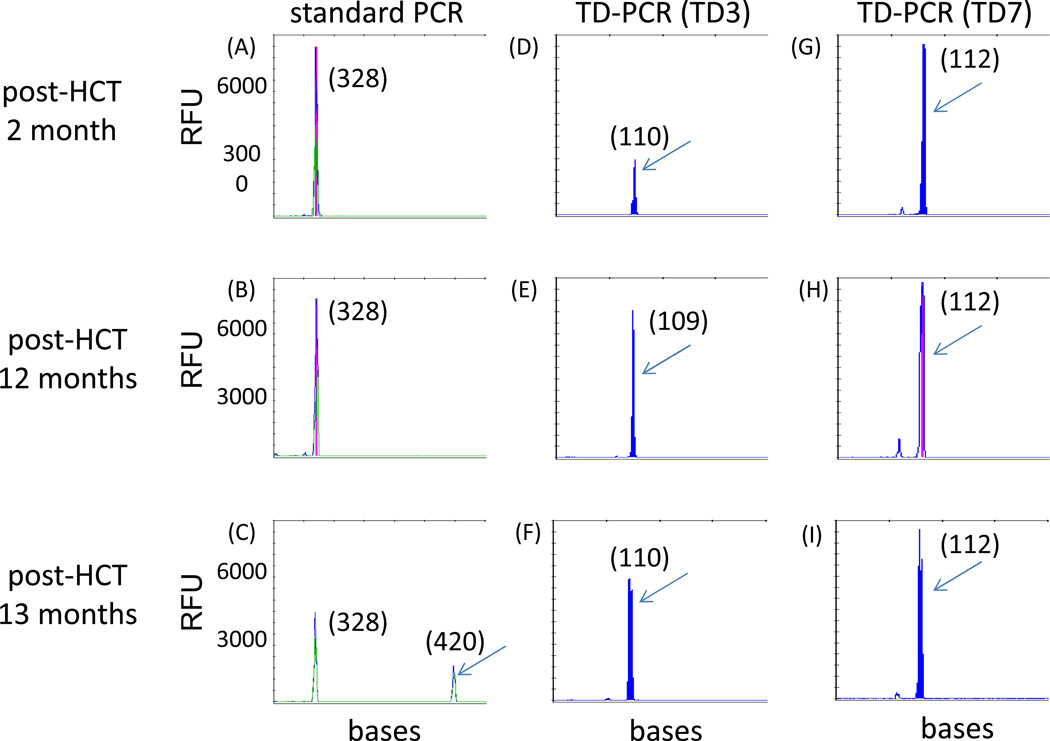
Patients with acute myeloid leukemia (AML) who harbor internal tandem duplication (ITD) mutations of the FMS-like tyrosine kinase 3 (FLT3) gene carry a poor prognosis. Although allogeneic transplantation may improve outcomes, relapse occurs frequently. The FLT3/ITD mutation has been deemed an unsuitable minimal residual disease (MRD) marker because it is unstable and because the standard assay for the mutation is relatively insensitive. The FLT3 mutation is undetectable by PCR at pre- or post-transplant time points in many FLT3/ITD AML patients who subsequently relapse after transplant. We report the application of a new technique, tandem duplication PCR (TD-PCR), for detecting MRD in FLT3/ITD AML patients. Between October 2004 and January 2012, 54 FLT3/ITD AML patients in remission underwent transplantation at our institution. Of 37 patients with available day 60 marrow samples, 28 (76%) were assessable for MRD detection. In seven of 28 patients (25%), the FLT3/ITD mutation was detectable by TD-PCR but not by standard PCR on day 60. Six of 7 patients (86%) with MRD by TD-PCR have relapsed to date compared with only 2 of 21 patients (10%) who were negative for MRD (P = .0003). The ability to detect MRD by this sensitive technique may provide an opportunity for early clinical intervention.
Keywords: Acute myeloid leukemia (AML); Bone marrow transplant; FLT3; Internal tandem duplication (ITD); Minimal residual disease (MRD); Tandem duplication PCR (TD-PCR).
Copyright © 2014 American Society for Blood and Marrow Transplantation. Published by Elsevier Inc. All rights reserved.
Conflict of interest statement
Financial Disclosures: The authors have no relevant financial conflicts of interest.
Figures
References
-
- Marcucci G, Maharry K, Radmacher MD, et al. Prognostic significance of, and gene and microRNA expression signatures associated with, CEBPA mutations in cytogenetically normal acute myeloid leukemia with high-risk molecular features: a Cancer and Leukemia Group B Study. J Clin Oncol. 2008;26:5078–5087. - PMC - PubMed
-
- Schlenk RF, Dohner K, Krauter J, et al. Mutations and treatment outcome in cytogenetically normal acute myeloid leukemia. N Engl J Med. 2008;358:1909–1918. - PubMed
-
- Levis M, Small D. FLT3: ITDoes matter in leukemia. Leukemia. 2003;17:1738–1752. - PubMed
-
- Nakao M, Yokota S, Iwai T, et al. Internal tandem duplication of the flt3 gene found in acute myeloid leukemia. Leukemia. 1996;10:1911–1918. - PubMed
Publication types
MeSH terms
Substances
Grants and funding
LinkOut - more resources
Full Text Sources
Other Literature Sources
Medical
Miscellaneous
