


Multi drug resistance in strong biofilm forming clinical isolates of Staphylococcus epidermidis
- PMID: 25242939
- PMCID: PMC4166280
- DOI: 10.1590/s1517-83822014005000042
Multi drug resistance in strong biofilm forming clinical isolates of Staphylococcus epidermidis
Abstract
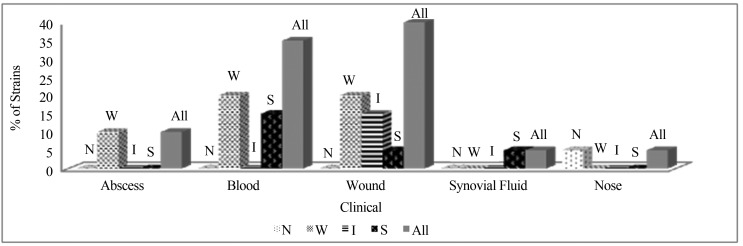
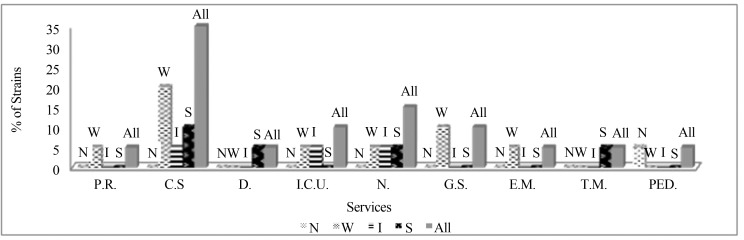
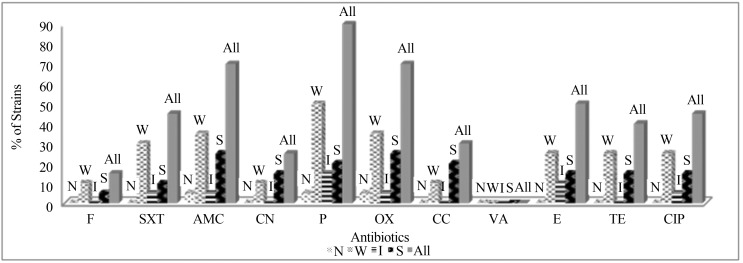
Staphylococcus epidermidis which exists in healthy human skin as a commensal inhabitant is also an important pathogen forming biofilms on many surfaces and recently, increased resistance traits were suggested to be acquired in biofilm environments. In this study; clinical Prevalences, antibiotic resistances and biofilm formations of S. epidermidis strains were determined and comparison of all these findings with each other was carried out in order to take precautions against them and figure out if high biofilm forming S. epidermidis strains display multi drug resistance. According to our results; samples of wound and blood were the most S. epidermidis isolated clinical materials (40%; 35%) and cardiothoracic surgery was the most S. epidermidis observed service unit. All of these strains were sensitive to vancomycin, however 65% of them showed resistance to all β-lactam antibiotics (Penicillin, Oxacillin, Amoxicilin/Clavulonic acid), used in this study and 60% of all S. epidermidis strains were found as multi drug resistant. When the results of strong biofilm forming S. epidermidis strains are examined; they were isolated from sample of blood and service unit of cardiovascular surgery in highest frequency and 80% of them were β-lactam resistant whereas 100% of them were multi drug resistant. One of these multi drug resistant strains which was resistant to maximum amount of different antimicrobial classes, was also observed as maximum biofilm forming strain among all the other S. epidermidis isolates. Multi drug resistance in strong biofilm forming strains shows that; biofilms play a role in antimicrobial resistance traits of S. epidermidis.
Keywords: Staphylococcus epidermidis; biofilm formation; indwelling medical device related infections; multi drug resistance; β-lactam resistance.
Figures
References
-
- Al FD, Akça G, Sipahi B, Sultan N. Kan Örneklerinden Soyutlanan Stafilokok Suslarinin Antibiyotiklere Direnç Durumlari. ANKEM. 2005;19(1):14–16.
-
- Arciola CR, Campoccia D, Gamberini S, Donati ME, Pirini V, Visai L, Speziale P, Montanaro L. Antibiotic resistance in exopolysaccharide-forming Staphylococcus epidermidis clinical isolates from orthopaedic implant infections. Biomaterials. 2005;26(33):6530–6535. - PubMed
-
- Arciola CR, Campoccia D, Speziale P, Montanaro L, Costerton JW. Biofilm formation in Staphylococcus implant infections. A review of molecular mechanisms and implications for biofilm-resistant materials. Biomaterials. 2012;33(26):5967–5982. - PubMed
-
- Aybar Y, Ozaras R, Besirli K, Engin E, Karabulut E, Salihoglu T, Mete B, Tabak F, Mert A, Tahan G, Yilmaz MH, Ozturk R. Efficacy of tigecycline and vancomycin in experimental catheter-related Staphylococcus epidermidis infection: microbiological and electron microscopic analysis of biofilm. Int J Antimicrob Agents. 2012;39(4):338–342. - PubMed
-
- Baillie GS, Douglas LJ. Matrix polymers of Candida biofilms and their possible role in biofilm resistance to antifungal agents. J Antimicrob Chemother. 2000;46:397–403. - PubMed
MeSH terms
Substances
LinkOut - more resources
Full Text Sources
Other Literature Sources
Medical