


Early response roles for prolactin cortisol and circulating and cellular levels of heat shock proteins 72 and 90α in severe sepsis and SIRS
- PMID: 25243181
- PMCID: PMC4160647
- DOI: 10.1155/2014/803561
Early response roles for prolactin cortisol and circulating and cellular levels of heat shock proteins 72 and 90α in severe sepsis and SIRS
Abstract
Objective: To evaluate the early heat shock protein (HSP) and hormonal stress response of intensive care unit (ICU) patients with severe sepsis/septic shock (SS) or systemic inflammatory response syndrome (SIRS) compared to healthy subjects (H).
Methods: Patients with early (first 48 hrs) SS (n = 29) or SIRS (n = 29) admitted to a university ICU and 16 H were enrolled in the study. Serum prolactin, cortisol, and plasma ACTH were determined using immunoassay analyzers. ELISA was used to evaluate extracellular HSPs (eHSP90α, eHSP72) and interleukins. Mean fluorescence intensity (MFI) values for intracellular HSPs (iHSP72, iHSP90α) were measured using 4-colour flow-cytometry.
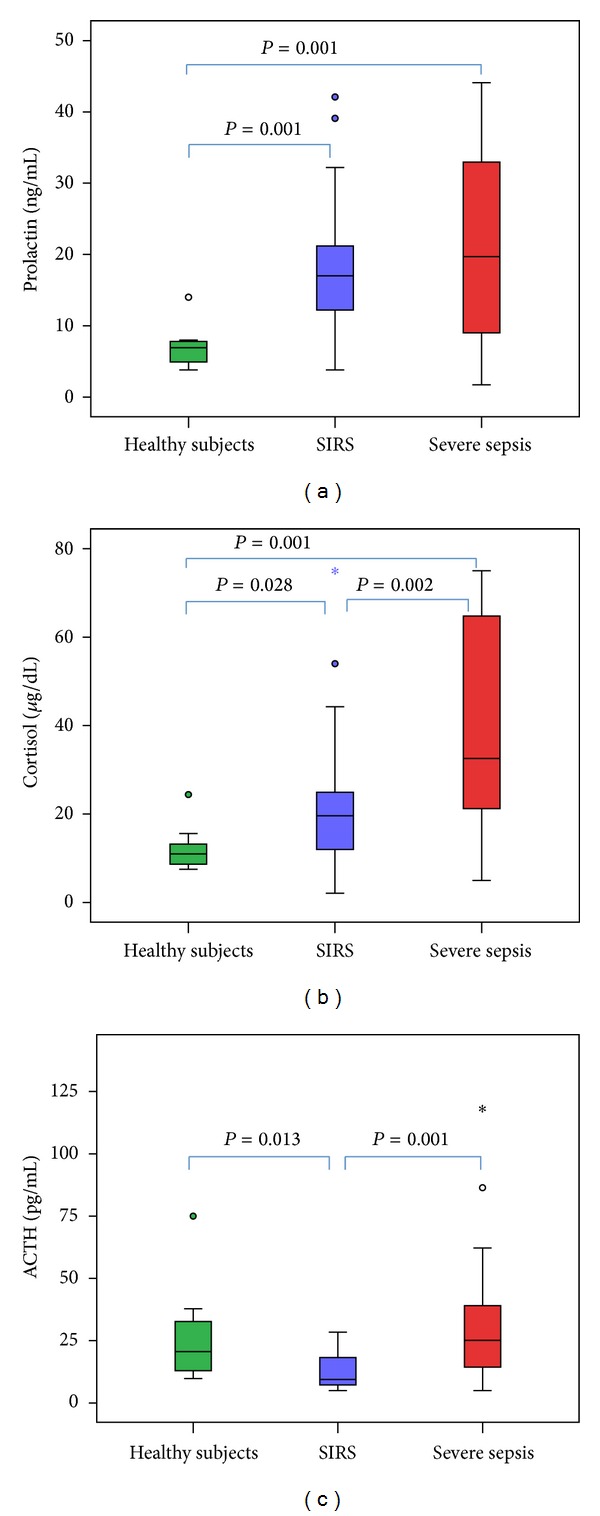
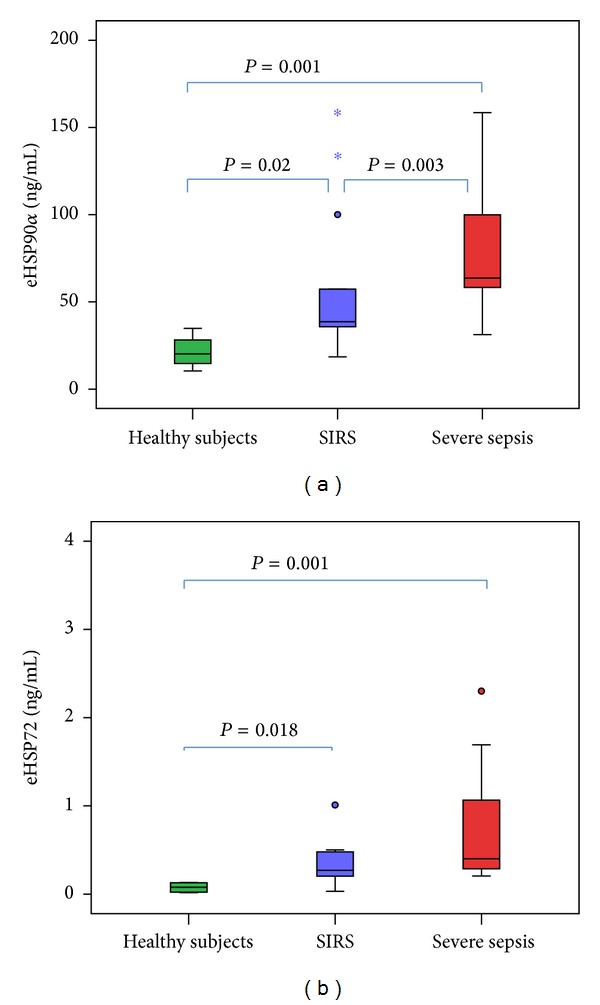
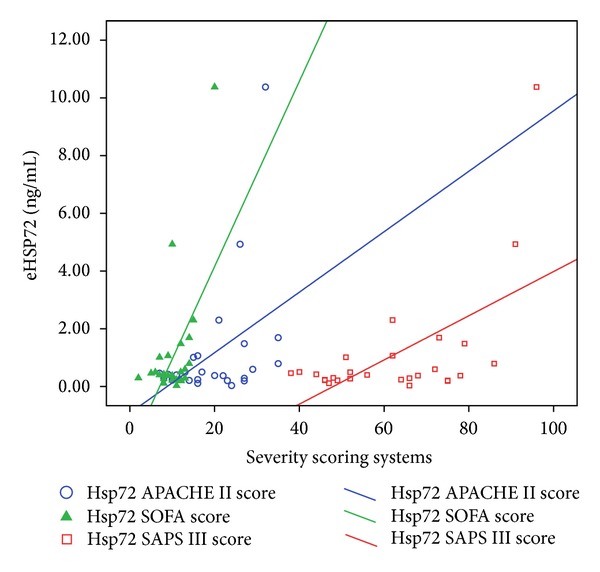
Results: Prolactin, cortisol, and eHSP90α levels were significantly increased in SS patients compared to SIRS and H (P < 0.003). ACTH and eHSP72 were significantly higher in SS and SIRS compared to H (P < 0.005). SS monocytes expressed lower iHSP72 MFI levels compared to H (P = 0.03). Prolactin was related with SAPS III and APACHE II scores and cortisol with eHSP90α, IL-6, and lactate (P < 0.05). In SS and SIRS eHSP90α was related with eHSP72, IL-6, and IL-10.
Conclusion: Prolactin, apart from cortisol, may have a role in the acute stress response in severe sepsis. In this early-onset inflammatory process, cortisol relates to eHSP90α, monocytes suppress iHSP72, and plasma eHSP72 increases.
Figures
References
-
- Angus DC, Linde-Zwirble WT, Lidicker J, Clermont G, Carcillo J, Pinsky MR. Epidemiology of severe sepsis in the United States: Analysis of incidence, outcome, and associated costs of care. Critical Care Medicine. 2001;29(7):1303–1310. - PubMed
-
- Maxime V, Siami S, Annane D. Metabolism modulators in sepsis: the abnormal pituitary response. Critical Care Medicine. 2007;35(9):S596–S601. - PubMed
-
- Oberbeck R, Schmitz D, Wilsenack K, et al. Prolactin modulates survival and cellular immune functions in septic mice. Journal of Surgical Research. 2003;113(2):248–256. - PubMed
Publication types
MeSH terms
Substances
LinkOut - more resources
Full Text Sources
Other Literature Sources
Medical
