


A large cohort of hemoglobin variants in Thailand: molecular epidemiological study and diagnostic consideration
- PMID: 25244406
- PMCID: PMC4171515
- DOI: 10.1371/journal.pone.0108365
A large cohort of hemoglobin variants in Thailand: molecular epidemiological study and diagnostic consideration
Abstract
Background: Hemoglobin (Hb) variants are structurally inherited changes of globin chains. Accurate diagnoses of these variants are important for planning of appropriate management and genetic counseling. Since no epidemiological study has been conducted before, we have investigated frequencies, molecular and hematological features of Hb variants found in a large cohort of Thai subjects.
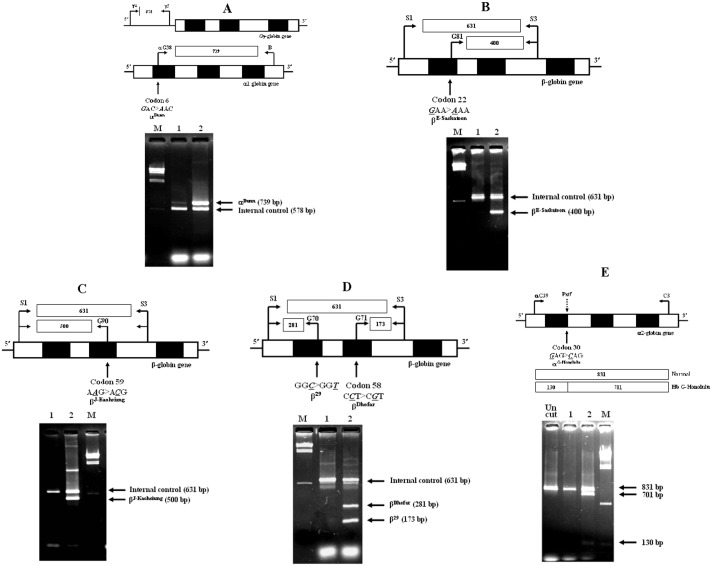
Materials and methods: Study was conducted on 26,013 unrelated subjects, inhabiting in all geographical parts of Thailand over a period of 11 years from January 2002-December 2012. Hb analysis was done on high performance liquid chromatography (HPLC) or capillary electrophoresis (CE). Mutations causing Hb variants were identified using PCR and related techniques.
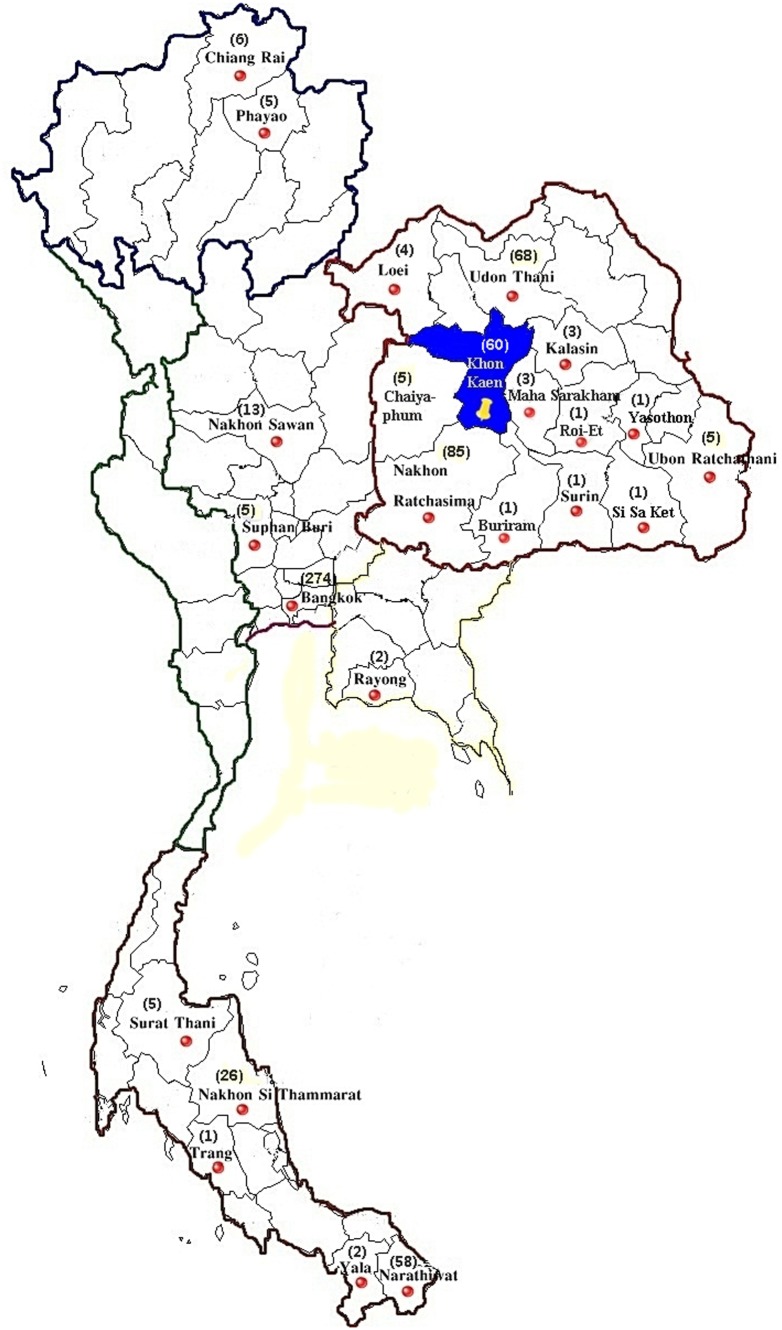
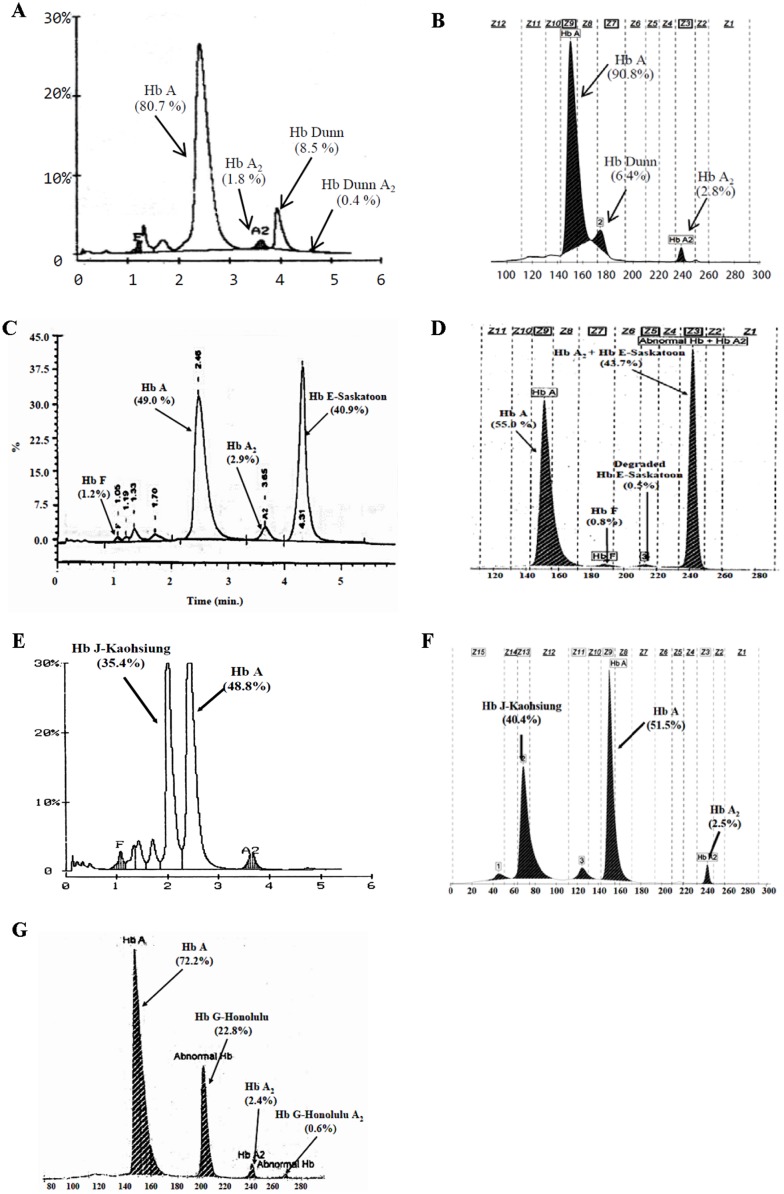
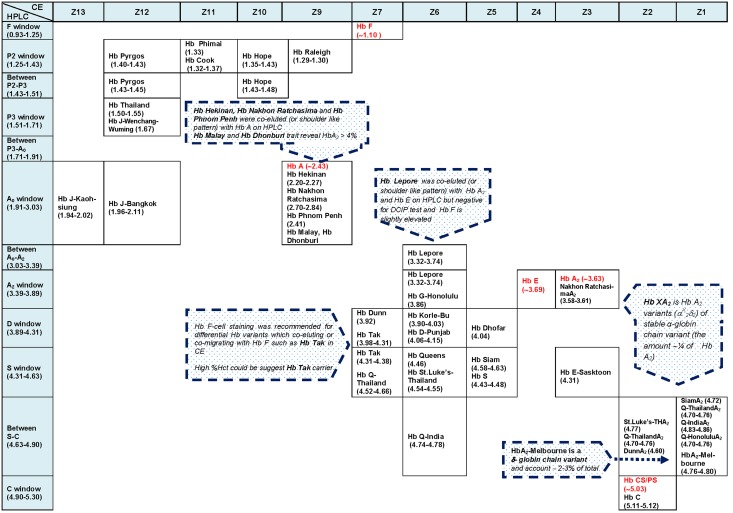
Results: Among 26,013 subjects investigated, 636 (2.4%) were found to carry Hb variants. Of these 636 subjects, 142 (22.4%) carried α-chain variants with 13 different mutations. The remaining included 451 (70.9%) cases with 16 β-chain variants, 37 (5.8%) cases with Hb Lepore (δβ-hybrid Hb) and 6 (0.9%) cases with a single δ-chain variant. The most common α-globin chain variant was the Hb Q-Thailand (α⁷⁴GAC-CAC, Asp-His) which was found in 101 cases (15.8%). For β-globin chain variants, Hb Hope (β¹³⁶GGT-GAT, Gly-Asp) and Hb Tak (β¹⁴⁶+AC, Ter-Thr) are the two most common ones, found in 121 (19.0%) and 90 (14.2%) cases, respectively. Seven Hb variants have never been found in Thai population. Hb analysis profiles on HPLC or CE of these variants were illustrated to guide presumptive diagnostics.
Conclusions: Hb variants are common and heterogeneous in Thai population. With varieties of thalassemias and hemoglobinopathies in the population, interactions between them leading to complex syndromes are common and render their diagnoses difficult in routine practices. Knowledge of the spectrum, molecular basis, genotype-phenotype correlation and diagnostic features should prove useful for prevention and control of the diseases in the region.
Conflict of interest statement
Figures
References
-
- Weatherall DJ, Clegg JB (2001) The Thalassemia Syndromes. 4th edition. Oxford, UK: Blackwell.
-
- Fucharoen S, Winichagoon P (1987) Hemoglobinopathies in Southeast Asia. Hemoglobin 11: 65–88. - PubMed
-
- Fucharoen S, Fucharoen G, Sriroongrueng W, Laosombat V, Jetsrisuparb A, et al. (1989) Molecular basis of beta-thalassemia in Thailand: analysis of beta-thalassemia mutations using the polymerase chain reaction. Hum Genet 84: 41–46. - PubMed
-
- Boonsa S, Sanchaisuriya K, Fucharoen G, Wiangnon S, Jetsrisuparb A, et al. (2004) The diverse molecular basis and hematological features of Hb H and AEBart’s diseases in northeast Thailand. Acta Haematol 111: 149–154. - PubMed
Publication types
MeSH terms
Substances
LinkOut - more resources
Full Text Sources
Other Literature Sources
Miscellaneous
