


Is all pain is treated equally? A multicenter evaluation of acute pain care by age
- PMID: 25244947
- PMCID: PMC4250377
- DOI: 10.1016/j.pain.2014.09.017
Is all pain is treated equally? A multicenter evaluation of acute pain care by age
Abstract
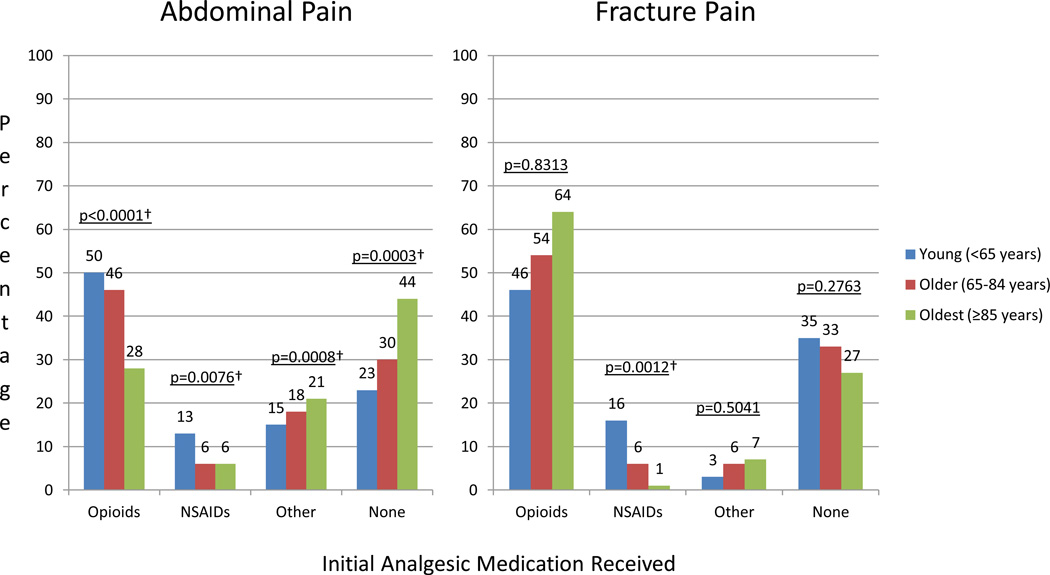
Pain is highly prevalent in health care settings; however, disparities continue to exist in pain care treatment. Few studies have investigated if differences exist based on patient-related characteristics associated with aging. The objective of this study was to determine if there are differences in acute pain care for older vs younger patients. This was a multicenter, retrospective, cross-sectional observation study of 5 emergency departments across the United States evaluating the 2 most commonly presenting pain conditions for older adults, abdominal and fracture pain. Multivariable adjusted hierarchical modeling was completed. A total of 6,948 visits were reviewed. Older (⩾ 65 years) and oldest (⩾ 85 years) were less likely to receive analgesics compared to younger patients (<65 years), yet older patients had greater reductions in final pain scores. When evaluating pain treatment and final pain scores, differences appeared to be based on type of pain. Older patients with abdominal pain were less likely to receive pain medications, while older patients with fracture were more likely to receive analgesics and opioids compared to younger patients. Differences in pain care for older patients appear to be driven by the type of presenting pain.
Keywords: Acute pain care; Emergency department; Geriatrics.
Published by Elsevier B.V.
Conflict of interest statement
The authors have no conflicts of interest.
Figures
References
-
- Brown J, Klein E, Lewis C, Johnston B, Cummings P. Emergency department analgesia for fracture pain. Ann Emerg Med. 2003;42:197–205. - PubMed
-
- Charlson M, Pompei P, Ales K, MacKenzie C. A new method of classifying prognostic comorbidity in longitudinal studies: development and validation. J Chronic Dis. 1987;40:373–383. - PubMed
-
- Cintron A, Morrison RS. Pain and ethnicity in the United States: A systematic review. J Palliate Med. 2006;9(6):1454–1473. - PubMed
-
- Federal Interagency Forum on Aging-Related Statistics, editor. Federal Interagency Forum on Aging-Related Statistics. Older Americans 2012: Key Indicators of Well-Being. Washington, DC: U.S. Government Printing Office; 2012. Jun, pp. 1–200.
Publication types
MeSH terms
Substances
Grants and funding
LinkOut - more resources
Full Text Sources
Other Literature Sources
Medical
