


Cup position alone does not predict risk of dislocation after hip arthroplasty
- PMID: 25249516
- PMCID: PMC4270833
- DOI: 10.1016/j.arth.2014.07.009
Cup position alone does not predict risk of dislocation after hip arthroplasty
Abstract
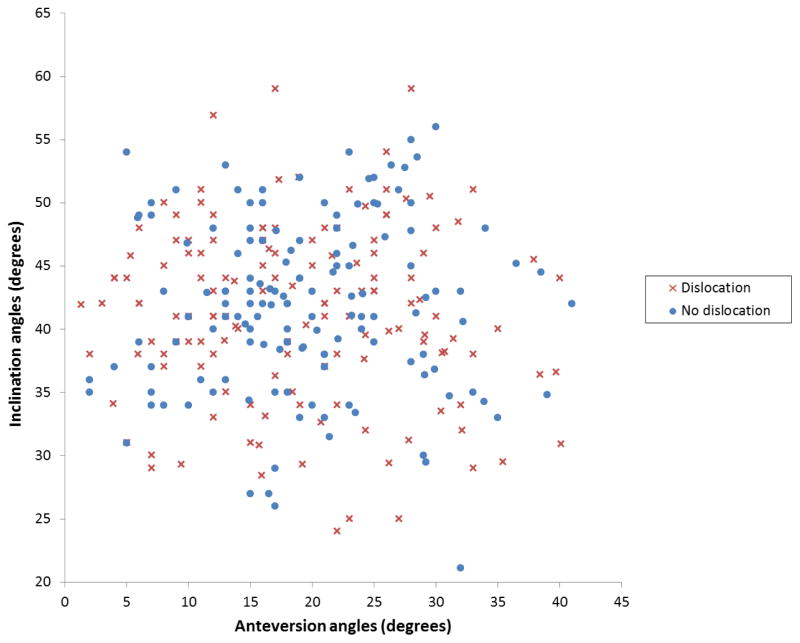
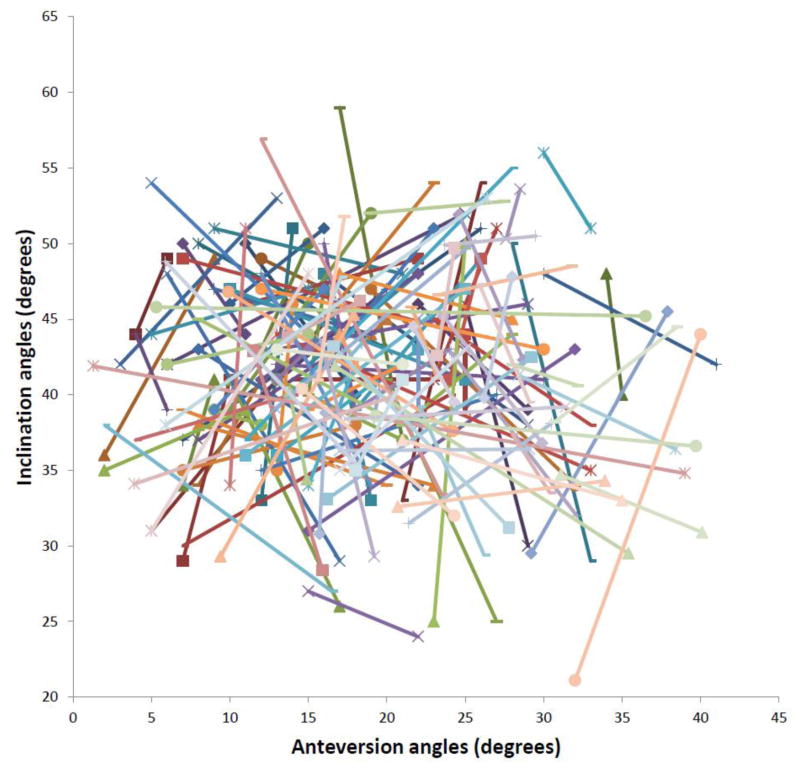
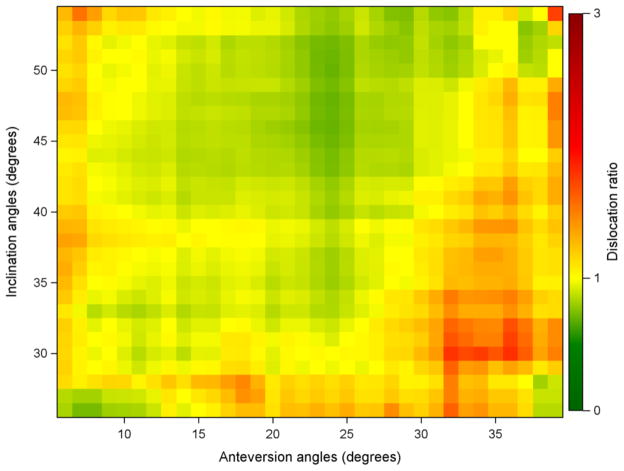
We used a large prospective institutional registry to determine if there is a 'safe zone' that exists for acetabular component position within which the risk of hip dislocation is low and if other patient and implant factors affect the risk of hip dislocation. Patients who reported a dislocation event within six months after hip arthroplasty surgery were identified, and acetabular component position was measured with anteroposterior radiographs. The frequency of dislocation was 2.1% (147 of 7040 patients). No significant difference was found in the number of dislocated hips among the radiographic zones (±5°,±10°,±15° boundaries). Dislocators <50 years old were less active preoperatively than nondislocators (P=0.006). Acetabular component position alone is not protective against instability.
Keywords: arthroplasty; cup orientation; dislocation; hip; safe zone.
Copyright © 2014 Elsevier Inc. All rights reserved.
Figures
References
-
- Bozic KJ, Kurtz SM, Lau E, Ong K, Vail TP, Berry DJ. The Epidemiology of Revision Total Hip Arthroplasty in the United States. J Bone Jt Surg. 2009;91:128–33. - PubMed
-
- Amstutz HC, Kody MH. Hip Arthroplasty. New York: Churchill Livingstone; 1991. Dislocation and subluxation; pp. 429–48.
-
- Beaulé PE, Schmalzried TP, Udomkiat P, Amstutz HC. Jumbo femoral head for the treatment of recurrent dislocation following total hip replacement. J Bone Joint Surg Am. 2002;84-A:256–63. - PubMed
-
- Eftekhar NS. Dislocation and instability complicating low friction arthroplasty of the hip joint. Clin Orthop. 1976:120–5. - PubMed
Publication types
MeSH terms
Grants and funding
LinkOut - more resources
Full Text Sources
Other Literature Sources
Medical
Molecular Biology Databases
