


Current practices of mobilization, analgesia, relaxants and sedation in Indian ICUs: A survey conducted by the Indian Society of Critical Care Medicine
- PMID: 25249742
- PMCID: PMC4166873
- DOI: 10.4103/0972-5229.140146
Current practices of mobilization, analgesia, relaxants and sedation in Indian ICUs: A survey conducted by the Indian Society of Critical Care Medicine
Abstract
Background and aim: Use of sedation, analgesia and neuromuscular blocking agents is widely practiced in Intensive Care Units (ICUs). Our aim is to study the current practice patterns related to mobilization, analgesia, relaxants and sedation (MARS) to help in standardizing best practices in these areas in the ICU.
Materials and methods: A web-based nationwide survey involving physicians of the Indian Society of Critical Care Medicine (ISCCM) and the Indian Society of Anesthesiologists (ISA) was carried out. A questionnaire included questions on demographics, assessment scales for delirium, sedation and pain, as also the pharmacological agents and the practice methods.
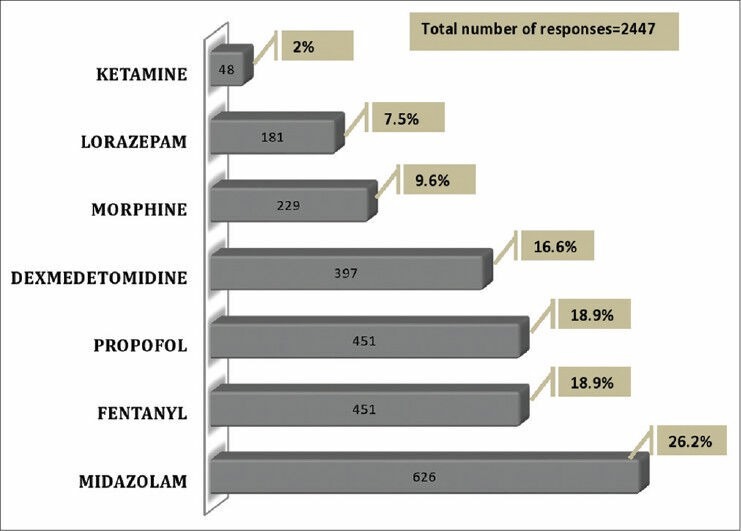
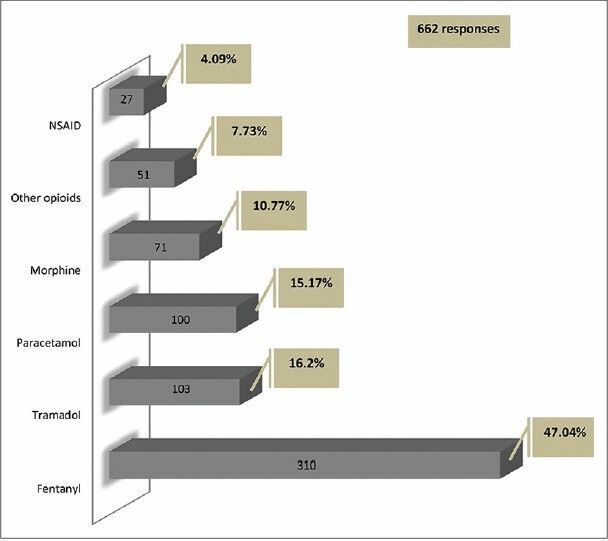
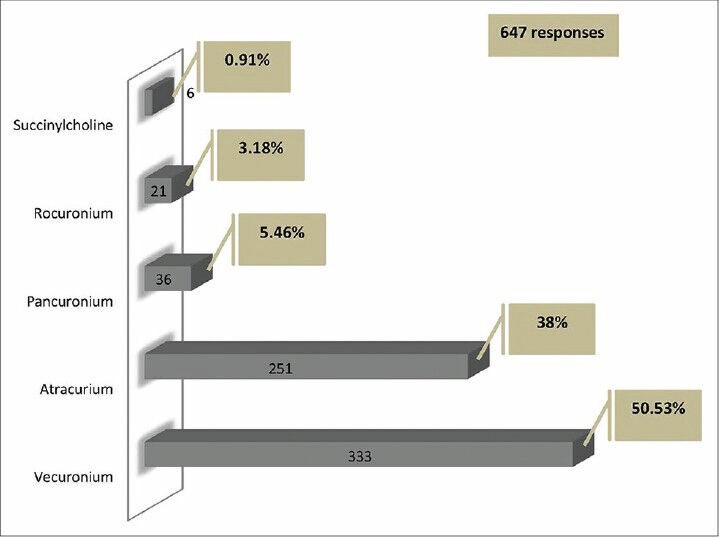
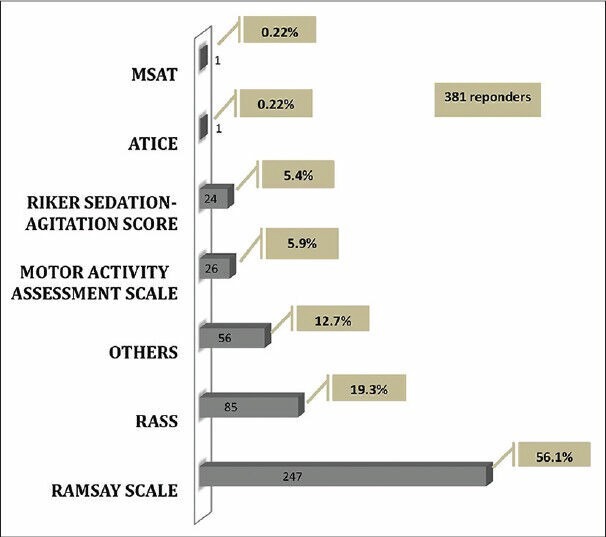
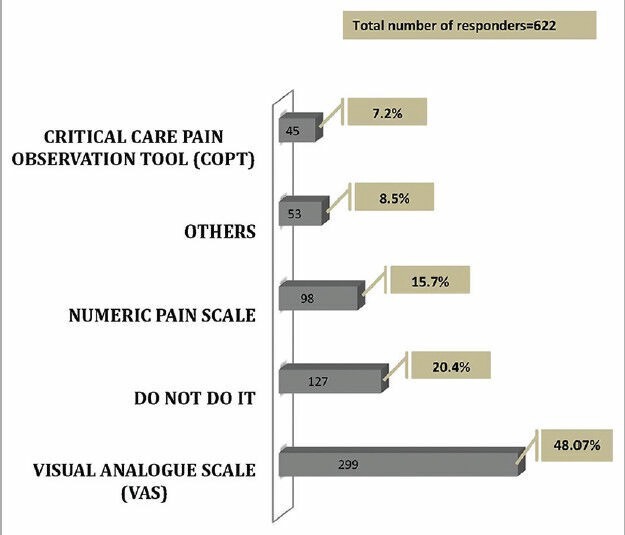
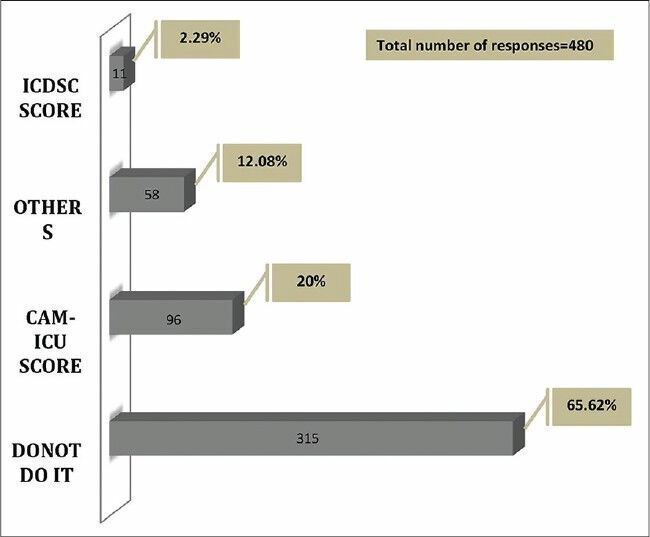
Results: Most ICUs function in a semi-closed model. Midazolam (94.99%) and Fentanyl (47.04%) were the most common sedative and analgesic agents used, respectively. Vecuronium was the preferred neuromuscular agent. Monitoring of sedation, analgesia and delirium in the ICU. Ramsay's Sedation Scale (56.1%) and Visual Analogue Scale (48.07%) were the preferred sedation and pain scales, respectively. CAM (Confusion Assessment Method)-ICU was the most preferred method of delirium assessment. Haloperidol was the most commonly used agent for delirium. Majority of the respondents were aware of the benefit of early mobilization, but lack of support staff and safety concerns were the main obstacles to its implementation.
Conclusion: The results of the survey suggest that compliance with existing guidelines is low. Benzodiazepines still remain the predominant ICU sedative. The recommended practice of giving analgesia before sedation is almost non-existent. Delirium remains an underrecognized entity. Monitoring of sedation levels, analgesia and delirium is low and validated and recommended scales for the same are rarely used. Although awareness of the benefits of early mobilization are high, the implementation is low.
Keywords: Analgesia; early mobilization; muscle relaxants; sedation.
Conflict of interest statement
Figures
References
-
- Brook AD, Ahrens TS, Schaiff R, Prentice D, Sherman G, Shannon W, et al. Effect of a nursing-implemented sedation protocol on the duration of mechanical ventilation. Crit Care Med. 1999;27:2609–15. - PubMed
-
- Girard TD, Kress JP, Fuchs BD, Thomason JW, Schweickert WD, Pun BT, et al. Efficacy and safety of a paired sedation and ventilator weaning protocol for mechanically ventilated patients in intensive care (Awakening and Breathing Controlled trial): A randomised controlled trial. Lancet. 2008;371:126–34. - PubMed
-
- Kress JP, Pohlman AS, O'Connor MF, Hall JB. Daily interruption of seda-tive infusions in critically ill patients undergoing mechanical ventila-tion. N Engl J Med. 2000;342:1471–7. - PubMed
-
- Treggiari MM, Romand JA, Yanez ND, Deem SA, Goldberg J, Hudson L, et al. Randomized trial of light versus deep sedation on mental health after critical illness. Crit Care Med. 2009;37:2527–34. - PubMed
-
- Kollef MH, Levy NT, Ahrens TS, Schaiff R, Prentice D, Sherman G. The use of continuous i.v. seda tion is associated with prolongation of mechanical ventilation. Chest. 1998;114:541–8. - PubMed
LinkOut - more resources
Full Text Sources
Other Literature Sources
Miscellaneous