


Might depression, psychosocial adversity, and limited social assets explain vulnerability to and resistance against violent radicalisation?
- PMID: 25250577
- PMCID: PMC4174521
- DOI: 10.1371/journal.pone.0105918
Might depression, psychosocial adversity, and limited social assets explain vulnerability to and resistance against violent radicalisation?
Abstract
Background: This study tests whether depression, psychosocial adversity, and limited social assets offer protection or suggest vulnerability to the process of radicalisation.
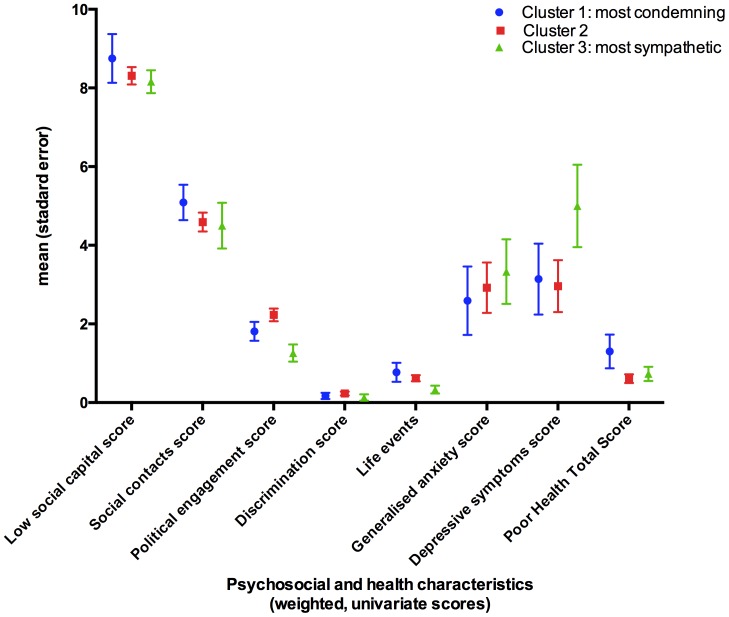
Methods: A population sample of 608 men and women of Pakistani or Bangladeshi origin, of Muslim heritage, and aged 18-45 were recruited by quota sampling. Radicalisation was measured by 16 questions asking about sympathies for violent protest and terrorism. Cluster analysis of the 16 items generated three groups: most sympathetic (or most vulnerable), most condemning (most resistant), and a large intermediary group that acted as a reference group. Associations were calculated with depression (PHQ9), anxiety (GAD7), poor health, and psychosocial adversity (adverse life events, perceived discrimination, unemployment). We also investigated protective factors such as the number social contacts, social capital (trust, satisfaction, feeling safe), political engagement and religiosity.
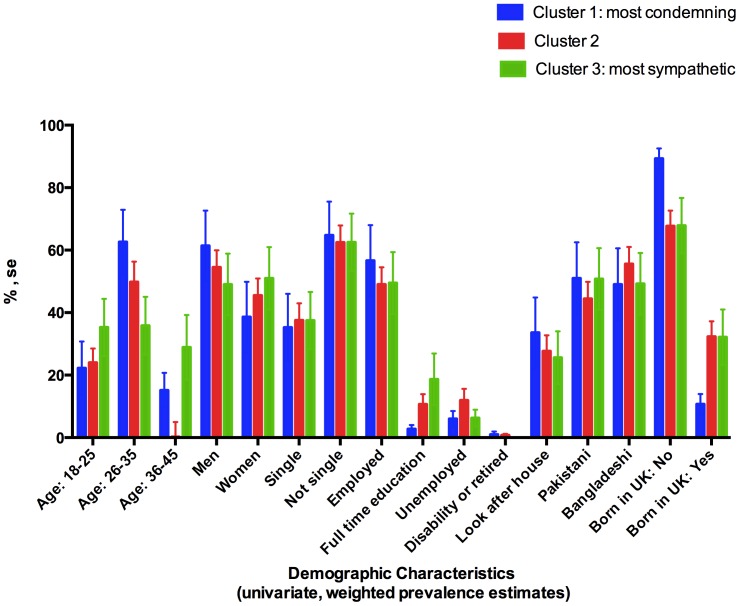
Results: Those showing the most sympathy for violent protest and terrorism were more likely to report depression (PHQ9 score of 5 or more; RR = 5.43, 1.35 to 21.84) and to report religion to be important (less often said religion was fairly rather than very important; RR = 0.08, 0.01 to 0.48). Resistance to radicalisation measured by condemnation of violent protest and terrorism was associated with larger number of social contacts (per contact: RR = 1.52, 1.26 to 1.83), less social capital (RR = 0.63, 0.50 to 0.80), unavailability for work due to housekeeping or disability (RR = 8.81, 1.06 to 37.46), and not being born in the UK (RR = 0.22, 0.08 to 0.65).
Conclusions: Vulnerability to radicalisation is characterised by depression but resistance to radicalisation shows a different profile of health and psychosocial variables. The paradoxical role of social capital warrants further investigation.
Conflict of interest statement
Figures
References
-
- Stroink M (2007) Processes and preconditions underlying terrorism in second-generation immigrants. Journal of Peace Psychology 13: 19.
-
- Horgan J (2009) Walkng away from terrorism: accounts of disengagement from radical and extremist movements. New York: Routledge. 186 p.
-
- Levy BS, Sidel VW (2008) War and Public Health: An Overview. In: Levy BS, Sidel V, editors. War & Public Health. New York: Oxford University Press. pp. 3–18.
-
- HomeAffairsCommittee (2012) The roots of violent radicalisation. London: House of Commons.
-
- Allgulander C (1994) Suicide and mortality patterns in anxiety neurosis and depressive neurosis. Arch Gen Psychiatry 51: 708–712. - PubMed
MeSH terms
LinkOut - more resources
Full Text Sources
Other Literature Sources
Medical
