. 2014 Dec;1841(12):1648-55.
doi: 10.1016/j.bbalip.2014.09.012.

Sequestration of fatty acids in triglycerides prevents endoplasmic reticulum stress in an in vitro model of cardiomyocyte lipotoxicity

Sequestration of fatty acids in triglycerides prevents endoplasmic reticulum stress in an in vitro model of cardiomyocyte lipotoxicity

Madeleen Bosma et al. Biochim Biophys Acta. 2014 Dec.

Abstract

We used human cardiomyocyte-derived cells to create an in vitro model to study lipid metabolism and explored the effects of PPARγ; ACSL1 and ATGL on fatty acid-induced ER stress. Compared to oleate, palmitate treatment resulted in less intracellular accumulation of lipid droplets and more ER stress, as measured by upregulation of CHOP, ATF6 and GRP78 gene expression and phosphorylation of eukaryotic initiation factor 2a (EIF2a). Both ACSL1 and PPARγ adenovirus-mediated expression augmented neutral lipid accumulation and reduced palmitate-induced upregulation of ER stress markers to levels similar to those in the oleate and control treatment groups. This suggests that increased channeling of non-esterified free fatty acids (NEFA) towards storage in the form of neutral lipids in lipid droplets protects against palmitate-induced ER stress. Overexpression of ATGL in cells incubated with oleate-containing medium increased NEFA release and stimulated expression of ER stress markers. Thus, inefficient creation of lipid droplets as well greater release of stored lipids induces ER stress.


Figures
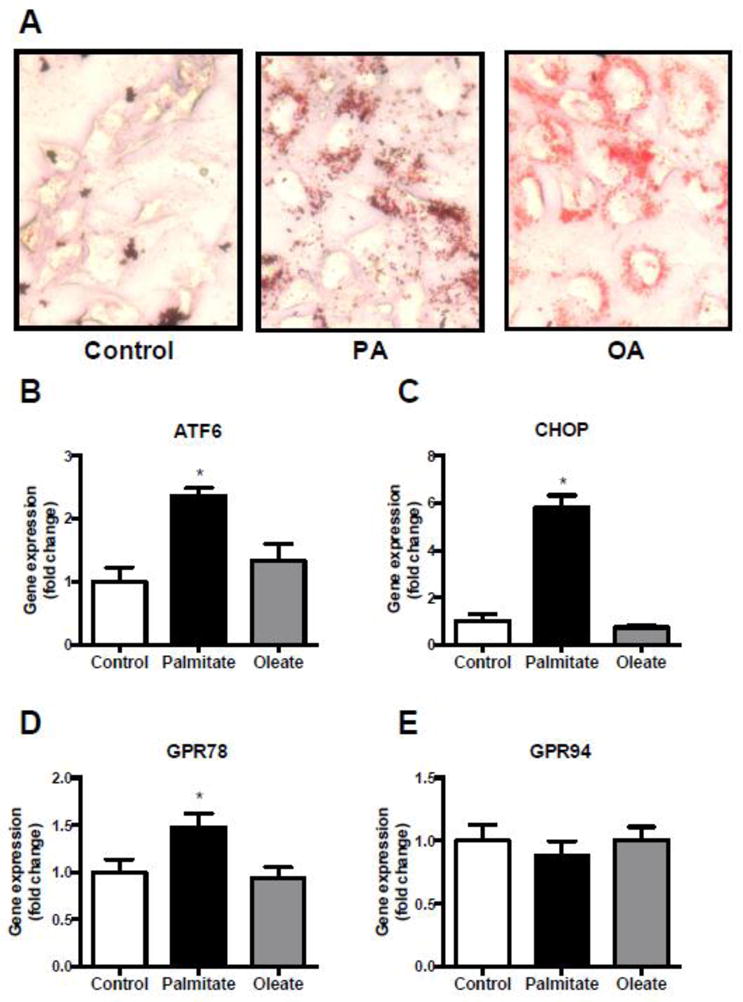
Fig. 1
Fig. 1. Palmitate induces expression of ER stress markers
(A) Oil-red-O staining of cardiomyocytes after overnight incubation with 400μM BSA-coupled palmitate (PA), OA(OA) or BSA with methanol as a control (magnification x40). (B–E) Gene expression of the ER stress markers ATF6 (B), CHOP (C), GRP78 (D) and GRP94 (E) after overnight treatment with 400μM BSA-coupled palmitate (PA), oleate (OA) or solely BSA and methanol as a control. Data are presented as fold change in gene expression relative to the control group. *P<0.05, n=4, error bars represent SEM.
Fig. 2
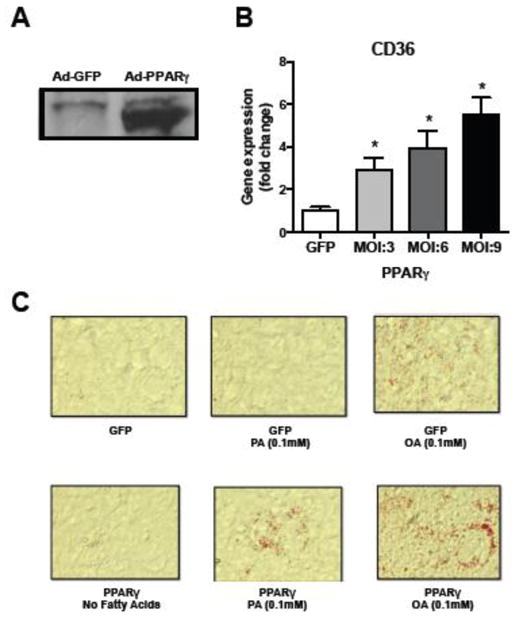
Fig. 2. Ectopic expression of PPARγ increases neutral lipid accumulation in cardiomyocytes
(A) Western Blot data demonstrating successful adenovirus-mediated overexpression of PPARγ in AC16 cells (MOI: 10). Ad: adenovirus. (B) Dose-dependent induction of the PPAR target gene CD36 upon PPARγ overexpression. MOI: Multiplicity of infection. *P<0.05 versus GFP-control, n=4–6 per condition. Error bars represent SEM. (C) PPARγ overexpression (MOI: 10) increased neutral lipid accumulation (Oil-red-O staining, magnification x10). PA: palmitate, OA: oleate.
Fig. 3
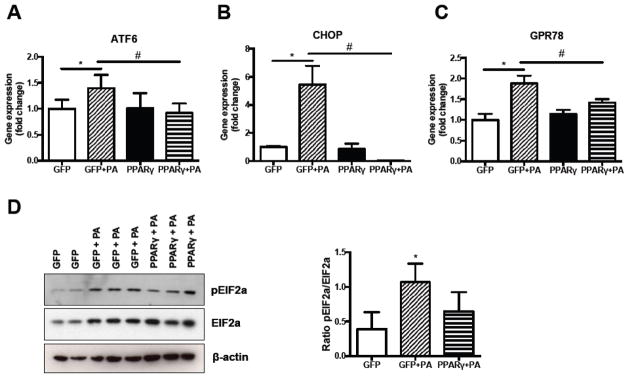
Fig. 3. PPARγ overexpression reduces palmitate-induced ER stress in cardiomyocytes
(A–C) Reduction in palmitate-induced induction of ER stress markers ATF6 (A), CHOP (B) and GRP78 (C) upon PPARγ overexpression. N=3–4. (B) Representative Western Blot and quantification of eIF2a phosphorylation. PA: palmitate. N=3. *P<0.05 BSA-control versus palmitate within groups, #P<0.05 PPARγ versus GFP, error bars represent SEM.
Fig. 4
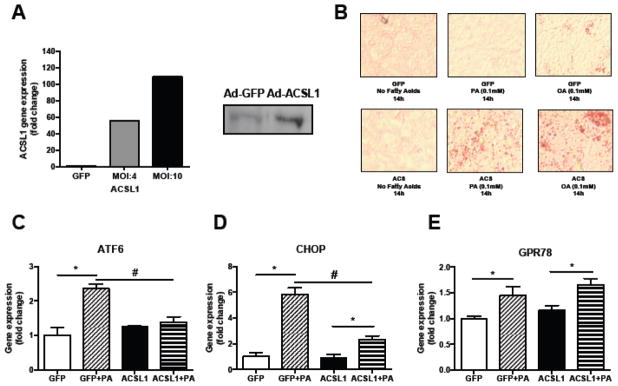
Fig. 4. Acyl-CoA synthetase (ACSL1) overexpression increases neutral lipid accumulation and relieves ER stress
(A) qPCR and Western Blot data demonstrating successful adenovirus-mediated overexpression of ACSL1 in AC16 cells. (B) Representative images of Oil-red-O stained AdGFP or AdACSL1-infected cells treated with either palmitate (PA) or oleate (OA) (magnification x10). (C–E) ACSL1-mediated reduction in palmitate-induced expression of ER stress markers ATF6 (C), CHOP (D) and GRP78 (E). N=3–4 per condition. Data are presented as mean±SEM. *P<0.05 BSA-control versus palmitate within groups, #P<0.05 ACSL1+PA versus GFP+PA, n=4.
Fig. 5
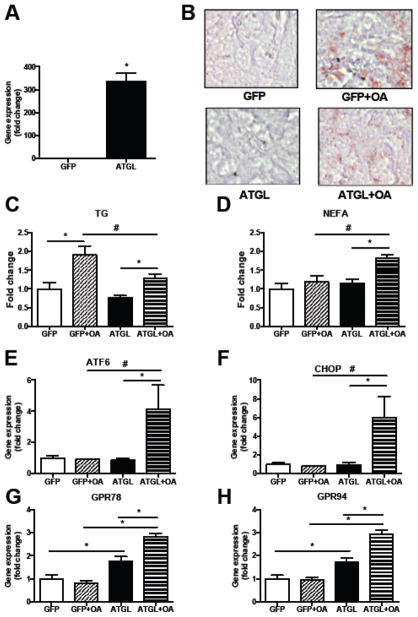
Fig. 5. ATGL-mediated reduction in triglyceride (TAG) accumulation induces ER stress
(A) qPCR data demonstrating successful adenovirus-mediated overexpression of ATGL in AC16 cells. Mean±SEM, n=7–8, *P<0.05. MOI: 10. (B) Oil-red-O staining of AdGFP or AdATGL-infected AC16 cells in the absence or presence of oleate (magnification x10). (C–D) ATGL overexpression reduces intracardiomyocellular TAG levels and increases FFA levels. Data are presented as fold change compared to the GFP control group. n=6, error bars represent SEM. *P<0.05 BSA-control versus palmitate within groups, #P<0.05 ATGL versus GFP. TAG: triacylglycerol, NEFA: non-esterified FA. (E–H) ATGL-mediated increase in ER stress markers ATF6 (E), CHOP (F), GRP78 (G) and GRP94 (H) in AC16 cells treated with oleate. *P<0.05 BSA-control versus palmitate within groups, #P<0.05 ATGL versus GFP, n=6, error bars represent SEM.

References

    1. van der Vusse GJ, van Bilsen M, Glatz JF. Cardiac fatty acid uptake and transport in health and disease. Cardiovasc Res. 2000;45:279–293. - PubMed
    1. Drosatos K, Bharadwaj KG, Lymperopoulos A, Ikeda S, Khan R, Hu Y, Agarwal R, Yu S, Jiang H, Steinberg SF, Blaner WS, Koch WJ, Goldberg IJ. Cardiomyocyte lipids impair beta-adrenergic receptor function via PKC activation. Am J Physiol Endocrinol Metab. 2011;300:E489–499. - PMC - PubMed
    1. Chess DJ, Stanley WC. Role of diet and fuel overabundance in the development and progression of heart failure. Cardiovasc Res. 2008;79:269–278. - PubMed
    1. Perman JC, Bostrom P, Lindbom M, Lidberg U, StAhlman M, Hagg D, Lindskog H, Scharin Tang M, Omerovic E, Mattsson Hulten L, Jeppsson A, Petursson P, Herlitz J, Olivecrona G, Strickland DK, Ekroos K, Olofsson SO, Boren J. The VLDL receptor promotes lipotoxicity and increases mortality in mice following an acute myocardial infarction. J Clin Invest. 2011;121:2625–2640. - PMC - PubMed
    1. Borradaile NM, Schaffer JE. Lipotoxicity in the heart. Curr Hypertens Rep. 2005;7:412–417. - PubMed

Publication types

MeSH terms