Review
. 2015 Mar;12(3):415-40.
doi: 10.1517/17425247.2015.961420. Epub 2014 Sep 24.

Long-term delivery of protein therapeutics

Affiliations
Review

Long-term delivery of protein therapeutics

Ravi Vaishya et al. Expert Opin Drug Deliv. 2015 Mar.

Abstract

Introduction: Proteins are effective biotherapeutics with applications in diverse ailments. Despite being specific and potent, their full clinical potential has not yet been realized. This can be attributed to short half-lives, complex structures, poor in vivo stability, low permeability, frequent parenteral administrations and poor adherence to treatment in chronic diseases. A sustained release system, providing controlled release of proteins, may overcome many of these limitations.

Areas covered: This review focuses on recent development in approaches, especially polymer-based formulations, which can provide therapeutic levels of proteins over extended periods. Advances in particulate, gel-based formulations and novel approaches for extended protein delivery are discussed. Emphasis is placed on dosage form, method of preparation, mechanism of release and stability of biotherapeutics.

Expert opinion: Substantial advancements have been made in the field of extended protein delivery via various polymer-based formulations over last decade despite the unique delivery-related challenges posed by protein biologics. A number of injectable sustained-release formulations have reached market. However, therapeutic application of proteins is still hampered by delivery-related issues. A large number of protein molecules are under clinical trials, and hence, there is an urgent need to develop new methods to deliver these highly potent biologics.

Keywords: formulation; hydrogel; implant; microparticle; nanoparticle; protein delivery; release mechanism; stability; sustained release; thermosensitive gel.


Figures
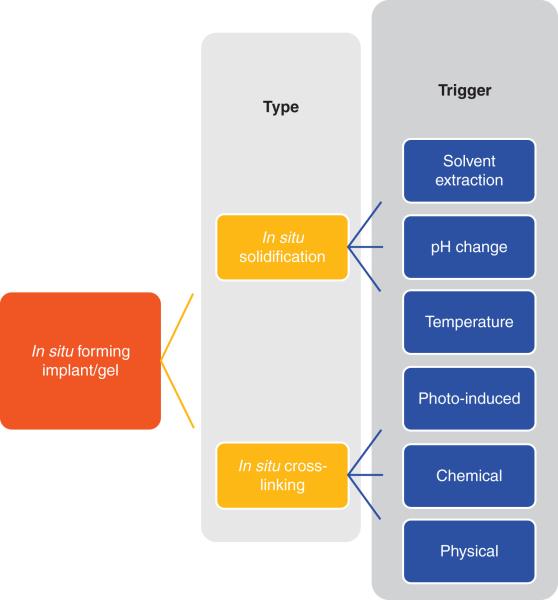
Figure 1
Figure 1
Classification of in situ forming implant/gel systems based of mechanism of formation.
Figure 2
Figure 2
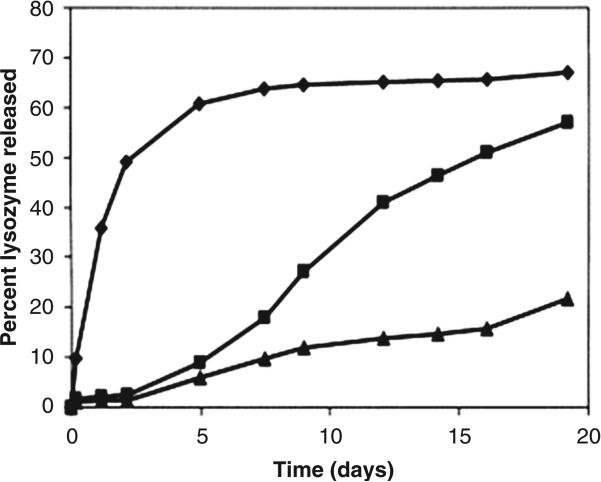
Lysozyme release rate from 50 wt% PLGA/solvent solutions; NMP (◆); triacetin (■); ethyl benzoate (▲) quenched into a PBS solution. Reproduced with permission from [29].
Figure 3
Figure 3
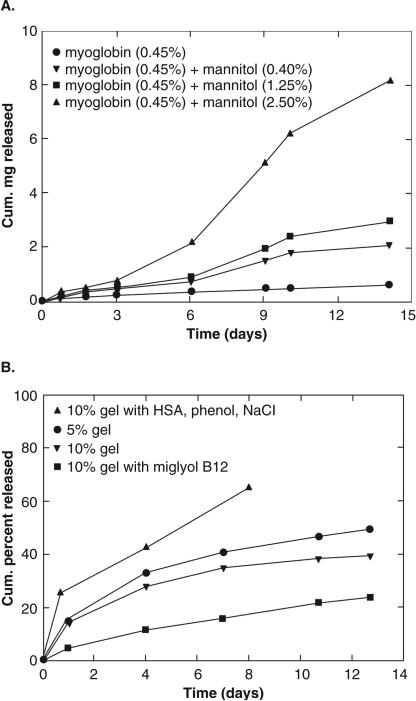
(a) Effect of mannitol on release of myoglobin from PLGA formulations. (b) Effect of polymer concentration and additives on myoglobin release from PLGA formulations. Reproduced with permission from [33].
Figure 4
Figure 4
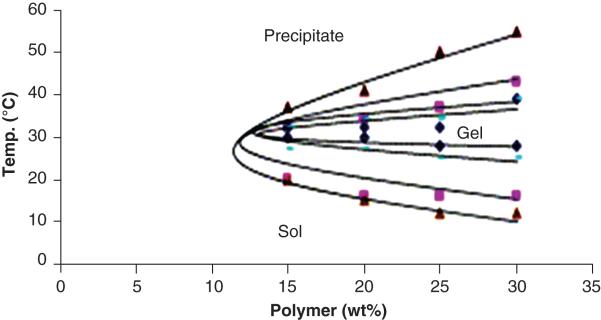
The phase diagram of PLGA–PEG–PLGA triblock copolymer. Key: (◆) PLGA995– PEG1000–PLGA995, (▬) PLGA1125–PEG1000–PLGA1125, (■) PLGA1350–PEG1000–PLGA1350, and (▲) PLGA1400–PEG1000–PLGA1400. Reproduced with permission from [48].
Figure 5
Figure 5
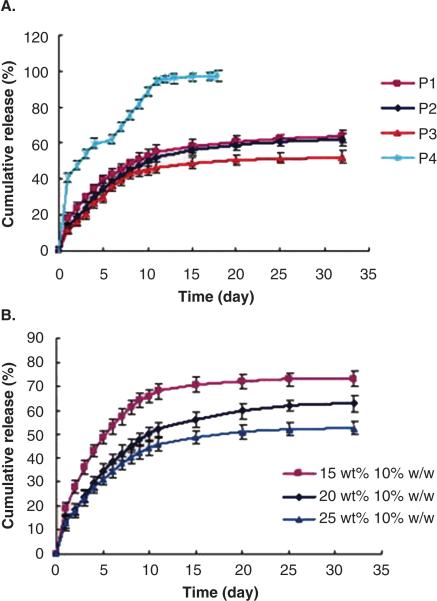
In vitro release of BSA from PCL-PEG-PCL hydrogels in PBS at 37°C with marked copolymer and drug loadings. (A) Effect of different compositions on the BSA release. The copolymer concentration was 20 wt %, and the drug loading was 10.0% (w/w). (B) Effect of varying polymer concentrations on the BSA release from copolymer P2 formulations. Each point represents the mean±SD, n=3. Reproduced with permission from [58].
Figure 6
Figure 6
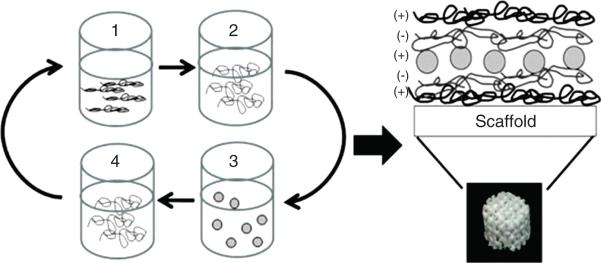
Schematic of LbL architecture shows that a 3DP scaffold (or glass surface) is repeatedly dipped with tetralayer units consisting of (1) Poly 2 (positively charged), (2) chondroitin sulphate (negatively charged), (3) BMP-2 (positively charged) and (4) chondroitin sulfate. This tetralayer structure was repeated 100 times for all LbL films. Reproduced with permission from [62].
Figure 7
Figure 7
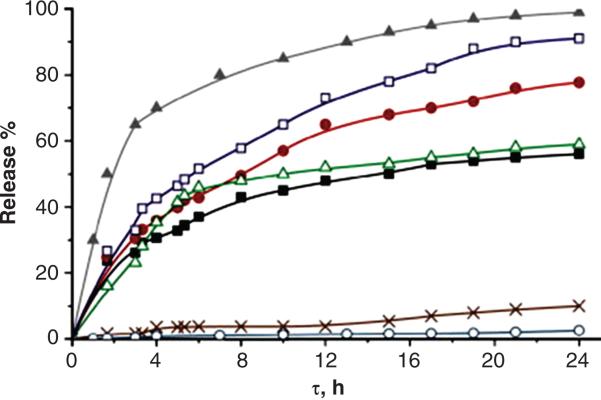
BSA release profiles from CSPVP hydrogels at 0.1 M ionic strength. pH 7.4 at 37°C, CSPVP1 (■), CSPVP2 (△), CSPVP3 (●),CSPVP4 (□); release of BSA from hydrogels at pH 1.5 (○), at pH 9 (▲) and in water (x). Key: CSPVP1: Cs:PVP 1:1 w/w crosslinked at 3.2 kGy, CSPVP2: Cs:PVP 1:1 w/w crosslinked at 5 kGy, CSPVP3: Cs:PVP 1:2 w/w crosslinked at 3.2 kGy and CSPVP4: Cs:PVP 1:2 w/w crosslinked at 5 kGy. Reproduced with permission from [72].
Figure 8
Figure 8
Drug release mechanism from microspheres.
Figure 9
Figure 9
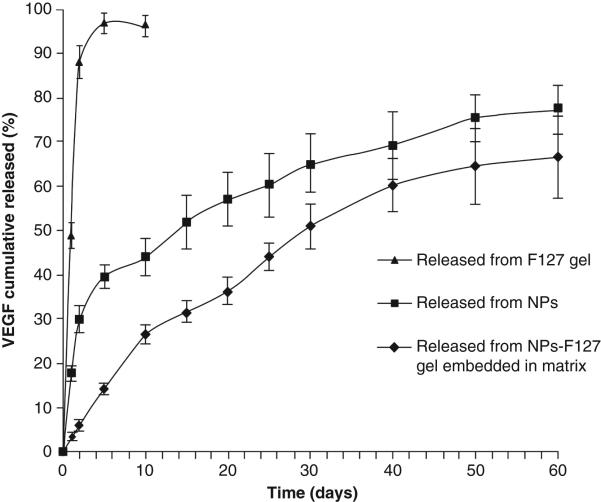
In vitro release of VEGF from Pluronic-F127 gel, PLGA-NPs and PLGA-NPs dispersed in Pluronic-F127 gel. Reproduced with permission from [109].
Figure 10
Figure 10
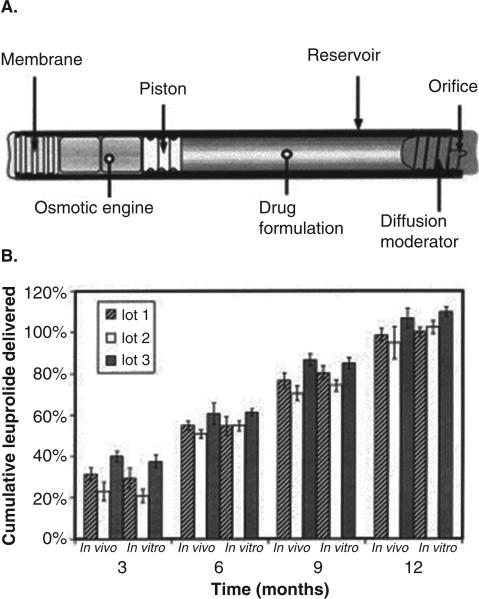
(a) Cross-sectional diagram of the DUROS ® implant. (b) In vivo/in vitro performance comparison for cumulative drug delivery in rats. Reproduced with permission from [117].
Figure 11
Figure 11
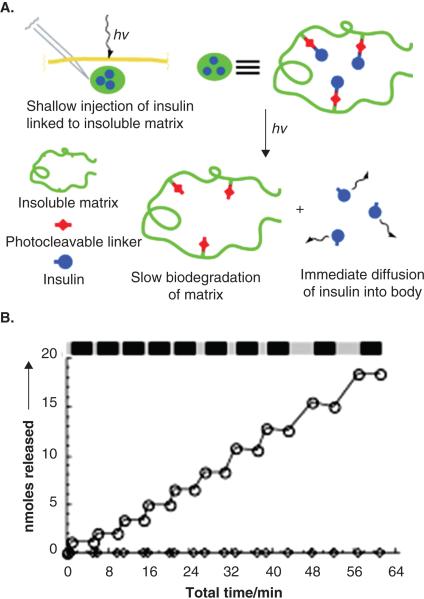
(a) Overall approach to the photoactivated depot (PAD). A drug, insulin in this case, is linked to an insoluble but biodegradable resin, through a photocleavable linker. The conjugate is injected in a shallow depot cutaneously or subcutaneously. Irradiation breaks the link of insulin from the resin, thereby allowing it to diffuse away from the resin and be absorbed by the systemic circulation. Ultimately the resin is biodegraded. (b) Stepwise photolysis of the photoactivated insulin depot. Cumulative moles of insulin released from the modified resin when using an LED point source that was turned on and off repeatedly. Light and dark bars indicate periods of irradiation and darkness. Reproduced with permission from [122].

References

    1. America PRaMo Biologic Medicines in Development. 2013 Feb;7:2013.
    1. Davison DB. The Number of Human Genes and Proteins. Nano Science and Technology Institute; 2002. pp. 6–11.
    1. Valkov E, Sharpe T, Marsh M, Greive S, Hyvonen M. Targeting protein-protein interactions and fragment-based drug discovery. Topics in current chemistry. 2012;317:145–79. - PubMed
    1. Thiel P, Kaiser M, Ottmann C. Small-molecule stabilization of protein-protein interactions: an underestimated concept in drug discovery? Angewandte Chemie. 2012 Feb 27;51(9):2012–8. - PubMed
    1. Voet A, Zhang KY. Pharmacophore modelling as a virtual screening tool for the discovery of small molecule protein-protein interaction inhibitors. Current pharmaceutical design. 2012;18(30):4586–98. - PubMed

Publication types

MeSH terms