


Methicillin-sensitive and methicillin-resistant Staphylococcus aureus nasal carriage in a random sample of non-hospitalized adult population in northern Germany
- PMID: 25251407
- PMCID: PMC4176714
- DOI: 10.1371/journal.pone.0107937
Methicillin-sensitive and methicillin-resistant Staphylococcus aureus nasal carriage in a random sample of non-hospitalized adult population in northern Germany
Abstract
Objective: The findings from truly randomized community-based studies on Staphylococcus aureus nasal colonization are scarce. Therefore we have examined point prevalence and risk factors of S. aureus nasal carriage in a non-hospitalized population of Braunschweig, northern Germany.
Methods: A total of 2026 potential participants were randomly selected through the resident's registration office and invited by mail. They were requested to collect a nasal swab at home and return it by mail. S. aureus was identified by culture and PCR. Logistic regression was used to determine risk factors of S. aureus carriage.
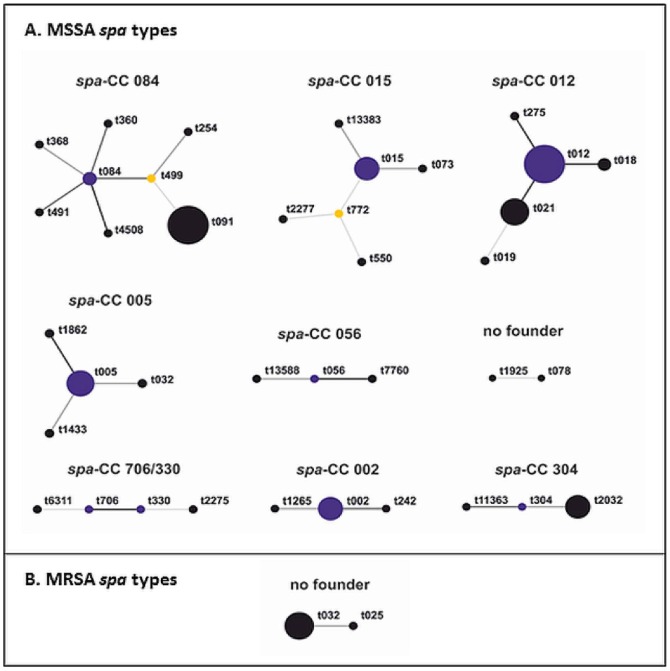
Results: Among the invitees, 405 individuals agreed to participate and 389 provided complete data which was included in the analysis. The median age of the participants was 49 years (IQR: 39-61) and 61% were females. S. aureus was isolated in 85 (21.9%; 95% CI: 18.0-26.2%) of the samples, five of which were MRSA (1.29%; 95% CI: 0.55-2.98%). In multiple logistic regression, male sex (OR = 3.50; 95% CI: 2.01-6.11) and presence of allergies (OR = 2.43; 95% CI: 1.39-4.24) were found to be associated with S. aureus nasal carriage. Fifty five different spa types were found, that clustered into nine distinct groups. MRSA belonged to the hospital-associated spa types t032 and t025 (corresponds to MLST CC 22), whereas MSSA spa types varied and mostly belonged to spa-CC 012 (corresponds to MLST CC 30), and spa-CC 084 (corresponds to MLST CC 15).
Conclusion: This first point prevalence study of S. aureus in a non-hospitalized population of Germany revealed prevalence, consistent with other European countries and supports previous findings on male sex and allergies as risk factors of S. aureus carriage. The detection of hospital-associated MRSA spa types in the community indicates possible spread of these strains from hospitals into the community.
Conflict of interest statement
Figures
References
Publication types
MeSH terms
LinkOut - more resources
Full Text Sources
Other Literature Sources
Medical
