


Electronic cigarette use among patients with cancer: characteristics of electronic cigarette users and their smoking cessation outcomes
- PMID: 25252116
- PMCID: PMC5642904
- DOI: 10.1002/cncr.28811
Electronic cigarette use among patients with cancer: characteristics of electronic cigarette users and their smoking cessation outcomes
Erratum in
-
Erratum: Borderud SP, Li Y, Burkhalter JE, Sheffer CE and Ostroff JS. Electronic cigarette use among patients with cancer: Characteristics of electronic cigarette users and their smoking cessation outcomes. Cancer. doi: 10.1002/ cncr.28811.Cancer. 2015 Mar 1;121(5):800. doi: 10.1002/cncr.29118. Cancer. 2015. PMID: 25855820
Abstract
Background: Given that continued smoking after a cancer diagnosis increases the risk of adverse health outcomes, patients with cancer are strongly advised to quit. Despite a current lack of evidence regarding their safety and effectiveness as a cessation tool, electronic cigarettes (E-cigarettes) are becoming increasingly popular. To guide oncologists' communication with their patients about E-cigarette use, this article provides what to the authors' knowledge is the first published clinical data regarding E-cigarette use and cessation outcomes among patients with cancer.
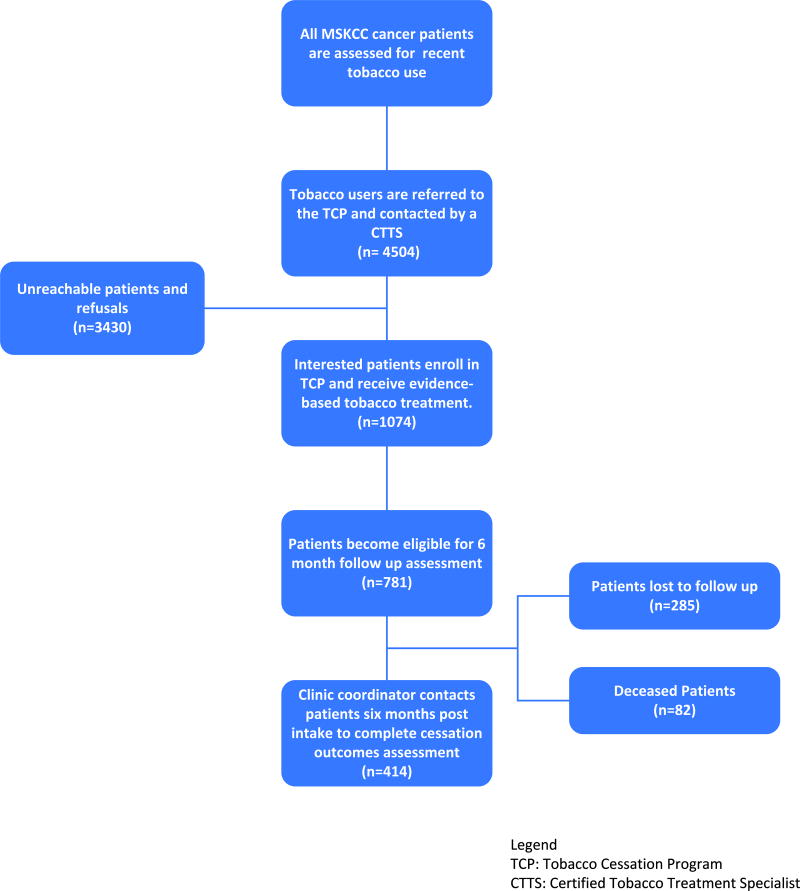
Methods: A total of 1074 participants included smokers (patients with cancer) who recently enrolled in a tobacco treatment program at a comprehensive cancer center. Standard demographic, tobacco use history, and follow-up cessation outcomes were assessed.
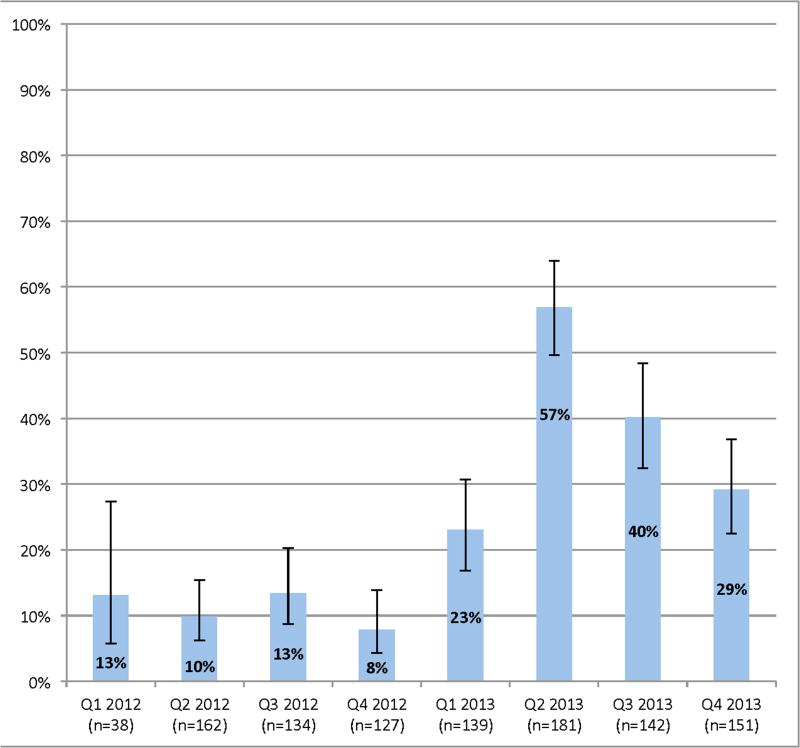
Results: A 3-fold increase in E-cigarette use was observed from 2012 to 2013 (10.6% vs 38.5%). E-cigarette users were more nicotine dependent than nonusers, had more prior quit attempts, and were more likely to be diagnosed with thoracic and head or neck cancers. Using a complete case analysis, E-cigarette users were as likely to be smoking at the time of follow-up as nonusers (odds ratio, 1.0; 95% confidence interval, 0.5-1.7). Using an intention-to-treat analysis, E-cigarette users were twice as likely to be smoking at the time of follow-up as nonusers (odds ratio, 2.0; 95% confidence interval, 1.2-3.3).
Conclusions: The high rate of E-cigarette use observed is consistent with recent articles highlighting increased E-cigarette use in the general population. The current longitudinal findings raise doubts concerning the usefulness of E-cigarettes for facilitating smoking cessation among patients with cancer. Further research is needed to evaluate the safety and efficacy of E-cigarettes as a cessation treatment for patients with cancer.
Keywords: cancer; electronic cigarettes (E-cigarettes); smoking cessation; tobacco.
© 2014 American Cancer Society.
Figures
Comment in
-
Tobacco control: up in E-smoke?Cancer. 2014 Nov 15;120(22):3430-2. doi: 10.1002/cncr.28810. Epub 2014 Sep 22. Cancer. 2014. PMID: 25252011 No abstract available.
-
Electronic cigarettes did not help patients with cancer stop smoking.CA Cancer J Clin. 2015 Mar;65(2):85-6. doi: 10.3322/caac.21264. Epub 2015 Jan 30. CA Cancer J Clin. 2015. PMID: 25640916 No abstract available.
-
Reply to discrepant results for smoking and cessation among electronic cigarette users.Cancer. 2015 Jul 1;121(13):2287-8. doi: 10.1002/cncr.29306. Epub 2015 Mar 4. Cancer. 2015. PMID: 25740086 Free PMC article. No abstract available.
-
Discrepant results for smoking and cessation among electronic cigarette users.Cancer. 2015 Jul 1;121(13):2286-7. doi: 10.1002/cncr.29307. Epub 2015 Mar 4. Cancer. 2015. PMID: 25740231 No abstract available.
References
-
- U.S. Department of Health and Human Services. The Health Consequences of Smoking – 50 years of progress: A report of the Surgeon General. Atlanta, GA: U.S. Department of Health and Human Services, Centers for Disease Control and Prevention, National Center for Chronic Disease Prevention and Health Promotion, Office on Smoking and Health; 2014.
-
- Warren GW, Kasza KA, Reid ME, Cummings KM, Marshall JR. Smoking at diagnosis and survival in cancer patients. Int J Cancer. 2013;132:401–410. - PubMed
MeSH terms
Grants and funding
LinkOut - more resources
Full Text Sources
Other Literature Sources
Medical
