


The effect of a supplementary ('Gist-based') information leaflet on colorectal cancer knowledge and screening intention: a randomized controlled trial
- PMID: 25253443
- PMCID: PMC4353886
- DOI: 10.1007/s10865-014-9596-z
The effect of a supplementary ('Gist-based') information leaflet on colorectal cancer knowledge and screening intention: a randomized controlled trial
Abstract
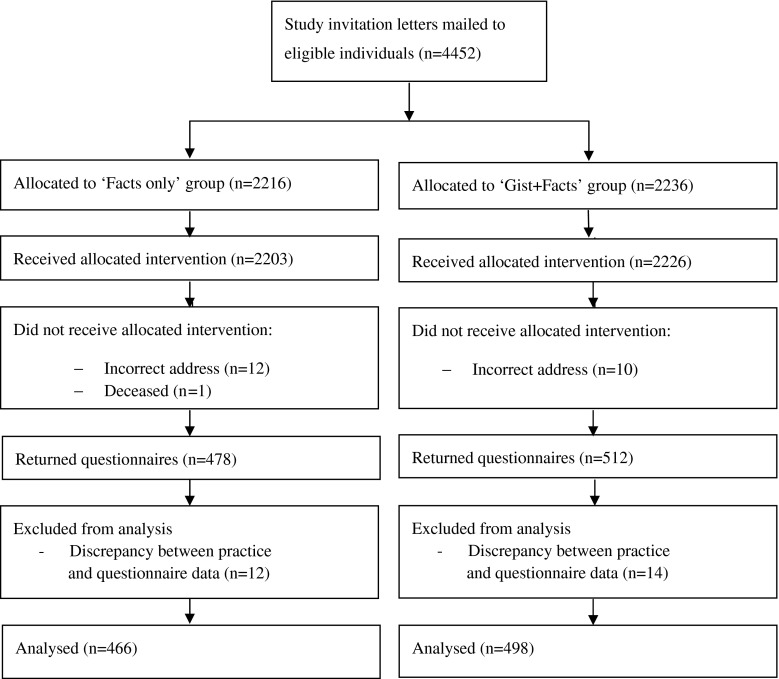
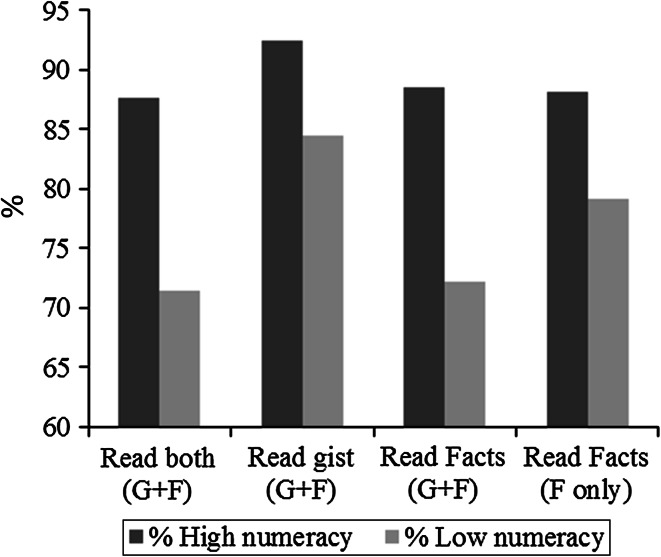
Guided by Fuzzy Trace Theory, this study examined the impact of a 'Gist-based' leaflet on colorectal cancer screening knowledge and intentions; and tested the interaction with participants' numerical ability. Adults aged 45-59 years from four UK general practices were randomly assigned to receive standard information ('The Facts', n = 2,216) versus standard information plus 'The Gist' leaflet (Gist + Facts, n = 2,236). Questionnaires were returned by 964/4,452 individuals (22 %). 82 % of respondents reported having read the information, but those with poor numeracy were less likely (74 vs. 88 %, p < .001). The 'Gist + Facts' group were more likely to reach the criterion for adequate knowledge (95 vs. 91 %; p < .01), but this was not moderated by numeracy. Most respondents (98 %) intended to participate in screening, with no group differences and no interaction with numeracy. The improved levels of knowledge and self-reported reading suggest 'The Gist' leaflet may increase engagement with colorectal cancer screening, but ceiling effects reduced the likelihood that screening intentions would be affected.
Figures
References
-
- Austoker J, Giordano L, Hewitson P, Villain P. European guidelines for quality assurance in colorectal cancer screening and diagnosis. First Edition—Communication. Endoscopy. 2012;44:S164–S185. - PubMed
-
- Boxell EM, Smith SG, Morris M, Kummer S, Rowlands G, Waller J, Simon AE. Increasing awareness of gynecological cancer symptoms and reducing barriers to medical help seeking: Does health literacy play a role? Journal of Health Communication. 2012;17:S265–S279. doi: 10.1080/10810730.2012.712617. - DOI - PubMed
Publication types
MeSH terms
Grants and funding
LinkOut - more resources
Full Text Sources
Other Literature Sources
Medical
