


Disruption of hSWI/SNF complexes in T cells by WAS mutations distinguishes X-linked thrombocytopenia from Wiskott-Aldrich syndrome
- PMID: 25253772
- PMCID: PMC4246038
- DOI: 10.1182/blood-2014-07-587642
Disruption of hSWI/SNF complexes in T cells by WAS mutations distinguishes X-linked thrombocytopenia from Wiskott-Aldrich syndrome
Abstract
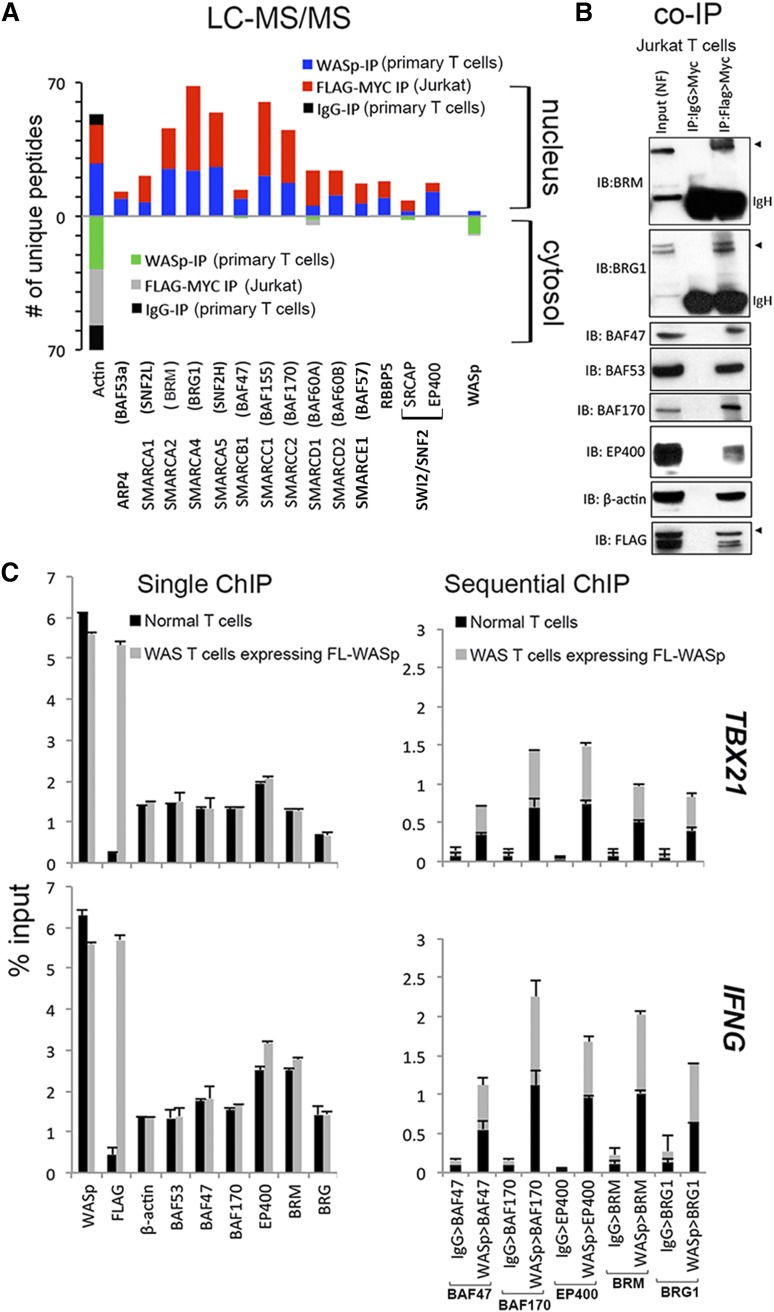
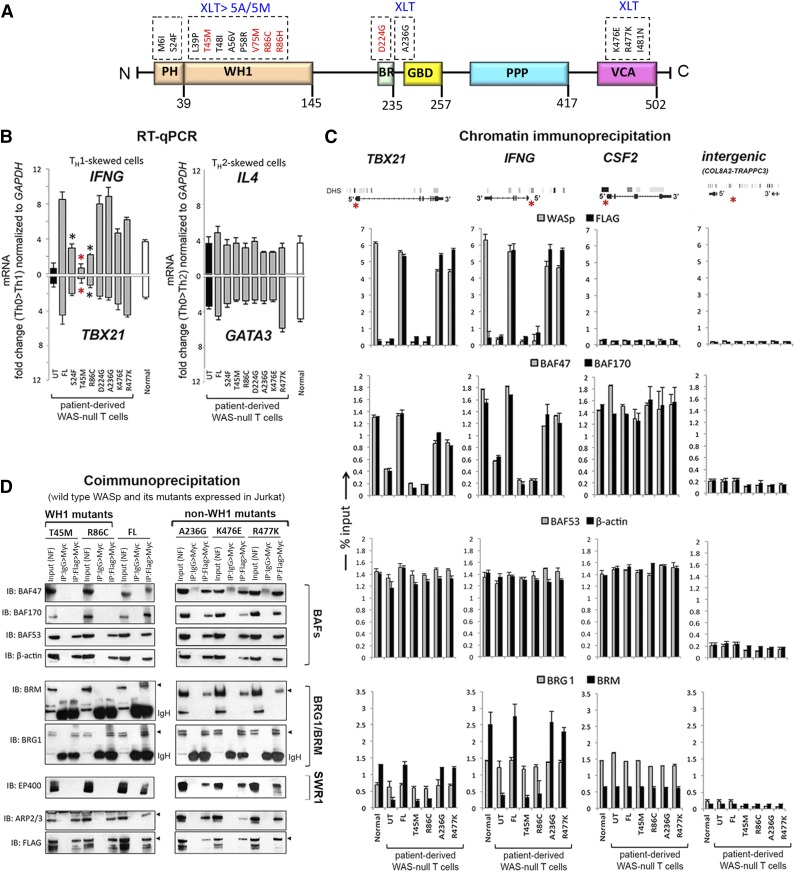
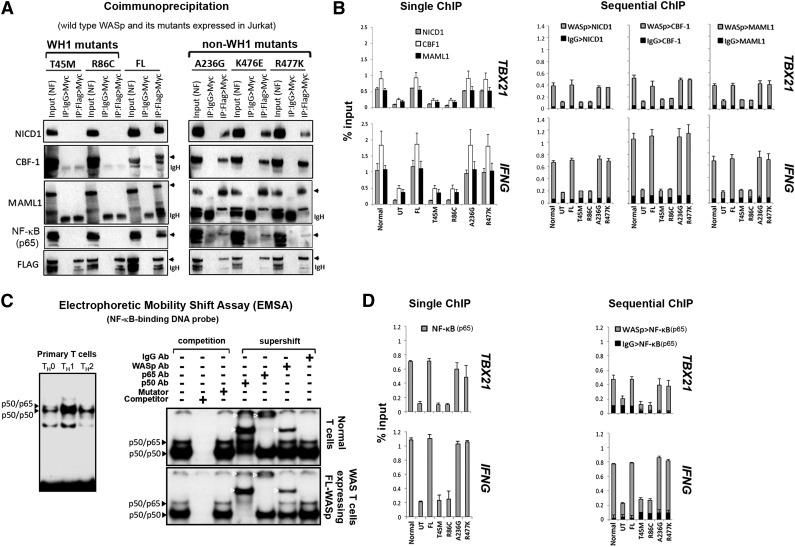
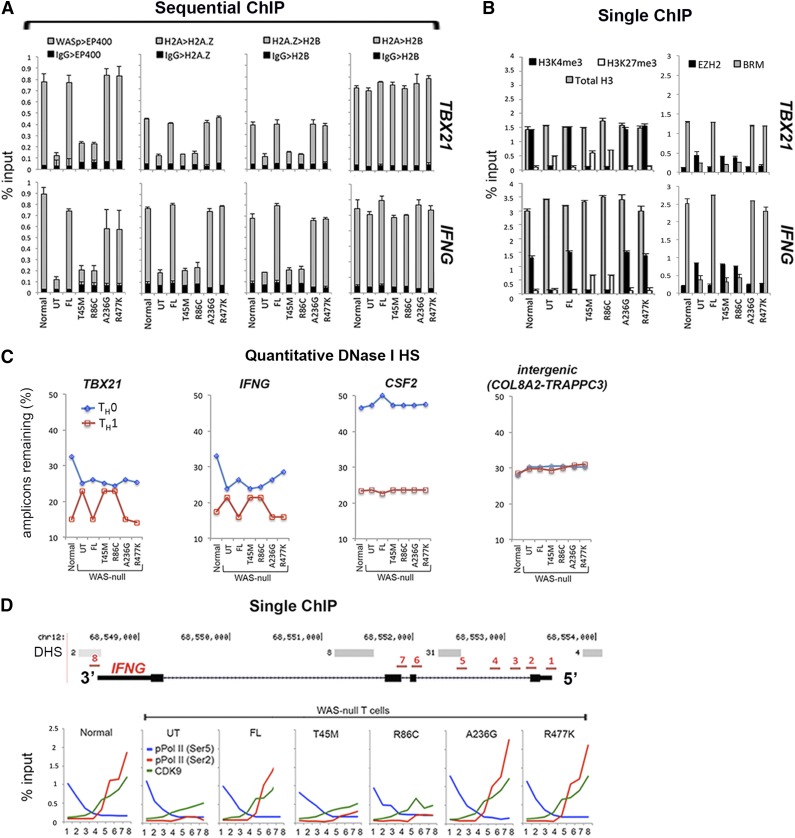
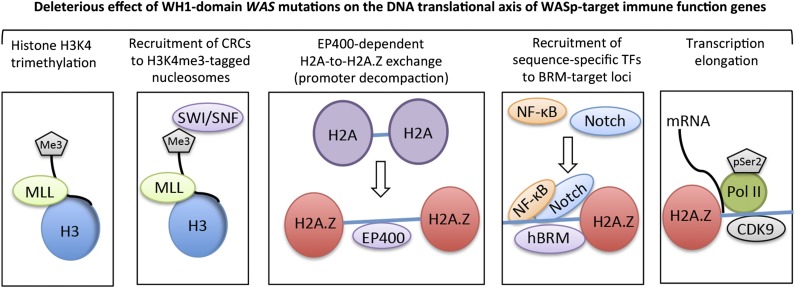
Wiskott-Aldrich syndrome (WAS), an immunodeficiency disorder, and X-linked thrombocytopenia (XLT), a bleeding disorder, both arise from nonsynonymous mutations in WAS, which encodes a hematopoietic-specific WASp. Intriguingly, XLT evolves into WAS in some patients but not in others; yet the biological basis for this cross-phenotype (CP) effect remains unclear. Using human T-helper (TH) cells expressing different disease-causing WAS mutations, we demonstrated that hSWI/SNF-like complexes require nuclear-WASp to execute their chromatin-remodeling activity at promoters of WASp-target, immune function genes during TH1 differentiation. Hot-spot WAS mutations Thr45Met and Arg86Cys, which result in XLT-to-WAS disease progression, impair recruitment of hBRM- but not BRG1-enriched BAF complexes to IFNG and TBX21 promoters. Moreover, promoter enrichment of histone H2A.Z and its catalyzing enzyme EP400 are both impaired. Consequently, activation of Notch signaling, a hBRM-regulated event, and its downstream effector NF-κB are both compromised, along with decreased accessibility of nucleosomal DNA and inefficient transcription-elongation of WASp-target TH1 genes. In contrast, patient mutations Ala236Gly and Arg477Lys that manifest in XLT without progressing to WAS do not disrupt chromatin remodeling or transcriptional reprogramming of TH1 genes. Our study defines an indispensable relationship between nuclear-WASp- and hSWI/SNF-complexes in gene activation and reveals molecular distinctions in TH cells that might contribute to disease severity in the XLT/WAS clinical spectrum.
© 2014 by The American Society of Hematology.
Figures
References
-
- Symons M, Derry JM, Karlak B, et al. Wiskott-Aldrich syndrome protein, a novel effector for the GTPase CDC42Hs, is implicated in actin polymerization. Cell. 1996;84(5):723–734. - PubMed
-
- Villa A, Notarangelo L, Macchi P, et al. X-linked thrombocytopenia and Wiskott-Aldrich syndrome are allelic diseases with mutations in the WASP gene. Nat Genet. 1995;9(4):414–417. - PubMed
Publication types
MeSH terms
Substances
Supplementary concepts
Grants and funding
LinkOut - more resources
Full Text Sources
Other Literature Sources
Miscellaneous
