


Current treatment options for colon cancer peritoneal carcinomatosis
- PMID: 25253949
- PMCID: PMC4168082
- DOI: 10.3748/wjg.v20.i35.12493
Current treatment options for colon cancer peritoneal carcinomatosis
Abstract
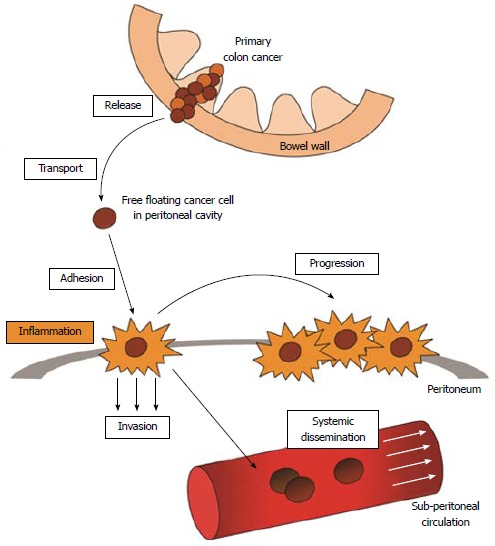
Peritoneal carcinomatosis (PC), the dissemination of cancer cells throughout the lining of the abdominal cavity, is the second most common presentation of colon cancer distant metastasis. Despite remarkable advances in cytotoxic chemotherapy and targeted therapy for colon cancer over the last 15 years, it has been repeatedly shown that these therapies remain ineffective for colon cancer PC. Recently, there has been a rapid accumulation of reports that cytoreductive surgery combined with hyperthermic intraperitoneal chemotherapy (CRS-HIPEC) prolongs the life of colon cancer PC patients. Here, we will review the clinical presentation, the mechanisms of disease progression, and current treatment options for colon cancer PC, with a focus on the benefits and limitations of CRS-HIPEC.
Keywords: Cancer; Carcinomatosis; Colorectal; Cytoreductive surgery; Hyperthermic intraperitoneal chemotherapy; Intraperitoneal chemotherapy; Mechanism; Peritoneal.
Figures
References
-
- House MG, Ito H, Gönen M, Fong Y, Allen PJ, DeMatteo RP, Brennan MF, Blumgart LH, Jarnagin WR, D’Angelica MI. Survival after hepatic resection for metastatic colorectal cancer: trends in outcomes for 1,600 patients during two decades at a single institution. J Am Coll Surg. 2010;210:744–752, 752-755. - PubMed
-
- Go PH, Klaassen Z, Meadows MC, Chamberlain RS. Gastrointestinal cancer and brain metastasis: a rare and ominous sign. Cancer. 2011;117:3630–3640. - PubMed
Publication types
MeSH terms
Substances
Grants and funding
LinkOut - more resources
Full Text Sources
Other Literature Sources
Medical
