


Motivational activation: a unifying hypothesis of orexin/hypocretin function
- PMID: 25254979
- PMCID: PMC4335648
- DOI: 10.1038/nn.3810
Motivational activation: a unifying hypothesis of orexin/hypocretin function
Abstract
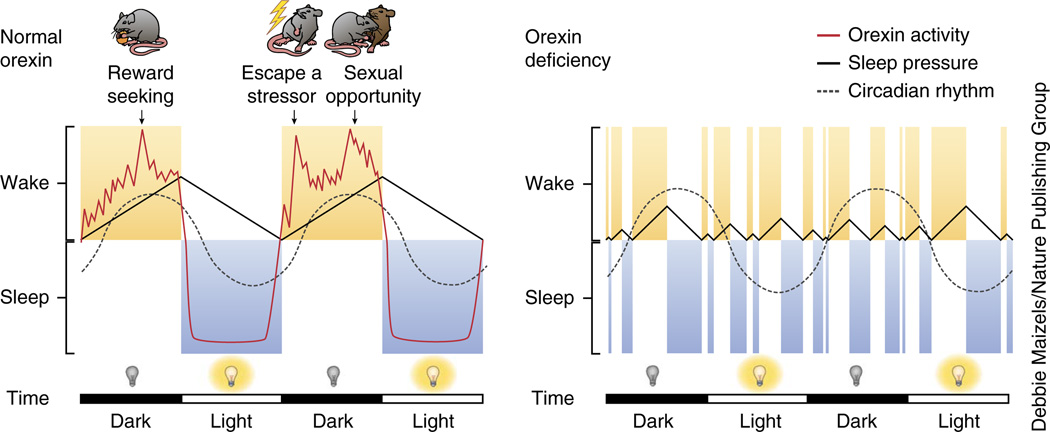
Orexins (hypocretins) are two peptides (orexin A and B) produced from the pre-pro-orexin precursor and expressed in a limited region of dorsolateral hypothalamus. Orexins were originally thought to specifically mediate feeding and promote wakefulness, but it is now clear that they participate in a wide range of behavioral and physiological processes under select circumstances. Orexins primarily mediate behavior under situations of high motivational relevance, such as during physiological need states, exposure to threats or reward opportunities. We hypothesize that many behavioral functions of orexins (including regulation of sleep/wake cycling) reflect a fundamentally integrated function for orexins in translating motivational activation into organized suites of psychological and physiological processes supporting adaptive behaviors. We also discuss how numerous forms of neural heterogeneity modulate this function, allowing orexin neurons to organize diverse, adaptive responses in a variety of motivationally relevant situations. Thus, the involvement of orexins in diverse behaviors may reflect a common underlying function for this peptide system.
Figures
References
-
- Sakurai T, et al. Orexins and orexin receptors: a family of hypothalamic neuropeptides and G protein–coupled receptors that regulate feeding behavior. Cell. 1998;92:573–585. - PubMed
-
- Sakurai T. The neural circuit of orexin (hypocretin): maintaining sleep and wakefulness. Nat. Rev. Neurosci. 2007;8:171–181. - PubMed
-
- Kilduff TS, Peyron C. The hypocretin/orexin ligand-receptor system: implications for sleep and sleep disorders. Trends Neurosci. 2000;23:359–365. - PubMed
Publication types
MeSH terms
Substances
Grants and funding
LinkOut - more resources
Full Text Sources
Other Literature Sources
