


Infants with Tyrosinemia Type 1: Should phenylalanine be supplemented?
- PMID: 25256450
- PMCID: PMC4361924
- DOI: 10.1007/8904_2014_358
Infants with Tyrosinemia Type 1: Should phenylalanine be supplemented?
Abstract
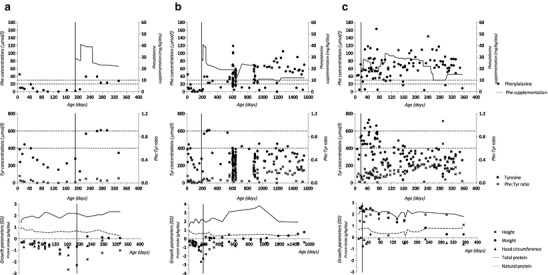
Tyrosinemia type 1 (HT1) is an inborn error of tyrosine catabolism caused by fumarylacetoacetase deficiency. Biochemically, this results in accumulation of toxic metabolites including succinylacetone. Clinically, HT1 is characterized by severe liver, kidney, and neurological problems. Treatment with NTBC and dietary restriction of tyrosine and phenylalanine have strongly improved outcome, but impaired neurocognitive development has been reported. Whether impaired neurocognitive outcome results from high blood tyrosine or low blood phenylalanine concentrations is currently unknown. In this report, two HT1 newborns, diagnosed by neonatal screening, are presented. The first patient showed low phenylalanine concentrations, growth retardation, neurological impairments, and skin problems, clearly improving after institution of phenylalanine supplementation (~30 mg/kg/day) at age 6 months, while both blood phenylalanine and tyrosine concentrations increased. In the second patient, phenylalanine supplementation (~20 mg/kg/day) was initiated as soon as low phenylalanine concentrations were observed at age 19 days. On this regimen, blood phenylalanine concentrations increased, and hypophenylalaninemia was less frequently observed than in the first patient, whereas blood tyrosine concentrations tended to increase. Clinically, no growth, neurological, or skin problems have been observed. The combination of knowledge obtained from these cases suggests that hypophenylalaninemia rather than hypertyrosinemia during the first months of life may impair neurocognitive development in young HT1 infants. Phenylalanine supplementation should really be considered in HT1 patients with consistently low blood phenylalanine concentrations during the first months of life. However, the minimal phenylalanine concentrations acceptable and the optimal phenylalanine supplementation regimen require further investigation.
Figures

References
-
- Couce ML, Dalmau J, del Toro M, Pintos-Morell G, Aldamiz-Echevarria L, Spanish Working Group on Tyrosinemia Type 1 (2011) Tyrosinemia type 1 in Spain: mutational analysis, treatment and long-term outcome. Pediatr Int 53:985–989 - PubMed
LinkOut - more resources
Full Text Sources
Other Literature Sources
