


"Kinect-ing" with clinicians: a knowledge translation resource to support decision making about video game use in rehabilitation
- PMID: 25256741
- PMCID: PMC4348717
- DOI: 10.2522/ptj.20130618
"Kinect-ing" with clinicians: a knowledge translation resource to support decision making about video game use in rehabilitation
Abstract
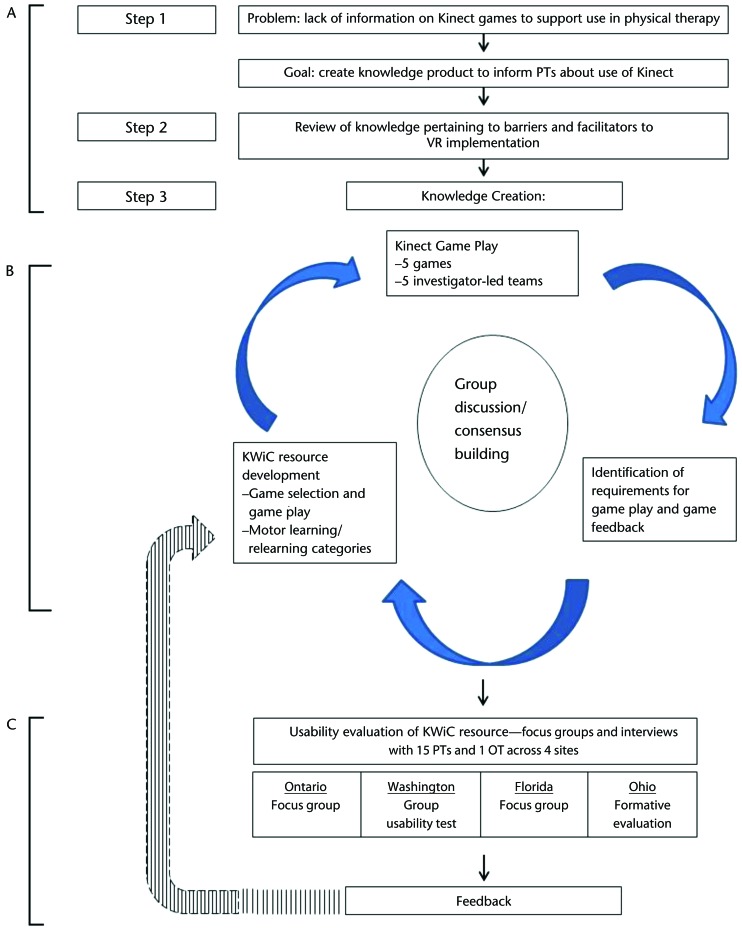
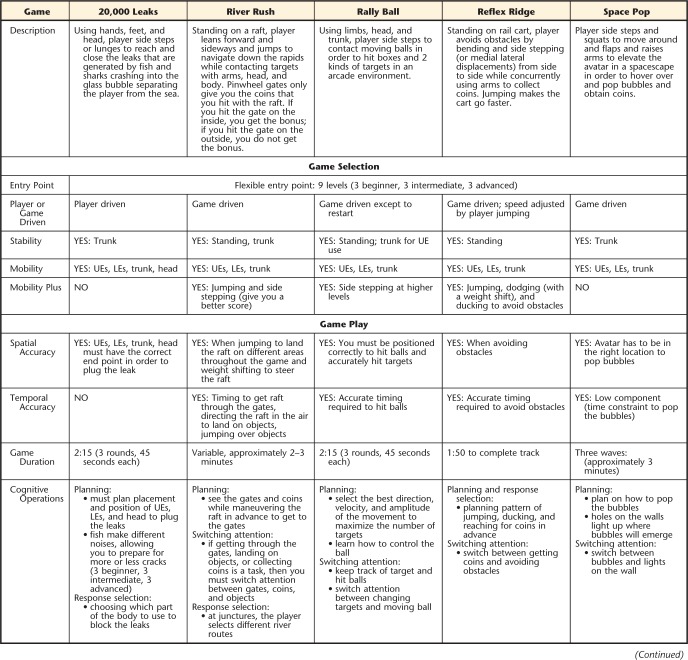
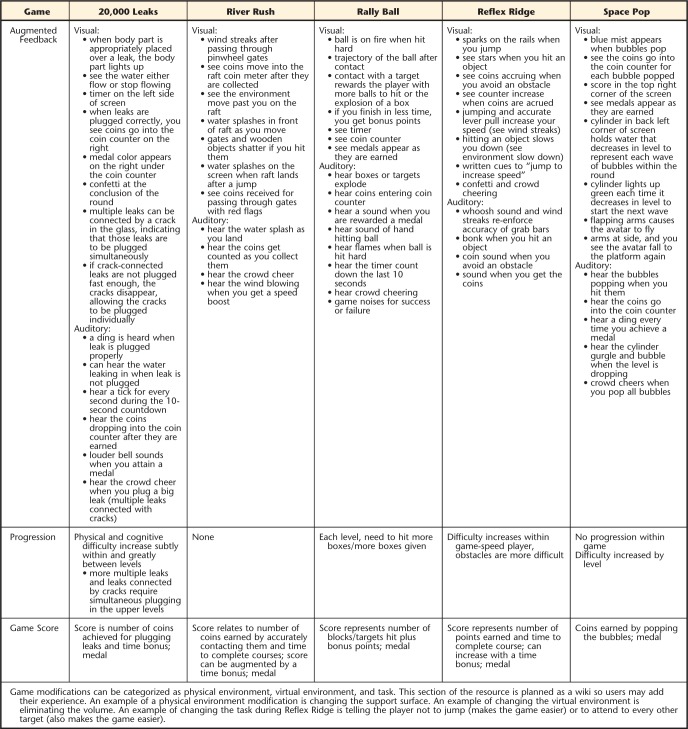
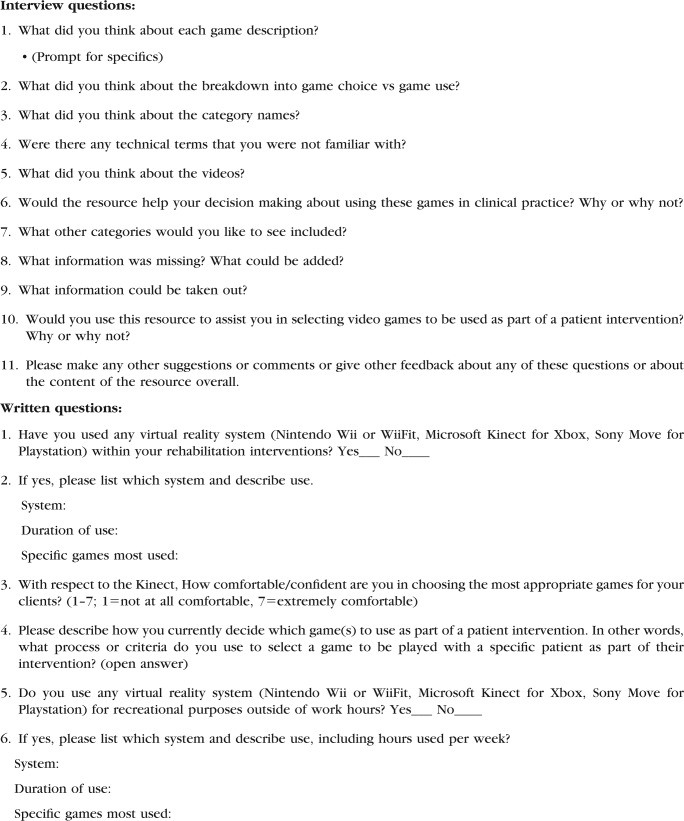
Microsoft's Kinect for Xbox 360 virtual reality (VR) video games are promising rehabilitation options because they involve motivating, full-body movement practice. However, these games were designed for recreational use, which creates challenges for clinical implementation. Busy clinicians require decision-making support to inform game selection and implementation that address individual therapeutic goals. This article describes the development and preliminary evaluation of a knowledge translation (KT) resource to support clinical decision making about selection and use of Kinect games in physical therapy. The knowledge-to-action framework guided the development of the Kinecting With Clinicians (KWiC) resource. Five physical therapists with VR and video game expertise analyzed the Kinect Adventure games. A consensus-building method was used to arrive at categories to organize clinically relevant attributes guiding game selection and game play. The process and results of an exploratory usability evaluation of the KWiC resource by clinicians through interviews and focus groups at 4 clinical sites is described. Subsequent steps in the evaluation and KT process are proposed, including making the KWiC resource Web-based and evaluating the utility of the online resource in clinical practice.
© 2015 American Physical Therapy Association.
Figures

References
-
- Wilson PN, Foreman N, Stanton D. Virtual reality, disability and rehabilitation. Disabil Rehabil. 1997;19:213–220. - PubMed
-
- Laver K, George S, Thomas S, et al. Cochrane review: virtual reality for stroke rehabilitation. Eur J Phys Rehabil Med. 2012;48:523–530. - PubMed
-
- Saposnik G, Levin M. Virtual reality in stroke rehabilitation: a meta-analysis and implications for clinicians. Stroke. 2011;42:1380–1386. - PubMed
-
- Mumford N, Wilson PH. Virtual reality in acquired brain injury upper limb rehabilitation: evidence-based evaluation of clinical research. Brain Inj. 2009;23:179–191. - PubMed
-
- Galvin J, McDonald R, Catroppa C, Anderson V. Does intervention using virtual reality improve upper limb function in children with neurological impairment: a systematic review of the evidence. Brain Inj. 2011;25:435–442. - PubMed
Publication types
MeSH terms
Grants and funding
LinkOut - more resources
Full Text Sources
Other Literature Sources
