


MicroRNA-421 Dysregulation is Associated with Tetralogy of Fallot
- PMID: 25257024
- PMCID: PMC4197626
- DOI: 10.3390/cells3030713
MicroRNA-421 Dysregulation is Associated with Tetralogy of Fallot
Abstract
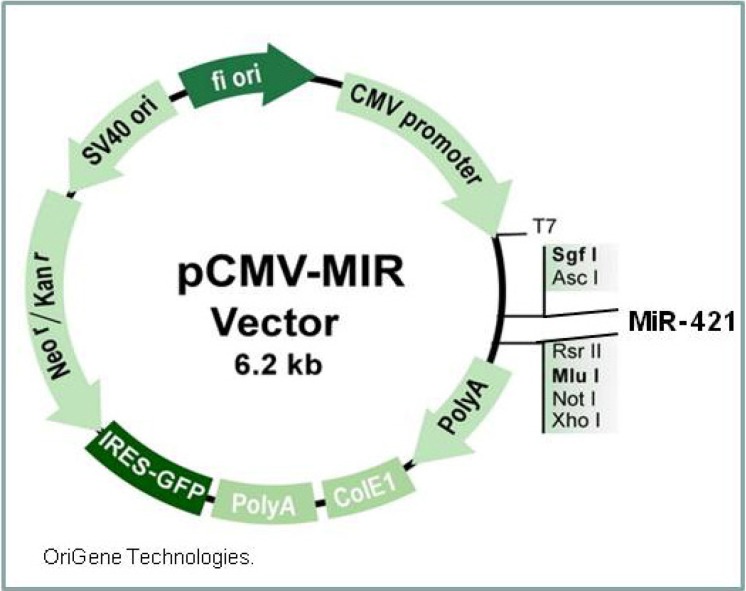
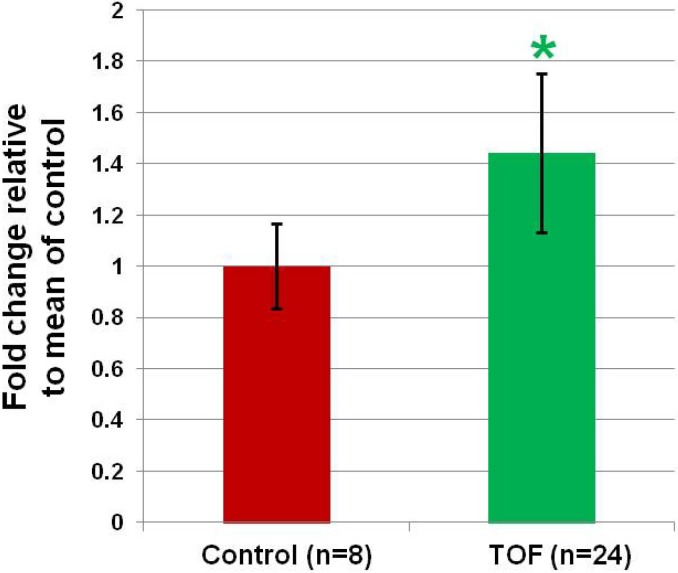
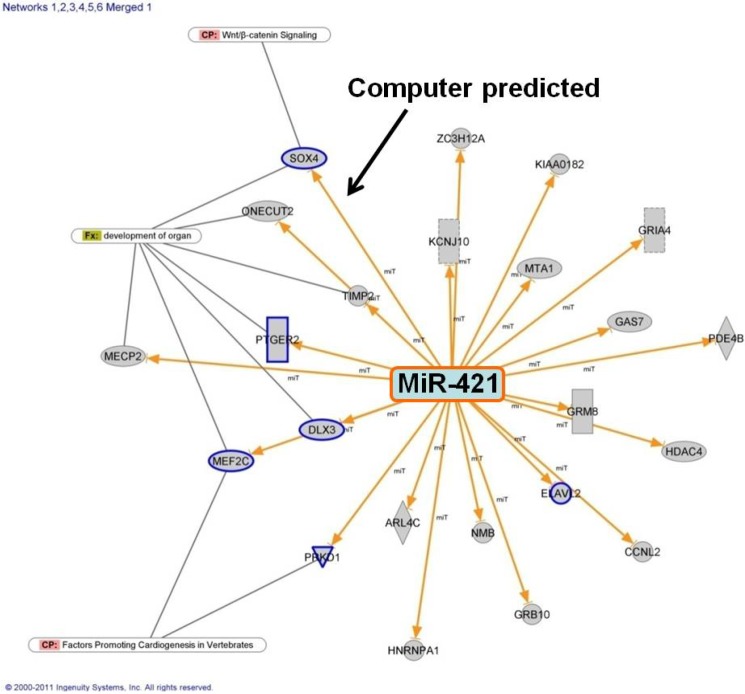
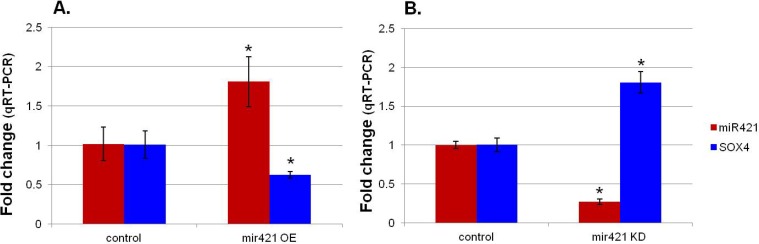
The importance of microRNAs for maintaining stability in the developing vertebrate heart has recently become apparent. In addition, there is a growing appreciation for the significance of microRNAs in developmental pathology, including the formation of congenital heart defects. We examined the expression of microRNAs in right ventricular (RV) myocardium from infants with idiopathic tetralogy of Fallot (TOF, without a 22q11.2 deletion), and found 61 microRNAs to be significantly changed in expression in myocardium from children with TOF compared to normally developing comparison subjects (O'Brien et al. 2012). Predicted targets of microRNAs with altered expression were enriched for gene networks that regulate cardiac development. We previously derived a list of 229 genes known to be critical to heart development, and found 44 had significantly changed expression in TOF myocardium relative to normally developing myocardium. These 44 genes had significant negative correlations with 33 microRNAs, each of which also had significantly changed expression. Here, we focus on miR-421, as it is significantly upregulated in RV tissue from infants with TOF; is predicted to interact with multiple members of cardiovascular regulatory pathways; and has been shown to regulate cell proliferation. We knocked down, and over expressed miR-421 in primary cells derived from the RV of infants with TOF, and infants with normally developing hearts, respectively. We found a significant inverse correlation between the expression of miR-421 and SOX4, a key regulator of the Notch pathway, which has been shown to be important for the cardiac outflow track. These findings suggest that the dysregulation of miR-421 warrants further investigation as a potential contributor to tetralogy of Fallot.
Figures
References
-
- Bruneau B.G. The developmental genetics of congenital heart disease. Nature. 2008;451:943–948. - PubMed
-
- Mitchell S.C., Korones S.B., Berendes H.W. Congenital heart disease in 56,109 births. Incidence and natural history. Circulation. 1971;43:323–332. - PubMed
-
- Hartman J.L.T., Garvik B., Hartwell L. Principles for the buffering of genetic variation. Science. 2001;291:1001–1004. - PubMed
-
- Rutherford S.L., Henikoff S. Quantitative epigenetics. Nat. Genet. 2003;33:6–8. - PubMed
LinkOut - more resources
Full Text Sources
Other Literature Sources
Molecular Biology Databases
