Cancer incidence and mortality during the intervention and postintervention periods of the Women's Health Initiative dietary modification trial
- PMID: 25258014
- PMCID: PMC4257879
- DOI: 10.1158/1055-9965.EPI-14-0922
Cancer incidence and mortality during the intervention and postintervention periods of the Women's Health Initiative dietary modification trial
Abstract
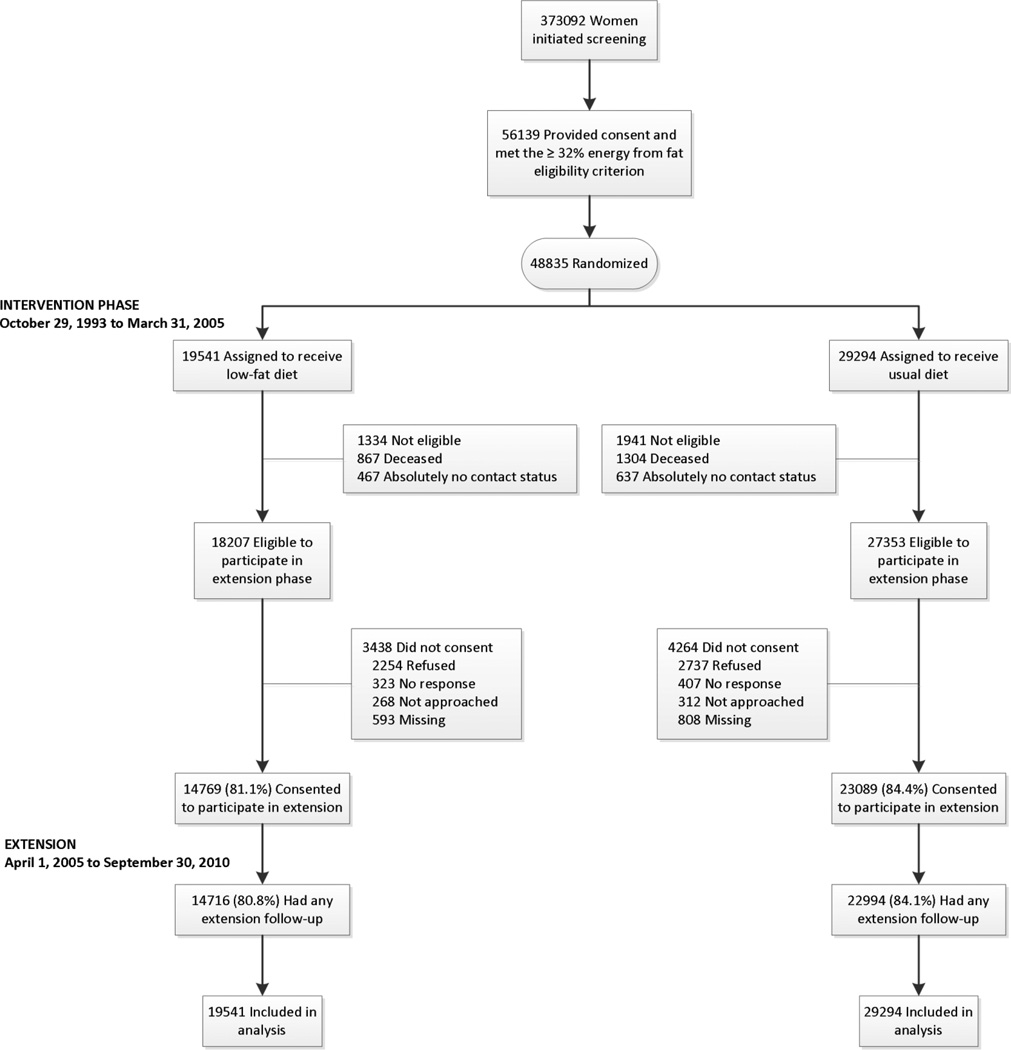
Background: The Women's Health Initiative (WHI) low-fat (20% kcal) dietary modification (DM) trial (1993-2005) demonstrated a nonsignificant reduction in breast cancer, a nominally significant reduction in ovarian cancer, and no effect on other cancers (mean 8.3 years intervention). Consent to nonintervention follow-up was 83% (n = 37,858). This analysis was designed to assess postintervention cancer risk in women randomized to the low-fat diet (40%) versus usual diet comparison (60%).
Methods: Randomized, controlled low-fat diet intervention for prevention of breast and colorectal cancers conducted in 48,835 postmenopausal U.S. women, ages 50 to 79 years at 40 U.S. sites. Outcomes included total invasive cancer, breast cancer, and colorectal cancer, and cancer-specific and overall mortality.
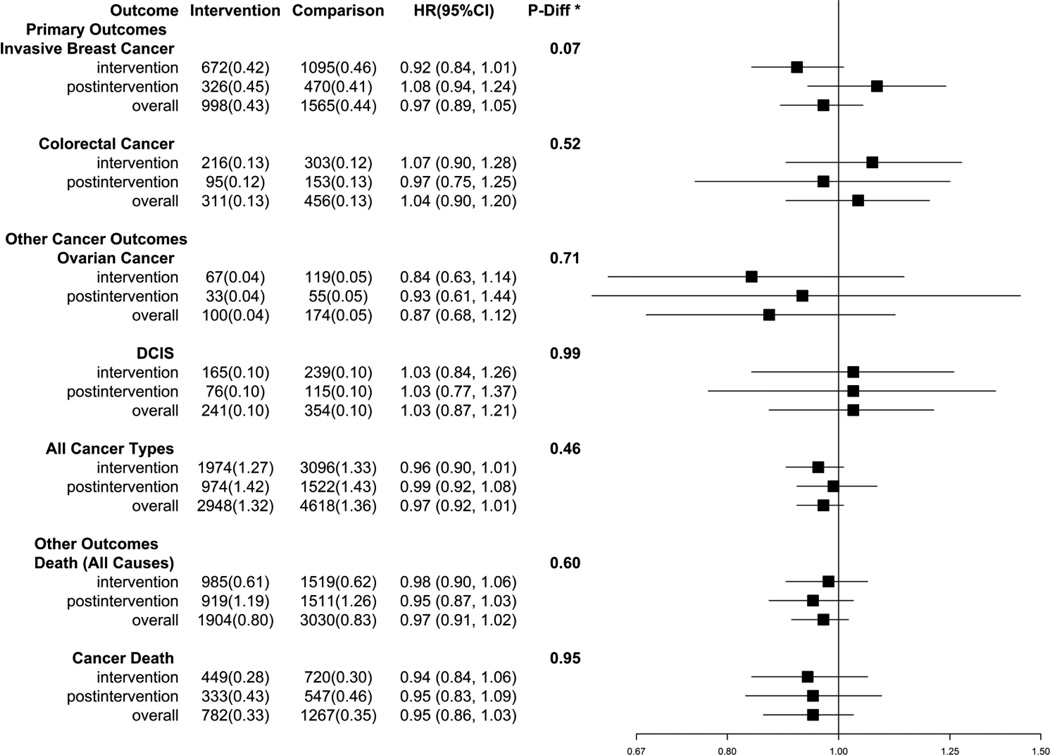
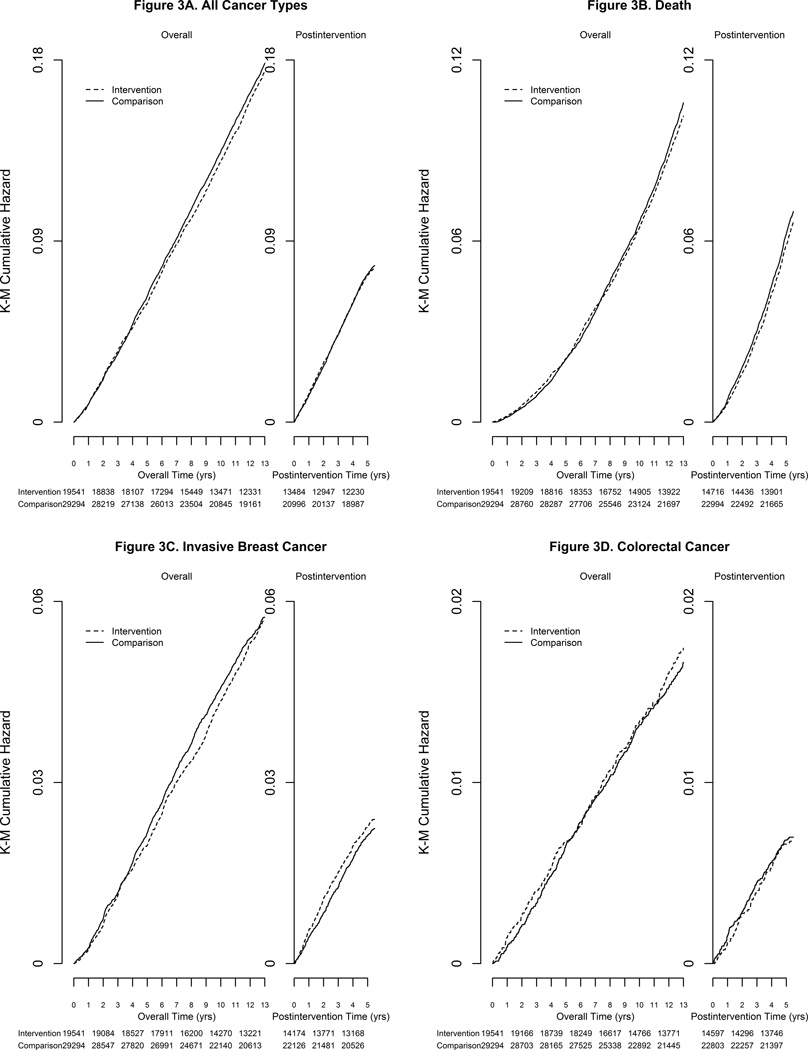
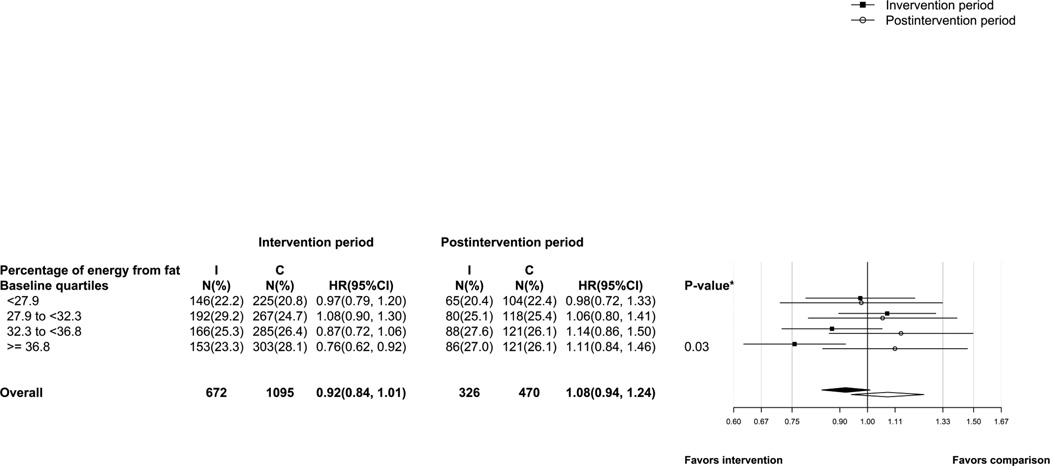
Results: There were no intervention effects on invasive breast or colorectal cancer, other cancers, or cancer-specific or overall mortality during the postintervention period or the combined intervention and follow-up periods. For invasive breast cancer, the hazard ratios (HR) and 95% confidence interval (CI) were 0.92 (0.84-1.01) during intervention, 1.08 (0.94-1.24) during the postintervention period, and 0.97 (0.89-1.05) during cumulative follow-up. A reduced risk for estrogen receptor positive/progesterone receptor-negative tumors was demonstrated during follow-up. In women with higher baseline fat intake (quartile), point estimates of breast cancer risk were HR, 0.76 (95% CI, 0.62-0.92) during intervention versus HR, 1.11 (95% CI, 0.84-1.4) during postintervention follow-up (Pdiff = 0.03).
Conclusions: Dietary fat intake increased postintervention in intervention women; no long-term reduction in cancer risk or mortality was shown in the WHI DM trial.
Impact: Dietary advisement to reduce fat for cancer prevention after menopause generally was not supported by the WHI DM trial.
©2014 American Association for Cancer Research.
Figures
References
-
- IARC Handbooks on Cancer Prevention. World Health Organization Press; 2003.
-
- Carroll KK, Khor HT. Dietary fat in relation to tumorigenesis. Prog Biochem Pharmacol. 1975;10:308–353. - PubMed
-
- Design of the Women's Health Initiative clinical trial and observational study. The Women's Health Initiative Study Group. Control Clin Trials. 1998;19:61–109. - PubMed
-
- Insull W, Jr, Henderson MM, Prentice RL, Thompson DJ, Clifford C, Goldman S, et al. Results of a randomized feasibility study of a low-fat diet. Arch Intern Med. 1990;150:421–427. - PubMed
-
- Henderson MM, Kushi LH, Thompson DJ, Gorbach SL, Clifford CK, Insull W, Jr, et al. Feasibility of a randomized trial of a low-fat diet for the prevention of breast cancer: dietary compliance in the Women's Health Trial Vanguard Study. Prev Med. 1990;19:115–133. - PubMed
Publication types
MeSH terms
Grants and funding
LinkOut - more resources
Full Text Sources
Other Literature Sources
Research Materials