


Selection of essential medicines for diabetes in low and middle income countries: a survey of 32 national essential medicines lists
- PMID: 25259517
- PMCID: PMC4178014
- DOI: 10.1371/journal.pone.0106072
Selection of essential medicines for diabetes in low and middle income countries: a survey of 32 national essential medicines lists
Abstract
Aim: Diabetes is a growing burden especially in low and middle income countries (LMICs). Inadequate access to diabetes care is of particular concern and selection of appropriate diabetes medicines on national essential medicines lists (NEMLs) is a first step in achieving adequate access. This selection was studied among LMICs and influences of various factors associated with selection decisions were assessed.
Methods: Countries were studied if they employed NEMLs for reimbursement or procurement purposes. Presence and number of essential diabetes medicines from different classes, both insulins and oral blood glucose lowering medicines, were surveyed and calculated. Data were also analyzed by country income level, geographic region, year of last update of the NEML and purpose of NEML employment. The effect of prevalence and burden of disease on the number of essential diabetes medicines was also studied. Non parametric tests and univariate linear regression analysis were used.
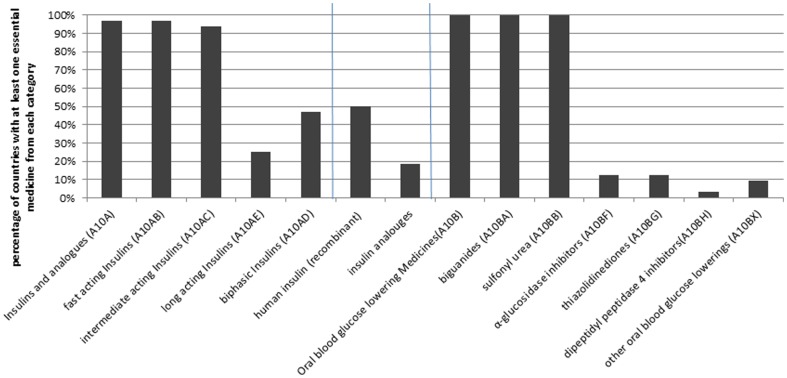
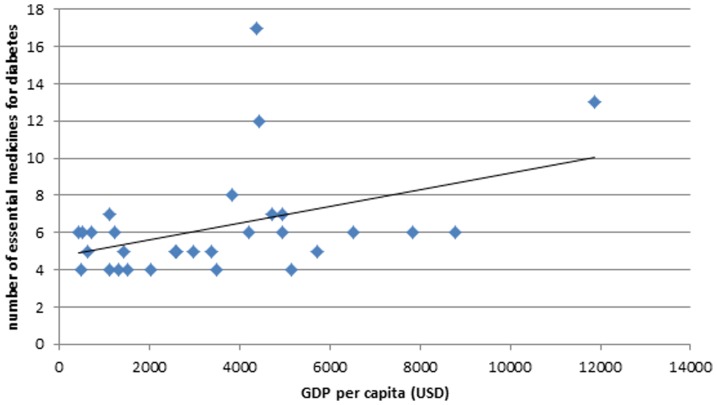
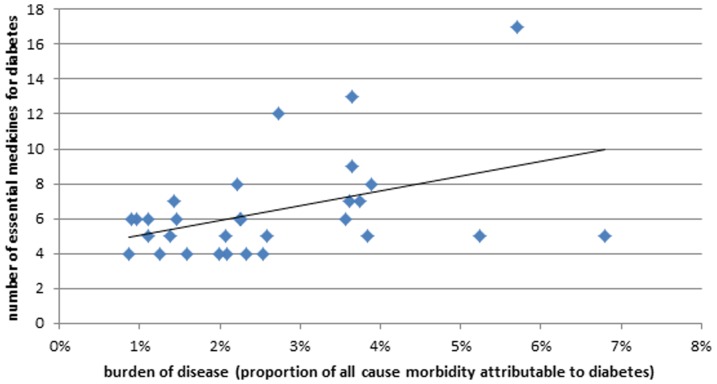
Results: Nearly all countries (n = 32) had chosen fast (97%) and intermediate acting insulin (93%), glibenclamide and metformin (100% both) as essential medicines. The median number of essential diabetes medicines was 6, equally divided between insulins and oral medicines. 20% of the countries had selected insulin analogues as essential medicines. Among all the studied factors, an increase in burden of diabetes and wealth of countries were associated with selection of higher numbers of essential diabetes medicines (p = 0.02 in both cases).
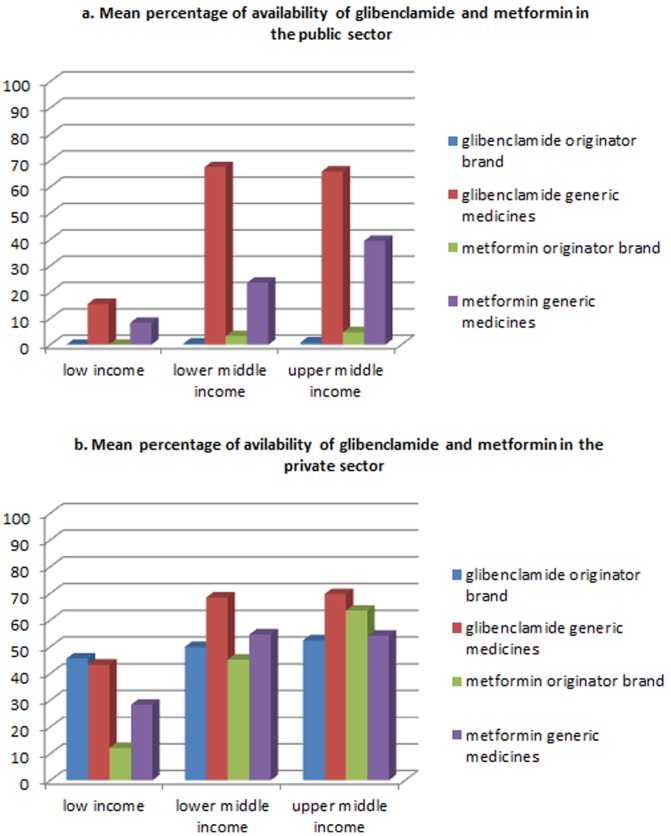
Conclusions: Nearly all the studied LMICs had included the minimum required medicines for diabetes management in their NEMLs. Selection can still be improved (e.g. exclusion of insulin analogues and replacement of glibenclamide by gliclazide). Nevertheless, the known suboptimal and inconsistent availability of essential diabetes medicines in LMICs cannot be explained by inadequate selection of essential medicines. Countries should therefore be encouraged to give precedence to implementation of NEMLs to make essential diabetes medicines more accessible.
Conflict of interest statement
Figures
References
-
- WHO (2013) Diabetes programme. Available: http://who.int/diabetes/en/. Accessed 2013 Dec 21.
-
- WHO (2013) Diabetes factsheets. Available: http://who.int/mediacentre/factsheets/fs312/en/index.html. Accessed 2013 Dec 17.
-
- Mbanya JC, Motala AA, Sobngwi E, Assah FK, Enoru ST (2010) Diabetes in sub-saharan africa. Lancet 375: 2254–2266 10.1016/S0140-6736(10)60550-8; 10.1016/S0140-6736(10)60550-8 - PubMed
-
- Ramachandran A, Mary S, Sathish CK, Selvam S, Catherin Seeli A, et al. (2008) Population based study of quality of diabetes care in southern india. J Assoc Physicians India 56: 513–516. - PubMed
MeSH terms
Substances
LinkOut - more resources
Full Text Sources
Other Literature Sources
Medical
