


Investigating population structure of Sea Lamprey (Petromyzon marinus, L.) in Western Iberian Peninsula using morphological characters and heart fatty acid signature analyses
- PMID: 25259723
- PMCID: PMC4178062
- DOI: 10.1371/journal.pone.0108110
Investigating population structure of Sea Lamprey (Petromyzon marinus, L.) in Western Iberian Peninsula using morphological characters and heart fatty acid signature analyses
Abstract
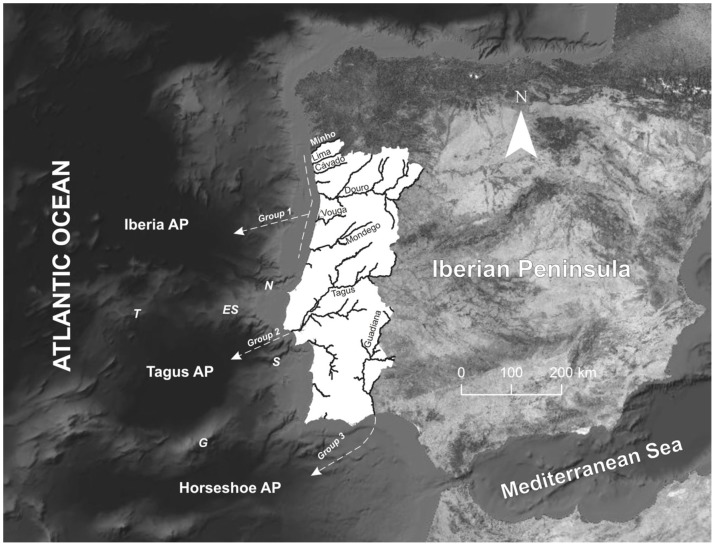
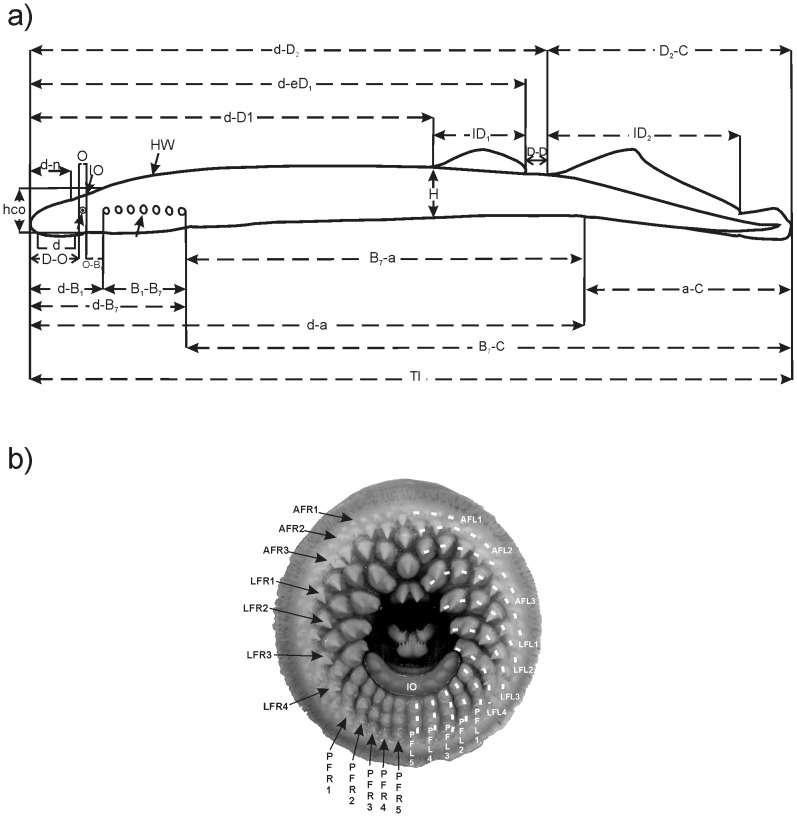
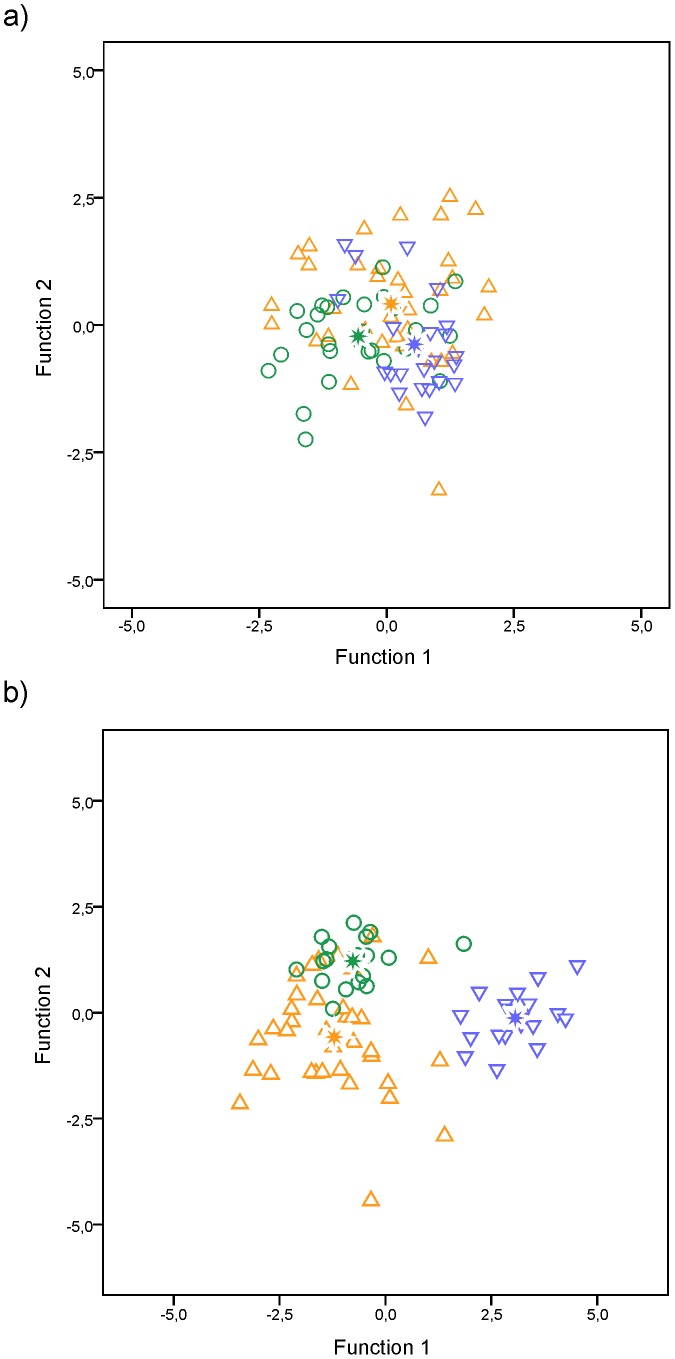
This study hypothesizes the existence of three groups of sea lamprey Petromyzon marinus L. in Portugal (North/Central group, Tagus group, and Guadiana group), possibly promoted by seabed topography isolation during the oceanic phase of the life cycle. Within this context, our purpose was to analyze the existence of a stock structure on sea lamprey populations sampled in the major Portuguese river basins using both morphological characters and heart tissue fatty acid signature. In both cases, the multiple discriminant analysis revealed statistically significant differences among groups, and the overall corrected classification rate estimated from cross-validation procedure was particularly high for the cardiac muscle fatty acid profiles (i.e. 83.8%). Morphometric characters were much more useful than meristic ones to discriminate stocks, and the most important variables for group differentiation were eye length, second dorsal fin length and branchial length. Fatty acid analysis showed that all lampreys from the southern Guadiana group were correctly classified and not mixing with individuals from any other group, reflecting a typical heart fatty acid signature. Our results revealed that 89.5% and 72.2% of the individuals from the Tagus and North/Central groups, respectively, were also correctly classified, despite some degree of overlap between individuals from these groups. The fatty acids that contributed to the observed segregation were C16:0; C17:0; C18:1ω9; C20:3ω6 and C22:2ω6. Detected differences are probably related with environmental variables to which lampreys may have been exposed, which leaded to different patterns of gene expression. These results suggest the existence of three different sea lamprey stocks in Portugal, with implication in terms of management and conservation.
Conflict of interest statement
Figures
References
-
- Lelek A (1987) The Freshwater Fishes of Europe, Volume 9: Threatened fishes of Europe. Wiesbaden: Aula-Verlag. 343 p.
-
- Renaud CB (1997) Conservation status of Northern Hemisphere lampreys (Petromyzontidae). J Appl Icthyol 13: 143–148.
-
- Mateus CS, Rodríguez-Muñoz R, Quintella BR, Alves MJ, Almeida PR (2012) Lampreys of the Iberian Peninsula: distribution, population status and conservation. Endanger Species Res 16: 183–198.
-
- Rogado L, Alexandrino P, Almeida PR, Alves J, Bochechas J, et al.. (2005) Peixes. In: Cabral MJ, et al..., editors. Livro vermelho dos vertebrados de Portugal. Lisboa: Instituto de Conservação da Natureza. pp. 63–114.
-
- Farmer GJ (1980) Biology and physiology of feeding in adult lamprey. Can J Fish Aquat Sci 37: 1751–1761.
Publication types
MeSH terms
Substances
LinkOut - more resources
Full Text Sources
Other Literature Sources
