


Chemobrain experienced by breast cancer survivors: a meta-ethnography study investigating research and care implications
- PMID: 25259847
- PMCID: PMC4178068
- DOI: 10.1371/journal.pone.0108002
Chemobrain experienced by breast cancer survivors: a meta-ethnography study investigating research and care implications
Erratum in
-
Correction: chemobrain experienced by breast cancer survivors: a meta-ethnography study investigating research and care implications.PLoS One. 2015 Feb 3;10(2):e0117740. doi: 10.1371/journal.pone.0117740. eCollection 2015. PLoS One. 2015. PMID: 25647507 Free PMC article.
Abstract
Background: Cognitive impairment, colloquially termed "chemobrain", occurs in 10-40% of all cancer patients, and is an emerging target of cancer survivorship research.
Aim: This study reviews published qualitative studies to explore cognitive impairments or chemobrain among breast cancer survivors, with particular attention given to the impact on quality of life.
Method: Using keywords, we searched ten electronic databases (CINAHL, EMBASE, Proquest, OVID SP, MEDLINE, Oxford Journal, Science Direct, PubMED).
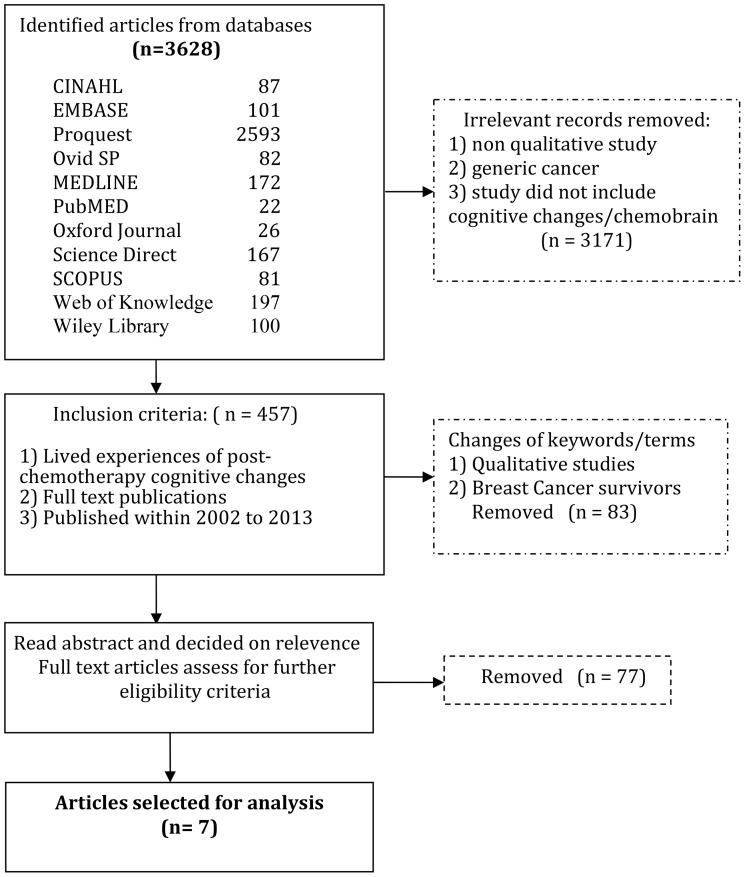
Findings: Of 457 papers, seven relevant papers were included. Data was extracted and concepts were analysed using a meta ethnography approach. Four second order intepretations were identified, on the basis of which, four third order intrepretations were constructed. Linked together in a line of argument, was a consistent account on their struggles to self-manage the chemobrain impairments that impact their daily lives. Five concepts emerged from the analysis of the primary findings: i) real experiences of cognitive changes, ii) calls for help, iii) impact of cognitive impairments, iv) coping and v) survivorship and meaning. Further synthesis resulted in four new order intepretations: i) The chemobrain struggle, ii) The substantial impact of chemobrain on life domains, iii) The struggle to readjust and to self manage, and iv) 'thankful yet fearful' representation.
Discussion: Awareness of cognitive changes were context-dependent on healthcare settings and cultural contexts as strong determinants. Subjects verified the existence of chemobrain but healthcare providers mis-recognised, under-recognised, and sometimes negated it perhaps due to its unknown aetiology. Asian breast cancer survivors appear less vocal than their western counterparts.
Conclusion: The current literature on the lived experiences of how women experienced chemobrain provides a consistent report that chemobrain is real, persistent and with detrimental impacts on quality of life - manifested as a constant struggles. A greater awareness of the effects of chemobrain with improved functional assessment and interventions is warranted.
Conflict of interest statement
Figures
References
-
- Marin AP, Sanchez AR, Arranz EE, Aunon PZ, Baron MG (2009) Adjuvant Chemotherapy for Breast Cancer and Cognitive Impairment. Southern Medical Journal 102(9): 929–34. - PubMed
-
- Meade E, Dowling M (2012) Early breast cancer: diagnosis, treatment and survivorship. British Journal of Nursing 21(17): S4–7. - PubMed
-
- American Cancer Society (2012) Cancer Facts & Figures 2012. Atlanta: American Cancer Society. http://www.cancer.org/research/cancerfactsfigures/cancerfactsfigures/can.... Accessed 2012 November 28.
-
- Argyriou A, Assimakopoulos K, Iconomou G, Fotini G, Haralabos K (2010) Either Called “Chemobrain” or “Chemofog,” the Long-Term Chemotherapy-Induced Cognitive Decline in Cancer Survivors Is Real. Journal of pain and symptom management 41(1): 126–139. - PubMed
-
- Burstein H J (2007) Cognitive side-effects of adjuvant treatments. The Breast 16(2): S166–8. - PubMed
Publication types
MeSH terms
LinkOut - more resources
Full Text Sources
Other Literature Sources
Medical
