


Growth, efficiency, and yield of commercial broilers from 1957, 1978, and 2005
- PMID: 25260522
- PMCID: PMC4988556
- DOI: 10.3382/ps.2014-04291
Growth, efficiency, and yield of commercial broilers from 1957, 1978, and 2005
Abstract
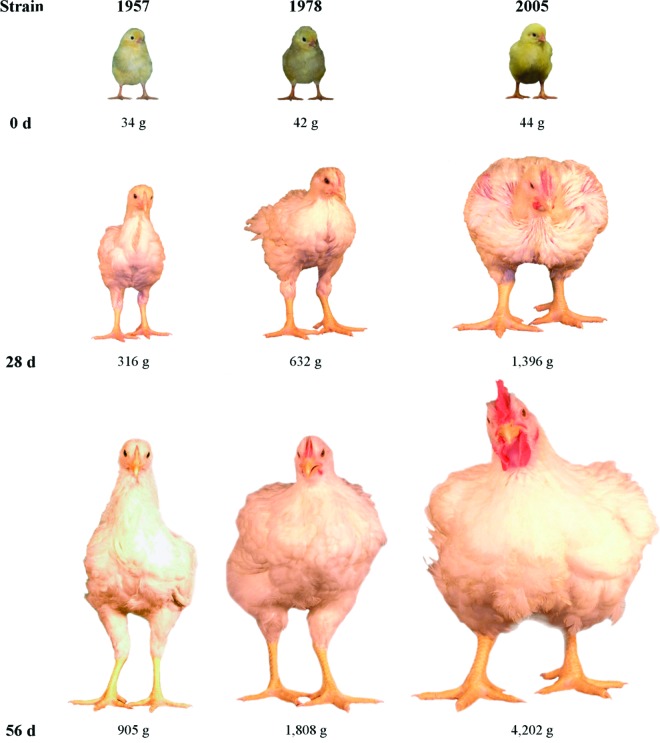
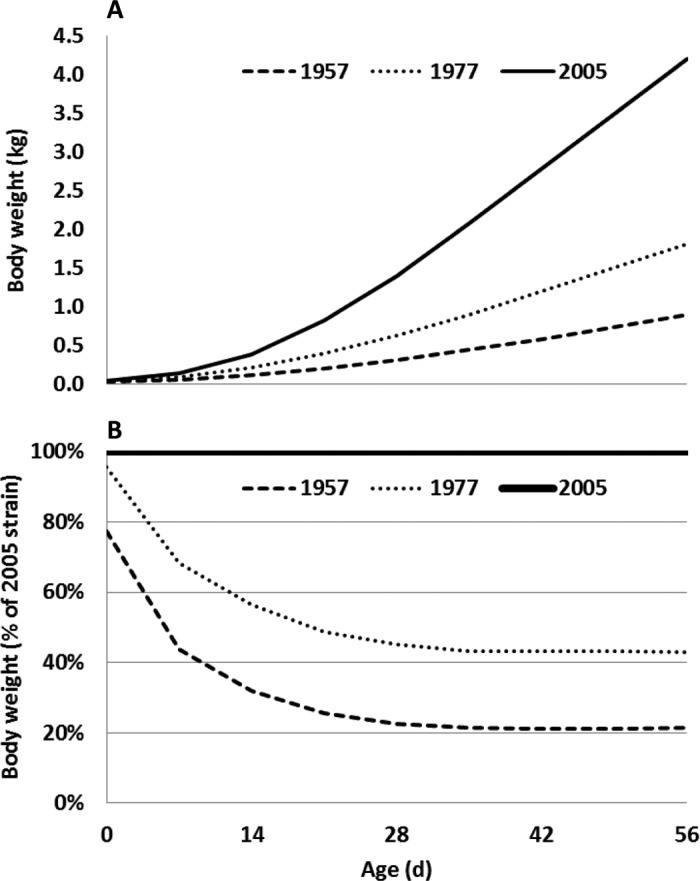
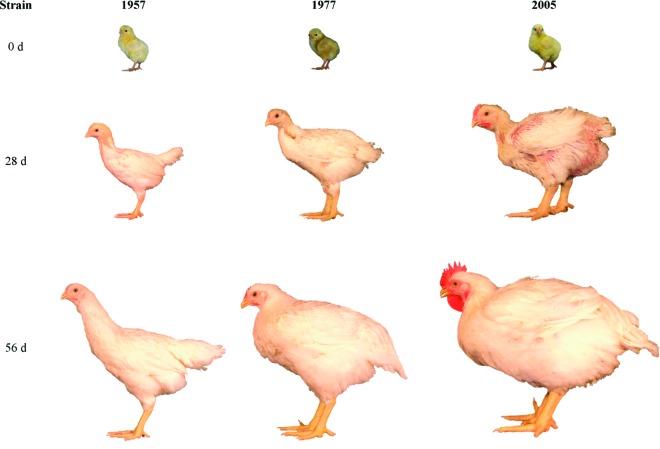
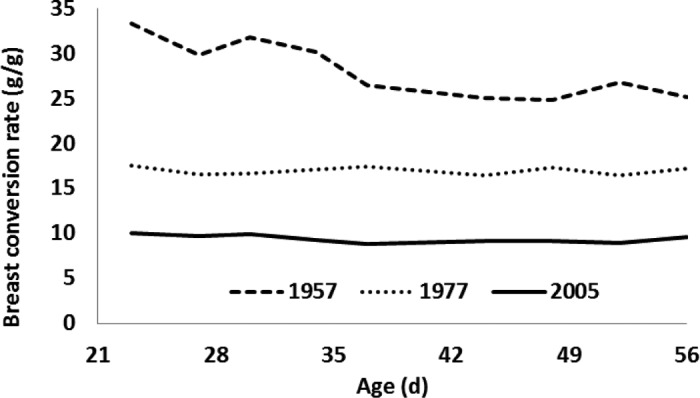
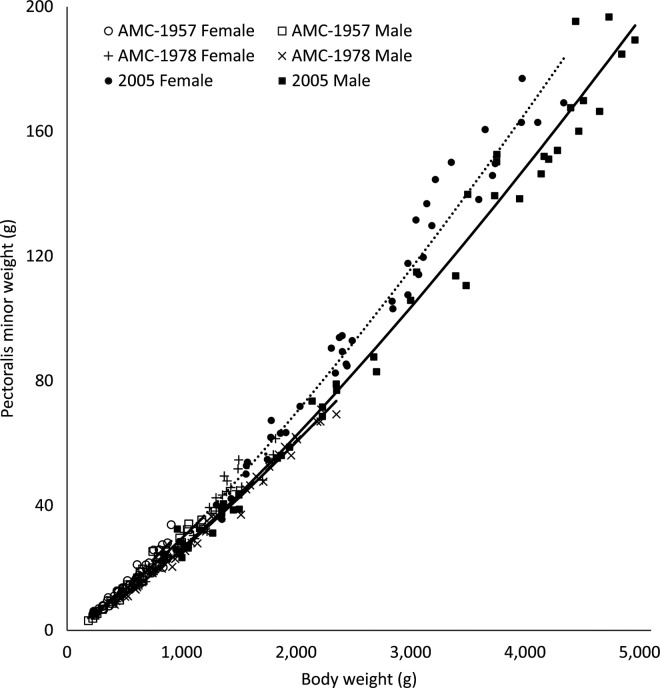
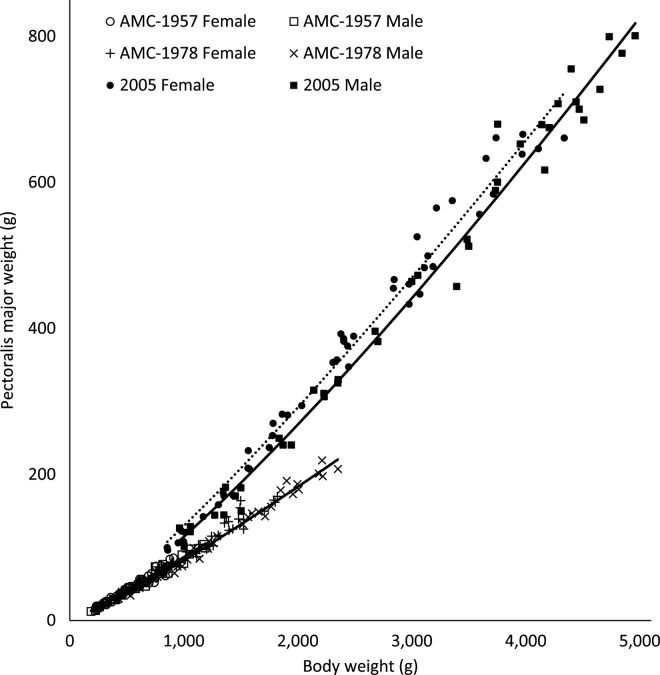
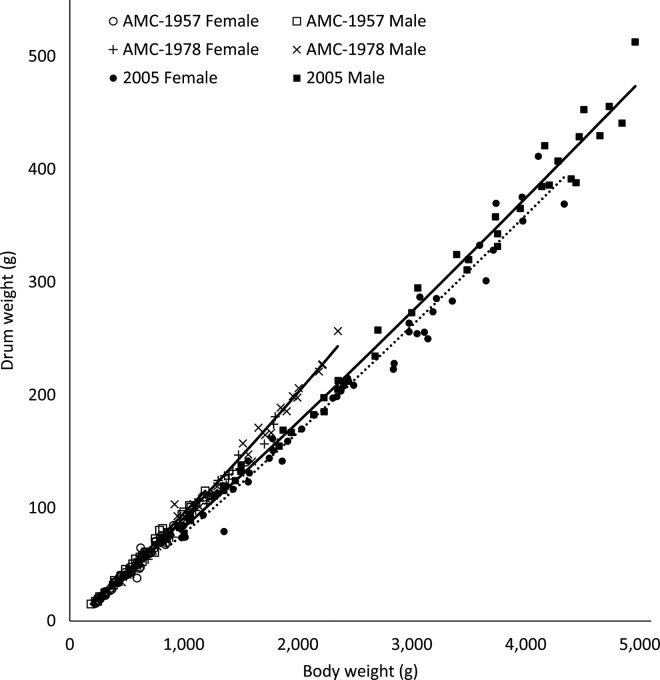
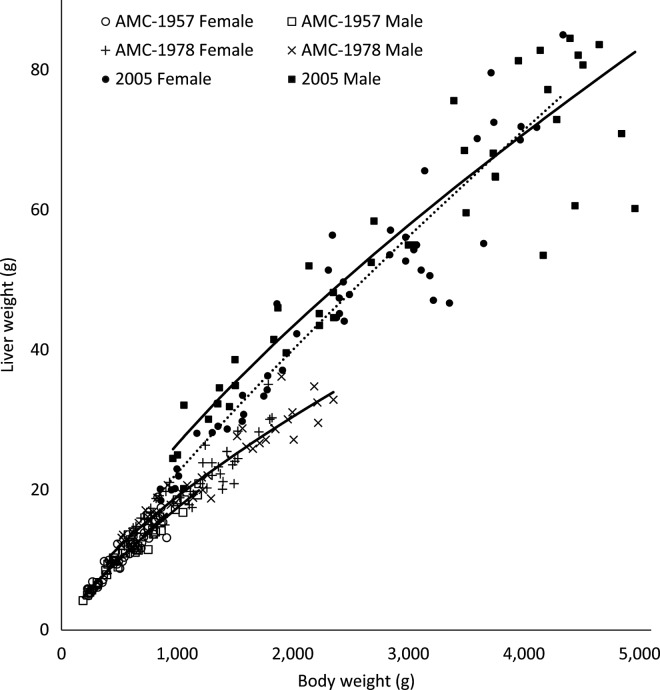
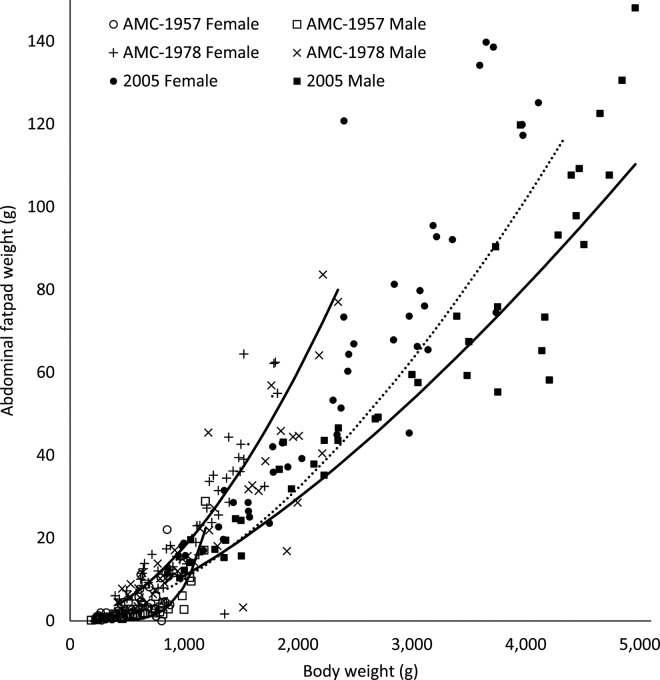
The effect of commercial selection on the growth, efficiency, and yield of broilers was studied using 2 University of Alberta Meat Control strains unselected since 1957 and 1978, and a commercial Ross 308 strain (2005). Mixed-sex chicks (n = 180 per strain) were placed into 4 replicate pens per strain, and grown on a current nutritional program to 56 d of age. Weekly front and side profile photographs of 8 birds per strain were collected. Growth rate, feed intake, and measures of feed efficiency including feed conversion ratio, residual feed intake, and residual maintenance energy requirements were characterized. A nonlinear mixed Gompertz growth model was used to predict BW and BW variation, useful for subsequent stochastic growth simulation. Dissections were conducted on 8 birds per strain semiweekly from 21 to 56 d of age to characterize allometric growth of pectoralis muscles, leg meat, abdominal fat pad, liver, gut, and heart. A novel nonlinear analysis of covariance was used to test the hypothesis that allometric growth patterns have changed as a result of commercial selection pressure. From 1957 to 2005, broiler growth increased by over 400%, with a concurrent 50% reduction in feed conversion ratio, corresponding to a compound annual rate of increase in 42 d live BW of 3.30%. Forty-two-day FCR decreased by 2.55% each year over the same 48-yr period. Pectoralis major growth potential increased, whereas abdominal fat decreased due to genetic selection pressure over the same time period. From 1957 to 2005, pectoralis minor yield at 42 d of age was 30% higher in males and 37% higher in females; pectoralis major yield increased by 79% in males and 85% in females. Over almost 50 yr of commercial quantitative genetic selection pressure, intended beneficial changes have been achieved. Unintended changes such as enhanced sexual dimorphism are likely inconsequential, though musculoskeletal, immune function, and parent stock management challenges may require additional attention in future selection programs.
Keywords: broiler; efficiency; genetic change; yield dynamics.
©2014 Poultry Science Association Inc.
Figures
References
-
- Abourachid A. Mechanics of standing in birds: Functional explanation of lameness problems in giant turkeys. Br. Poult. Sci. 1993;34:887–898. - PubMed
-
- Aviagen Inc. Ross x ross 308 North American broiler performance objectives. Huntsville, AL: Aviagen Inc.; 2003.
-
- Barton N. Breeding meat type poultry for the future targets for selection, limits to performance and market requirements for chicken.; Proc. 9th European Poultry Conference; UK Branch, Andover, Hants, UK: World's Poultry Science Association; 1994. pp. 33–38.
-
- Bottje W., Iqbal M., Tang Z. X., Cawthon D., Okimoto R., Wing T., Cooper M. Association of mitochondrial function with feed efficiency within a single genetic line of male broilers. Poult. Sci. 2002;81:546–555. - PubMed
-
- Chambers J. R., Bernon D. E., Gavora J. S. Synthesis and parameters of new populations of meat-type chickens. Theor. Appl. Genet. 1984;69:23–30. - PubMed
MeSH terms
LinkOut - more resources
Full Text Sources
Other Literature Sources
