


Epigenetic pathways regulating bone homeostasis: potential targeting for intervention of skeletal disorders
- PMID: 25260661
- PMCID: PMC4216616
- DOI: 10.1007/s11914-014-0240-1
Epigenetic pathways regulating bone homeostasis: potential targeting for intervention of skeletal disorders
Abstract
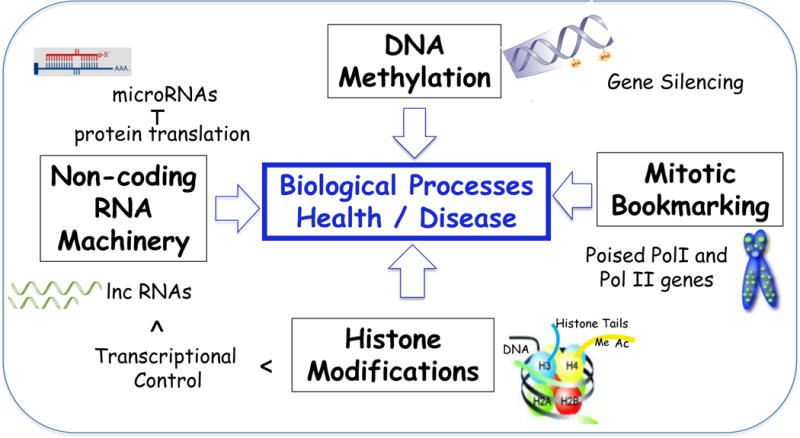
Epigenetic regulation utilizes different mechanisms to convey heritable traits to progeny cells that are independent of DNA sequence, including DNA silencing, post-translational modifications of histone proteins, and the post-transcriptional modulation of RNA transcript levels by non-coding RNAs. Although long non-coding RNAs have recently emerged as important regulators of gene imprinting, their functions during osteogenesis are as yet unexplored. In contrast, microRNAs (miRNAs) are well characterized for their control of osteogenic and osteoclastic pathways; thus, further defining how gene regulatory networks essential for skeleton functions are coordinated and finely tuned through the activities of miRNAs. Roles of miRNAs are constantly expanding as new studies uncover associations with skeletal disorders. The distinct functions of epigenetic regulators and evidence for integrating their activities to control normal bone gene expression and bone disease will be presented. In addition, potential for using "signature miRNAs" to identify, manage, and therapeutically treat osteosarcoma will be discussed in this review.
Figures
References
-
- Kilpinen H, Dermitzakis ET. Genetic and epigenetic contribution to complex traits. Hum Mol Genet. 2012;21:R24–8. - PubMed
-
- Stankov K, Benc D, Draskovic D. Genetic and epigenetic factors in etiology of diabetes mellitus type 1. Pediatrics. 2013;132:1112–22. - PubMed
-
- van Dijk SJ, Molloy PL, Varinli H, Morrison JL, Muhlhausler BS, members of Epi S Epigenetics and human obesity. Int J Obes (Lond) 2014 Feb 25; [Epub ahead of print] - PubMed
Publication types
MeSH terms
Substances
Grants and funding
LinkOut - more resources
Full Text Sources
Other Literature Sources
Medical
