


Elevation of circulating branched-chain amino acids is an early event in human pancreatic adenocarcinoma development
- PMID: 25261994
- PMCID: PMC4191991
- DOI: 10.1038/nm.3686
Elevation of circulating branched-chain amino acids is an early event in human pancreatic adenocarcinoma development
Abstract
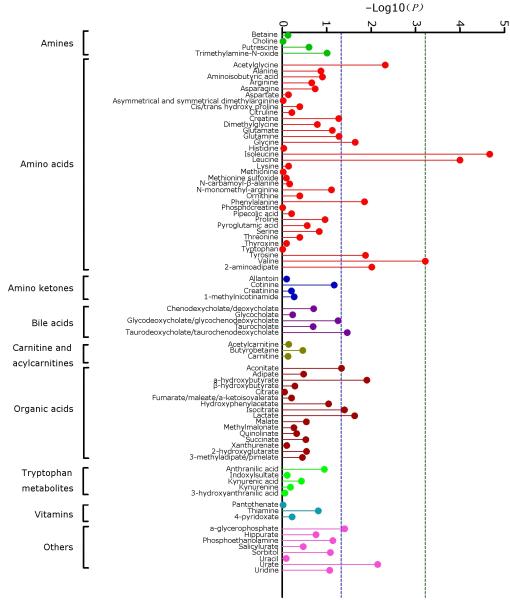
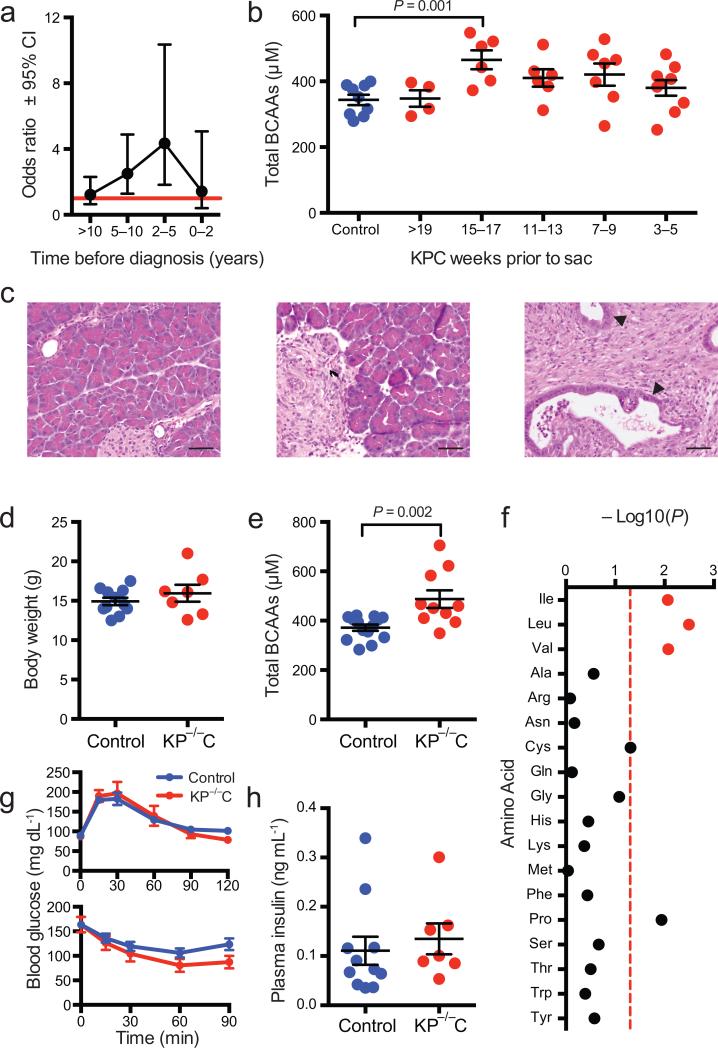
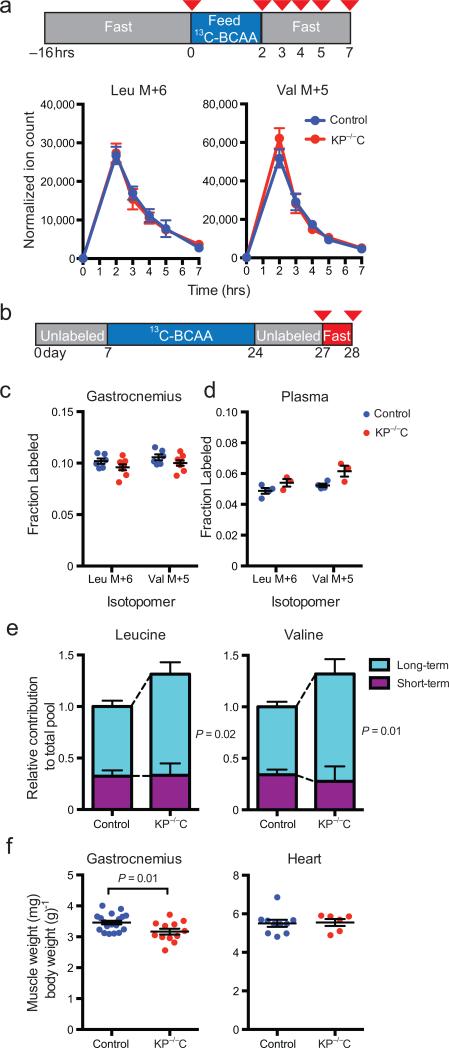
Most patients with pancreatic ductal adenocarcinoma (PDAC) are diagnosed with advanced disease and survive less than 12 months. PDAC has been linked with obesity and glucose intolerance, but whether changes in circulating metabolites are associated with early cancer progression is unknown. To better understand metabolic derangements associated with early disease, we profiled metabolites in prediagnostic plasma from individuals with pancreatic cancer (cases) and matched controls from four prospective cohort studies. We find that elevated plasma levels of branched-chain amino acids (BCAAs) are associated with a greater than twofold increased risk of future pancreatic cancer diagnosis. This elevated risk was independent of known predisposing factors, with the strongest association observed among subjects with samples collected 2 to 5 years before diagnosis, when occult disease is probably present. We show that plasma BCAAs are also elevated in mice with early-stage pancreatic cancers driven by mutant Kras expression but not in mice with Kras-driven tumors in other tissues, and that breakdown of tissue protein accounts for the increase in plasma BCAAs that accompanies early-stage disease. Together, these findings suggest that increased whole-body protein breakdown is an early event in development of PDAC.
Figures
Comment in
-
Protein breakdown precedes pancreatic tumor development.Nat Med. 2014 Oct;20(10):1097-9. doi: 10.1038/nm.3714. Nat Med. 2014. PMID: 25295937 No abstract available.
-
Pancreatic cancer: Early events in pancreatic cancer.Nat Rev Gastroenterol Hepatol. 2014 Dec;11(12):703. doi: 10.1038/nrgastro.2014.177. Epub 2014 Oct 14. Nat Rev Gastroenterol Hepatol. 2014. PMID: 25311477 No abstract available.
References
Publication types
MeSH terms
Substances
Grants and funding
- HHSN268201100001C/WH/WHI NIH HHS/United States
- T32 GM007287/GM/NIGMS NIH HHS/United States
- P30 CA014051/CA/NCI NIH HHS/United States
- 1UM1 CA167552/CA/NCI NIH HHS/United States
- HHSN268201100004C/WH/WHI NIH HHS/United States
- CA 34944/CA/NCI NIH HHS/United States
- P50 CA127003/CA/NCI NIH HHS/United States
- R01 CA097193/CA/NCI NIH HHS/United States
- R01 CA034944/CA/NCI NIH HHS/United States
- F30 CA183474/CA/NCI NIH HHS/United States
- P01 CA087969/CA/NCI NIH HHS/United States
- CA 97193/CA/NCI NIH HHS/United States
- R01 CA168653/CA/NCI NIH HHS/United States
- HL 26490/HL/NHLBI NIH HHS/United States
- P01 CA055075/CA/NCI NIH HHS/United States
- R01 DK081572/DK/NIDDK NIH HHS/United States
- R01 HL034595/HL/NHLBI NIH HHS/United States
- N01 WH022110/WH/WHI NIH HHS/United States
- HHMI/Howard Hughes Medical Institute/United States
- HHSN271201100004C/AG/NIA NIH HHS/United States
- P01 CA117969/CA/NCI NIH HHS/United States
- R01 CA49449/CA/NCI NIH HHS/United States
- P30-CA14051/CA/NCI NIH HHS/United States
- HL 34595/HL/NHLBI NIH HHS/United States
- R01 CA124908/CA/NCI NIH HHS/United States
- CA 40360/CA/NCI NIH HHS/United States
- P01 CA87969/CA/NCI NIH HHS/United States
- R01 HL034594/HL/NHLBI NIH HHS/United States
- UM1 CA186107/CA/NCI NIH HHS/United States
- P01 CA55075/CA/NCI NIH HHS/United States
- R01 HL026490/HL/NHLBI NIH HHS/United States
- HHSN268201100046C/HL/NHLBI NIH HHS/United States
- HHSN268201100003C/WH/WHI NIH HHS/United States
- UM1 CA167552/CA/NCI NIH HHS/United States
- K07 CA140790/CA/NCI NIH HHS/United States
- P01-CA117969/CA/NCI NIH HHS/United States
- HHSN268201100002C/WH/WHI NIH HHS/United States
- R01 CA049449/CA/NCI NIH HHS/United States
- R01 CA040360/CA/NCI NIH HHS/United States
LinkOut - more resources
Full Text Sources
Other Literature Sources
Medical
Molecular Biology Databases
Miscellaneous
