


Efficacy of phytoestrogens for menopausal symptoms: a meta-analysis and systematic review
- PMID: 25263312
- PMCID: PMC4389700
- DOI: 10.3109/13697137.2014.966241
Efficacy of phytoestrogens for menopausal symptoms: a meta-analysis and systematic review
Abstract
Objective: To perform a meta-analysis examining the efficacy of phytoestrogens for the relief of menopausal symptoms.
Methods: Medline, Cochrane, EMBASE, and Google Scholar databases were searched until September 30, 2013 using the following key words: vasomotor symptoms, menopausal symptoms, phytoestrogens, isoflavones, coumestrol, soy, red clover. Inclusion criteria were (1) randomized controlled trial (RCT), (2) perimenopausal or postmenopausal women experiencing menopausal symptoms, (3) intervention with an oral phytoestrogen. Outcome measures included Kupperman index (KI) changes, daily hot flush frequency, and the likelihood of side-effects.
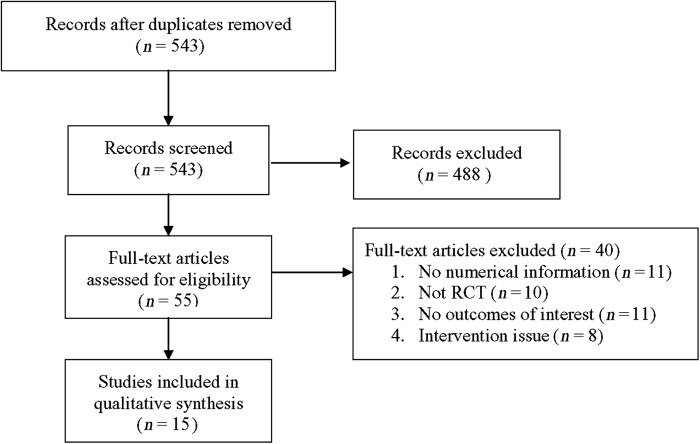
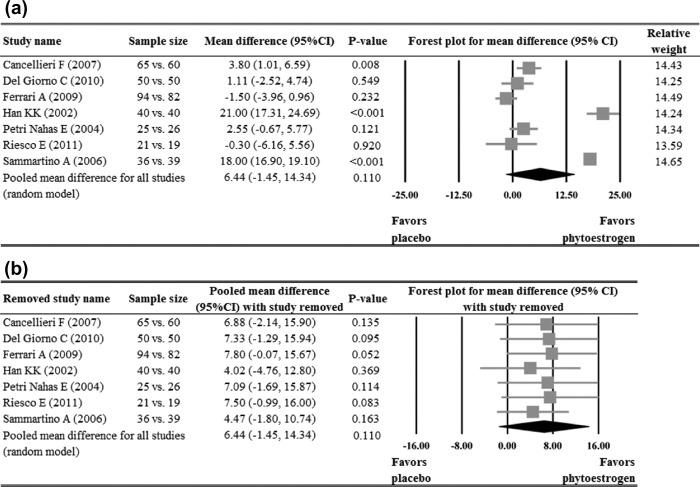
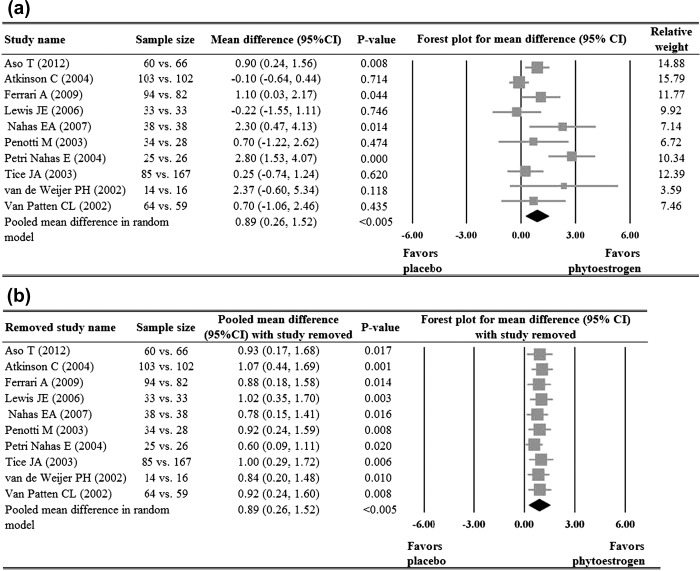
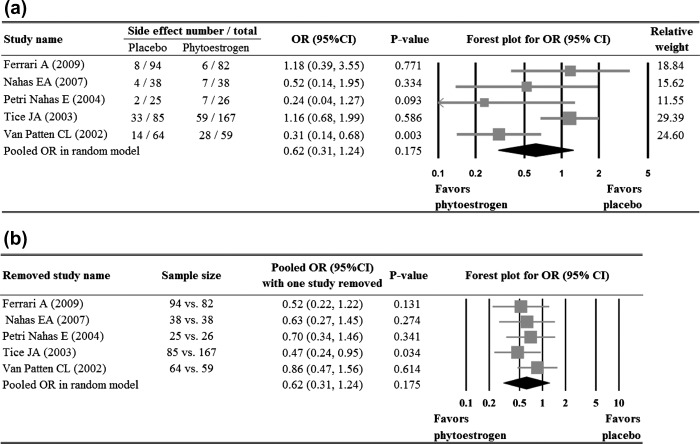
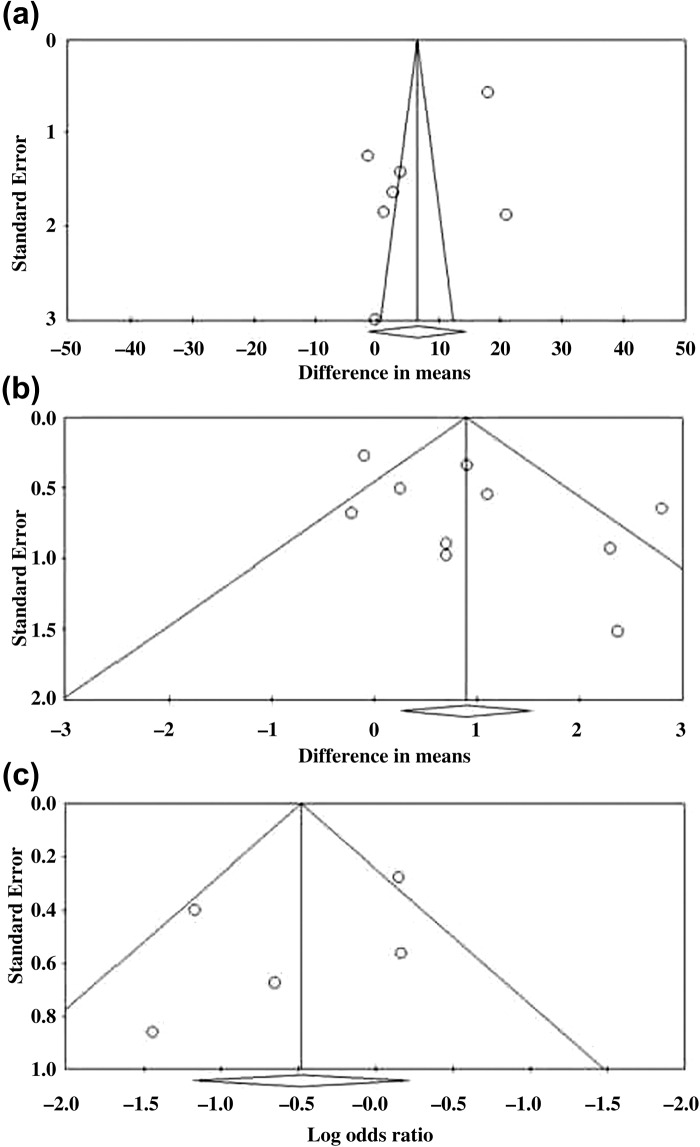
Results: Of 543 potentially relevant studies identified, 15 RCTs meeting the inclusion criteria were included. The mean age of the subjects ranged from 49 to 58.3 and 48 to 60.1 years, respectively, in the placebo and phytoestrogen groups. The number of participants ranged from 30 to 252, and the intervention periods ranged from 3 to 12 months. Meta-analysis of the seven studies that reported KI data indicated no significant treatment effect of phytoestrogen as compared to placebo (pooled mean difference = 6.44, p = 0.110). Meta-analysis of the ten studies that reported hot flush data indicated that phytoestrogens result in a significantly greater reduction in hot flush frequency compared to placebo (pooled mean difference = 0.89, p < 0.005). Meta-analysis of the five studies that reported side-effect data showed no significant difference between the two groups (p = 0.175).
Conclusion: Phytoestrogens appear to reduce the frequency of hot flushes in menopausal women, without serious side-effects.
Keywords: CLIMACTERIC; ESTROGEN; HOT FLUSH; ISOFLAVONE; LIGNAN; MENOPAUSE; META-ANALYSIS.
Figures
Comment in
-
Mindfulness-Based Stress Reduction for Posttraumatic Stress Disorder, Coffee Consumption and Mortality, Phytoestrogens for Menopause, Light Therapy for Non-Seasonal Depression, Electroacupuncture for Labor Pain.Explore (NY). 2016 May-Jun;12(3):210-4. doi: 10.1016/j.explore.2016.02.013. Epub 2016 Mar 2. Explore (NY). 2016. PMID: 27061036 No abstract available.
References
-
- Avis NE, Stellato R, Crawford S, et al. Is there a menopausal syndrome? Menopausal status and symptoms across racial/ethnic groups. Soc Sci Med. 2001;52:345–56. - PubMed
-
- Oldenhave A, Jaszmann LJ, Haspels AA, Everaerd WT. Impact of climacteric on well-being. A survey based on 5213 women 39 to 60 years old. Am J Obstet Gynecol. 1993;168:772–80. - PubMed
-
- Rossouw JE, Anderson GL, Prentice RL, et al. Risks and benefits of estrogen plus progestin in healthy postmenopausal women: Principal results from the Women's Health Initiative randomized controlled trial. JAMA. 2002;288:321–33. - PubMed
-
- Depypere HT, Comhaire FH. Herbal preparations for the menopause: beyond isoflavones and black cohosh. Maturitas. 2014;77:191–4. - PubMed
-
- Shou C, Li J, Liu Z. Complementary and alternative medicine in the treatment of menopausal symptoms. Chin J Integr Med. 2011;17:883–8. - PubMed
Publication types
MeSH terms
Substances
LinkOut - more resources
Full Text Sources
Other Literature Sources
Medical
