


Review
doi: 10.1038/onc.2014.326.
Epub 2014 Sep 29.
Genetic alterations of protein tyrosine phosphatases in human cancers
Affiliations
- PMID: 25263441
- PMCID: PMC4377308
- DOI: 10.1038/onc.2014.326
Item in Clipboard
Review
Genetic alterations of protein tyrosine phosphatases in human cancers
Oncogene.
.
Abstract
Protein tyrosine phosphatases (PTPs) are enzymes that remove phosphate from tyrosine residues in proteins. Recent whole-exome sequencing of human cancer genomes reveals that many PTPs are frequently mutated in a variety of cancers. Among these mutated PTPs, PTP receptor T (PTPRT) appears to be the most frequently mutated PTP in human cancers. Beside PTPN11, which functions as an oncogene in leukemia, genetic and functional studies indicate that most of mutant PTPs are tumor suppressor genes. Identification of the substrates and corresponding kinases of the mutant PTPs may provide novel therapeutic targets for cancers harboring these mutant PTPs.
Conflict of interest statement
The authors declare no conflict of interest.
Figures
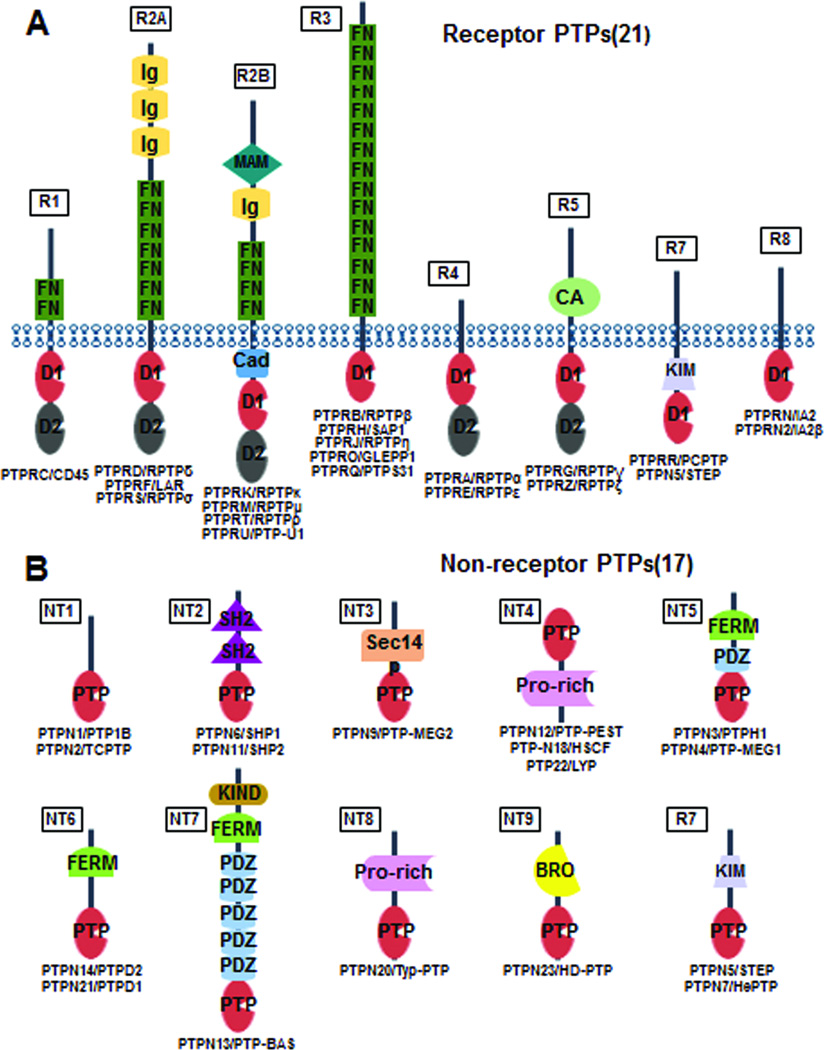
BRO: baculovirus BRO homology; CA: carbonic anhydrase domain; D1, intracellular tandem phosphatase domain 1; D2, intracellular tandem phosphatase domain 2; FERM: band 4.1/ezrin/radixin/moesin homology; FN: fibronectin type III repeat; Ig: immunoglobulin domain; KIM, kinase interaction motif; KIND: kinase N lobe-like domain; MAM: Meprin, A5 protein, and protein tyrosine phosphatase Mu (MAM) domain; PDZ: postsynaptic density-95/discs large/ZO1 homology; Pro-rich: proline-rich; PTP: protein tyrosine phosphatase catalytic domain; Sec14p: S. cerevisiae phosphatidylinositol transfer protein (Sec14p)-like lipid-binding domain.
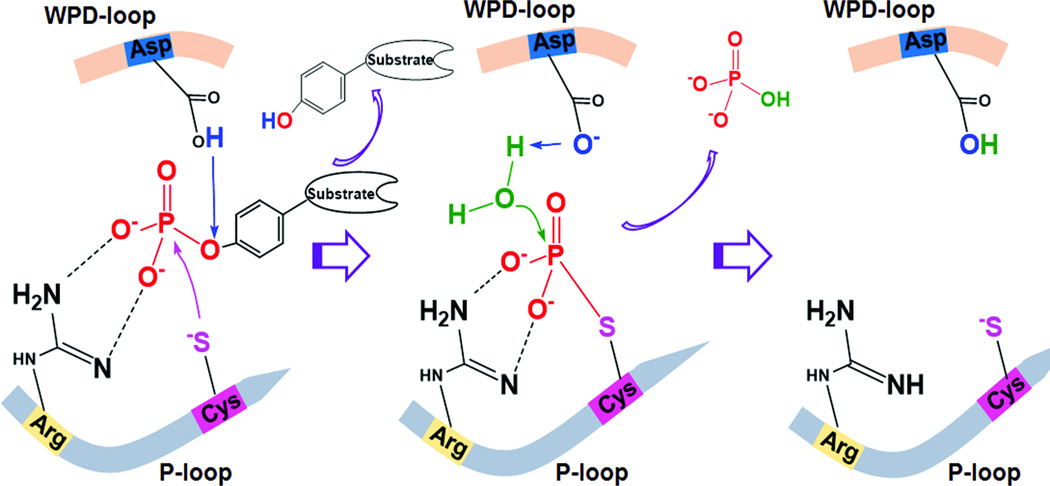
The catalytic cysteine in the P-loop initiates the nucleophilic attack of the phosphorous atom on pY and thus breaks the phosphorus–oxygen bond, whereas the catalytic aspartate in the WPD loop acts as a generate acid to donate a proton to the dephosphorylated tyrosine. This step generates a phosphocysteine intermediate and releases the dephosphorylated substrate. This phosphocysteine intermediate is then cleaved by the action of the catalytic aspartate, which acts as a general base to extract a proton from a water molecule and facilitates the hydrolysis of the phosphorous-sulfur bond. This reaction results in the release of free phosphate.
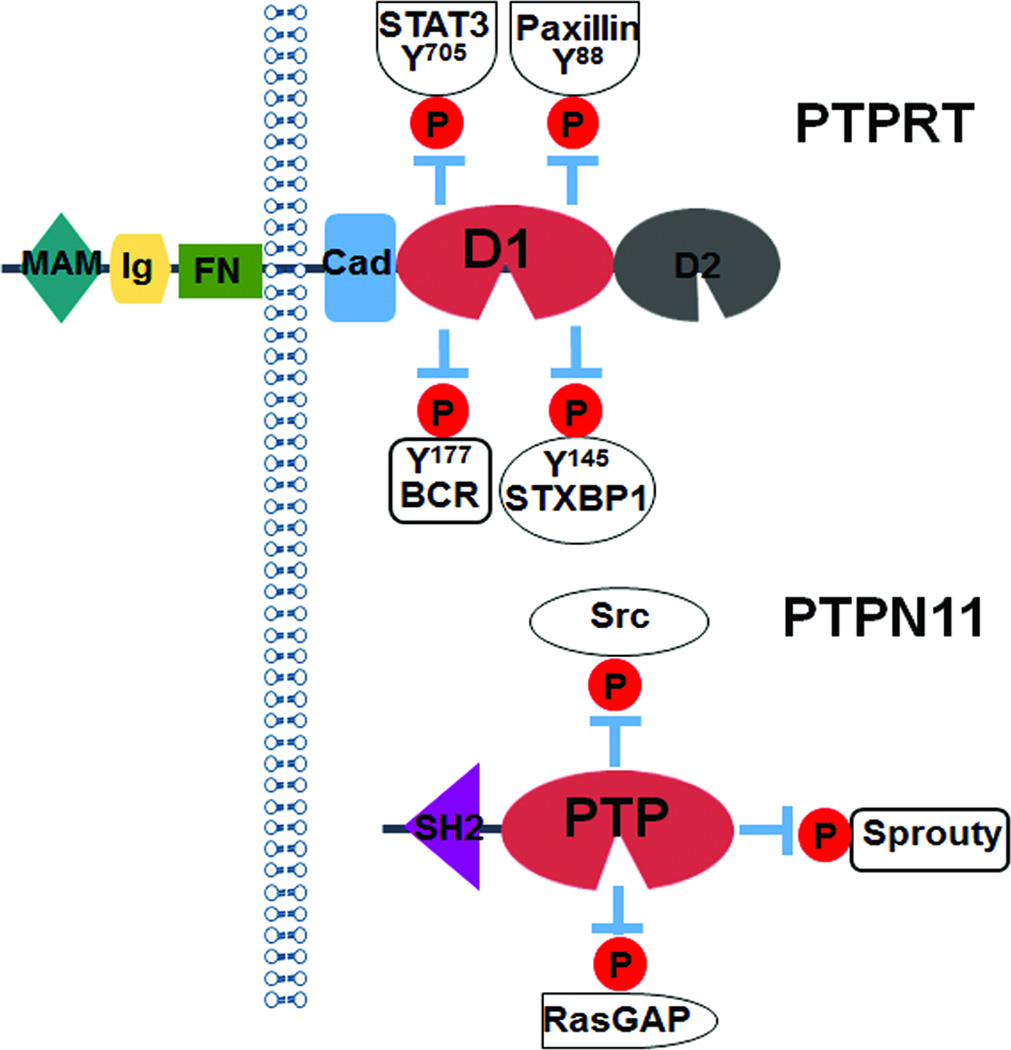
PTPRT negatively regulated signaling transduction pathways by dephosphorylating STAT3, paxillin, BCR and STXBP1 proteins. PTPN11/shp2 positively regulates MAP kinase pathway through de-phosphorylation of inhibitory pY residues in Src, RasGAP and Sprouty.
References
-
- Julien SG, Dubé N, Hardy S, Tremblay ML. Inside the human cancer tyrosine phosphatome. Nat Rev Cancer. 2011;11:35–49. - PubMed
-
- Wang Z, Shen D, Parsons DW, Bardelli A, Sager J, Szabo S, et al. Mutational analysis of the tyrosine phosphatome in colorectal cancers. Science. 2004;304:1164–1166. - PubMed
-
- Alonso A, Sasin J, Bottini N, Friedberg I, Friedberg I, Osterman A, et al. Protein tyrosine phosphatases in the human genome. Cell. 2004;117:699–711. - PubMed
Publication types
MeSH terms
Substances
Grants and funding
LinkOut - more resources
Full Text Sources
Other Literature Sources
Miscellaneous
