Review
. 2015 Feb;220(2):175-84.
doi: 10.1016/j.imbio.2014.09.013. Epub 2014 Sep 16.

Signalling versatility following self and non-self sensing by myeloid C-type lectin receptors

Affiliations
Review

Signalling versatility following self and non-self sensing by myeloid C-type lectin receptors

Salvador Iborra et al. Immunobiology. 2015 Feb.

Abstract

Among myeloid immune receptors, C-type lectin receptors (CLRs) have a remarkable capacity to sense a variety of self and non-self ligands. The coupling of CLRs to different signal transduction modules is influenced not only by the receptor, but also by the nature, density and architecture of the ligand, which can affect the rate of receptor internalization and trafficking to diverse intracellular compartments. Understanding how the variety of self and non-self ligands triggers differential CLR signalling and function presents a fascinating biological challenge. Non-self ligands usually promote inflammation and immunity, whereas self ligands are frequently involved in communication and tolerance. But pathogens can mimic self-inhibitory signals to escape immune surveillance, and endogenous ligands can contribute to the sensing of pathogens through CLRs. In this review, we survey the complexity and flexibility in functional outcome found in the myeloid CLRs, which is not only based on their differing intracellular motifs, but is also conditioned by the physical nature, affinity and avidity of the ligand.

Keywords: C-type lectin receptors; Innate immunity; Myeloid cells.


Figures

Figure 1
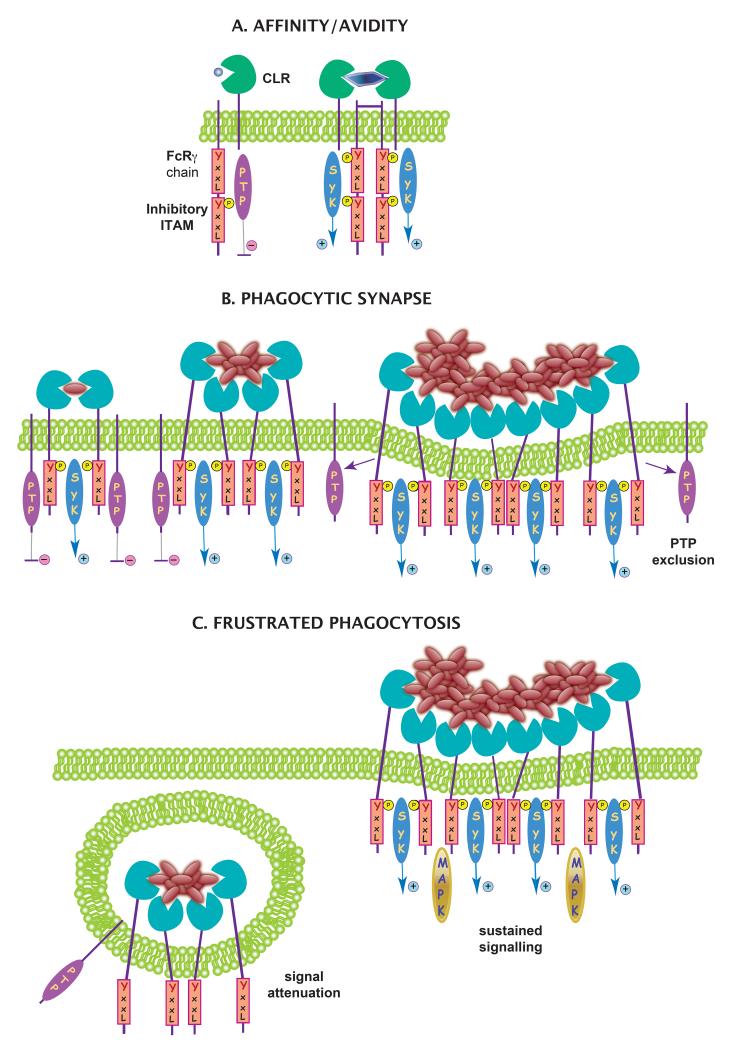
Figure 1. The nature of the ligand can modulate signalling through myeloid CLRs
Signalling myeloid CLRs can potentially trigger activating or inhibitory signals depending on their cytoplasmic signalling motifs and the nature of their ligands. (A) Affinity and avidity of the ligand can affect the quantity and duration of signals through the ITAM domain. Low affinity/avidity ligands induce hypo-phosphorylation of the ITAM domain in the FcRγ chain associated with the CLR. The hypophosphorylated ITAM, termed “inhibitory ITAM”, preferentially binds SH2-containing protein tyrosine phosphatases (PTPs). Upon binding of a high avidity ligand, the FcRγ chain ITAM becomes fully phosphorylated and associates with Syk kinase, which triggers an activating signal. (B) Soluble and particulate ligands are differentially sensed by CLRs. Soluble ligands for CLR are poor triggers of activating signalling because of the inhibitory activity of membrane PTPs. When a phagocytic synapse is formed following binding of particulate ligands, these phosphatases are segregated from the receptors. (C) CLR signalling is influenced by the size of the ligand-bearing particle. Small particles are endocytosed, resulting in attenuation of signalling. Delayed or “frustrated” phagocytosis of large particles enhances signalling and inflammatory responses.
Figure 2
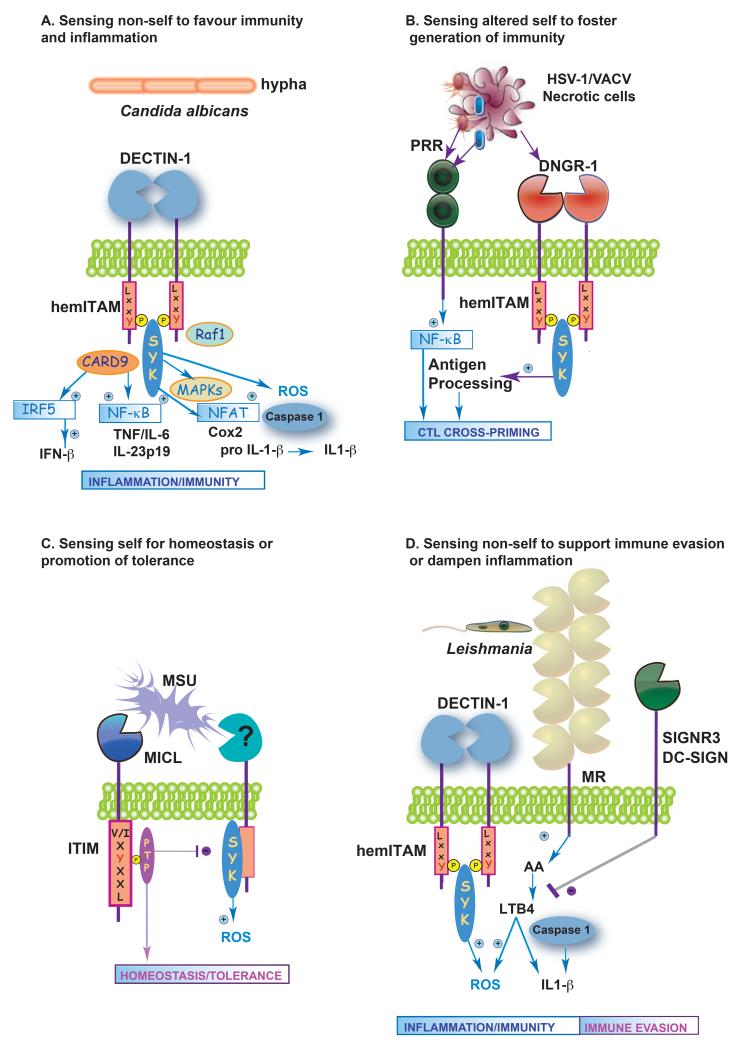
Figure 2. Self and non-self sensing by myeloid CLRs: plasticity of functional outcomes
The complexity of signalling motifs and ligand interaction with myeloid CLRs can result in distinct functional outcomes: (A) Sensing non-self to favour immunity and inflammation: Dectin-1 detects β-glucan carbohydrates on Candida albicans. After ligand binding, Dectin-1 can mediate multiple cellular responses in a Syk-dependent or independent (Raf1) manner, including cytokine and chemokine production, respiratory burst, phagocytosis and IFN-β production. (B) Sensing altered self to foster generation of immunity: Cells infected with cytophatic viruses (HSV-1 or VACV) can be detected by TLRs and DNGR-1 expressed on DCs. Whereas PRRs promote activation of the DCs, DNGR-1 favours CTL priming by sequestering cargo in a poorly degradative early endocytic compartment that allows MHC class I cross-presentation. (C) Sensing self for homeostasis or promotion of tolerance; Monosodium urate (MSU) is a damage-associated molecular pattern (DAMP) that induces Syk-dependent ROS production. Clec12a can sense MSU and promote an inhibitory signal through its ITIM that dampens inflammation. (D) Sensing non-self to support immune evasion or dampen inflammation: During Leishmania infantum infection, Dectin-1 and MR induce ROS production in macrophages and trigger Syk-coupled secretion of IL-1β. SIGNR3 (DC-SIGN in human macrophages) promotes parasite survival by inhibiting the LTB4/IL-1β axis.

References

    1. Ahrens S, Zelenay S, Sancho D, Hanč P, Kjær S, Feest C, Fletcher G, Durkin C, Postigo A, Skehel M, et al. F-Actin Is an Evolutionarily Conserved Damage-Associated Molecular Pattern Recognized by DNGR-1, a Receptor for Dead Cells. Immunity. 2012;36:635–645. - PubMed
    1. Bakker AB, Baker E, Sutherland GR, Phillips JH, Lanier LL. Myeloid DAP12-associating lectin (MDL)-1 is a cell surface receptor involved in the activation of myeloid cells. Proc Natl Acad Sci USA. 1999;96:9792–9796. - PMC - PubMed
    1. Barabe F, Gilbert C, Liao N, Bourgoin SG, Naccache PH. Crystal-induced neutrophil activation VI. Involvment of FcgammaRIIIB (CD16) and CD11b in response to inflammatory microcrystals. FASEB J. 1998;12:209–220. - PubMed
    1. Barrett NA, Maekawa A, Rahman OM, Austen KF, Kanaoka Y. Dectin-2 recognition of house dust mite triggers cysteinyl leukotriene generation by dendritic cells. J Immunol. 2009;182:1119–1128. - PMC - PubMed
    1. Barrett NA, Rahman OM, Fernandez JM, Parsons MW, Xing W, Austen KF, Kanaoka Y. Dectin-2 mediates Th2 immunity through the generation of cysteinyl leukotrienes. J Exp Med. 2011;208:593–604. - PMC - PubMed

Publication types

LinkOut - more resources